Beans, plants and growing
| Term | Meaning |
|---|---|
| Arabica | The main coffee species (Coffea arabica): sweet, aromatic, higher acidity. See Arabica coffee beans |
| Robusta | The second main species (Coffea canephora): strong, bitter, high caffeine. See Robusta guide |
| Liberica | A rare species with large, smoky, fruity beans. See Liberica |
| Excelsa | A rare type, now classed within Liberica |
| Variety | A subtype within a species, such as Typica, Bourbon or Geisha. See varieties |
| Cultivar | A cultivated variety selected or bred by people |
| Heirloom | Local Ethiopian varieties of mixed or unknown genetics |
| Altitude | Height above sea level. Higher farms usually give denser beans. See altitude impact |
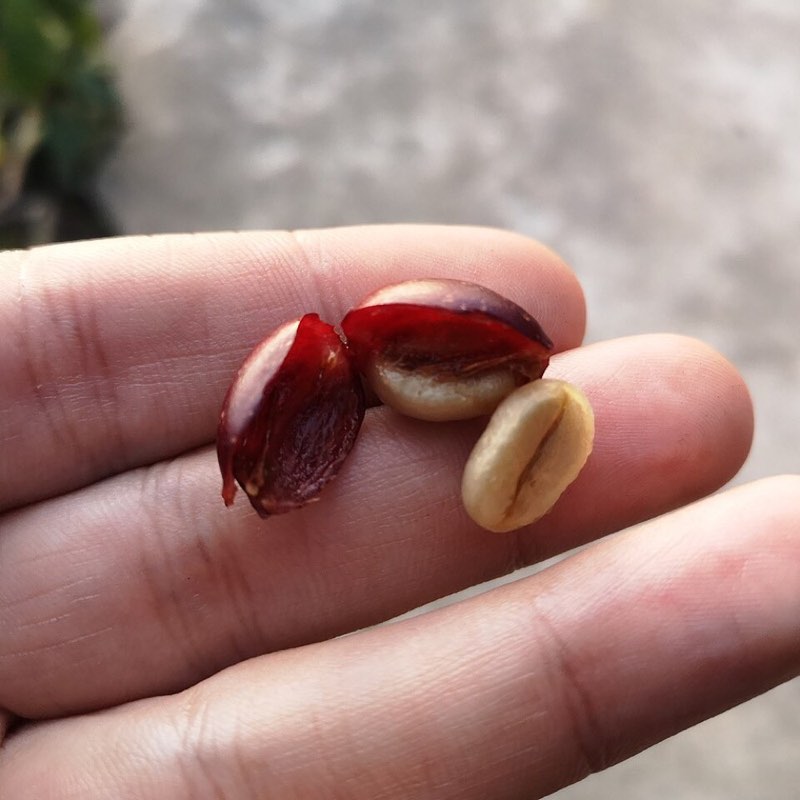
| Cherry | The coffee fruit that holds the seeds |
| Parchment | The papery layer around a washed coffee bean |
| Mucilage | The sticky fruit layer around the seed |
| Peaberry | A single, rounded bean instead of two flat halves |
| Shade-grown | Coffee grown under tree cover. See shade-grown coffee |
| Terroir | How place, soil and climate shape flavour |
| Leaf rust | A fungal disease that damages coffee plants |
| Harvest | Picking ripe cherries. See harvesting methods |
| Crop year | The harvest season of a lot |
| Fly crop | A smaller secondary harvest in some countries |
| Single origin | Coffee from one country, region or farm |
| Estate | A farm that grows and processes its own coffee |
Processing and post-harvest
| Term | Meaning |
|---|---|
| Washed (wet) | Fruit removed with water before drying. See wet processing |
| Natural (dry) | Whole cherries dried, then hulled. See natural processing |
| Honey process | Skin removed, some mucilage left to dry. See honey process |
| Pulped natural | Brazilian name for a honey-style process |
| Wet-hulled | Indonesian method (giling basah) with hulling while the bean is damp |
| Anaerobic | Fermentation in a sealed, oxygen-free tank. See experimental processing |
| Carbonic maceration | Fermentation in a CO₂ environment |
| Fermentation | Microbial breakdown of mucilage |
| Drying | Reducing moisture, often on raised beds or patios |
| Raised bed | A mesh bed that lets air flow under drying coffee |
| Hulling | Removing the parchment or dried fruit |
| Milling | Cleaning, sorting and preparing green coffee for export |
| Polishing | Removing silverskin from the bean |
| Colour sorting | Machine or hand removal of defective beans |
| Green coffee | Unroasted coffee beans. See unroasted coffee |
| Parchment coffee | Coffee still in its parchment layer |
| Moisture content | The water share of green coffee, ideally about 10–12%. See moisture levels |
| Water activity | A measure of free water that affects stability |
| Silverskin | A thin skin on the bean that becomes chaff |
| Decaf | Coffee with caffeine removed. See decaf green coffee |
Grading and quality
| Term | Meaning |
|---|---|
| Screen size | Bean size, measured in 1/64 inch (for example 17/18) |
| Defect | A flawed bean such as black, sour, insect-damaged or broken |
| Grade | A quality class based on size, defects or altitude. See grading standards |
| AA / AB | Kenyan size grades (AA is larger) |
| SHG | Strictly High Grown, from the highest altitudes |
| HG | High Grown |
| EP | European Preparation, a sorted export grade |
| Grade 1 | Top Ethiopian grade, or Indonesia Robusta Grade 1. See Grade 1 vs EK-1 |
| EK-1 | An Indonesian Robusta grade with strict defect limits |
| Specialty coffee | Coffee scoring 80 or more on the SCA scale. See SCA grading |
| Commercial grade | Coffee below specialty level, often used in blends |
| Cupping | A standard tasting method. See cupping guide |
| Cup score | A score out of 100 from cupping. See cupping score sheet |
| Q Grader | A certified coffee quality assessor |
| Aroma | Smell of ground coffee or brewed coffee |
| Acidity | Bright, sharp flavour quality (pleasant in good coffee) |
| Body | Weight or thickness in the mouth |
| Balance | How well flavour parts fit together |
| Clean cup | Free from off-tastes |
| Taint / fault | Mild or strong off-flavour found in cupping |
Roasting terms
| Term | Meaning |
|---|---|
| Roast loss | Weight lost in roasting. See roast loss calculator |
| Charge temperature | The roaster temperature when beans go in |
| Drying phase | Early roast stage when moisture leaves the bean |
| Maillard reaction | Browning reactions that build flavour and colour |
| First crack | Popping sound when the beans expand. See roasting stages |
| Second crack | A second, quieter crackle at darker roast levels |
| Development time | Time from first crack to the end of the roast |
| DTR | Development time ratio, a percentage of total roast time. See DTR |
| Rate of rise (RoR) | How fast bean temperature increases. See rate of rise |
| Bean temperature (BT) | Temperature measured at the bean mass |
| Environmental temperature (ET) | Temperature measured in the roasting drum. See BT vs ET |
| Drop | Removing beans from the roaster |
| Roast profile | A planned temperature and time pathway. See roast profiles |
| Light, medium, dark | Roast levels. See roasting levels |
| Baked | A flat, dull roast defect |
| Scorched | Burn marks from too much heat early |
| Tipped | Dark tips on the bean ends |
| Chaff | Papery skin that comes off during roasting |
| Degassing | Release of CO₂ after roasting. See resting coffee |
| Sample roast | A small roast for cupping. See sample roasting |
Brewing and café terms
| Term | Meaning |
|---|---|
| Dose | Weight of coffee used |
| Yield | Weight of liquid coffee produced |
| Brew ratio | Coffee to water ratio, such as 1:16. See brew ratio calculator |
| Extraction | How much flavour water takes from the coffee |
| Under-extracted | Sour, thin, salty |
| Over-extracted | Bitter, harsh, dry |
| TDS | Total dissolved solids, a measure of strength |
| Grind size | Particle size of ground coffee. See grind size chart |
| Burr grinder | A grinder that crushes beans between two burrs |
| Espresso | Concentrated coffee made under pressure. See espresso at home |
| Crema | The golden foam on an espresso shot |
| Channelling | Uneven water flow in espresso that harms extraction |
| Dialling in | Adjusting grind and recipe to taste good |
| Pour-over | Hand brewing through a filter. See filter brew |
| French press | An immersion brewer with a plunger. See French press guide |
| AeroPress | A pressure brewer. See AeroPress guide |
| Moka pot | Stovetop espresso-style brewer. See moka pot guide |
| Cold brew | Coffee steeped in cold water. See cold brew guide |
| Kopi | Malaysian coffee, traditionally Robusta. See kopi order guide |
| Kopi sock | Cloth filter for traditional kopi. See kopitiam coffee at home |
Buying and trade terms
| Term | Meaning |
|---|---|
| Spec / specification | The written description of the coffee you want. See spec sheet |
| Sample | A small amount of coffee for testing. See sample pack |
| Pre-shipment sample | A sample from the lot that will be shipped |
| Arrival sample | A sample taken when the lot arrives |
| MOQ | Minimum order quantity |
| FOB | Free on board: price includes loading at origin, not ocean freight |
| CIF | Cost, insurance and freight to your port |
| Landed cost | Total cost delivered to your door |
| Differential | Premium or discount over the futures price. See Robusta price |
| Futures price | Market benchmark price for Arabica or Robusta |
| C price | The benchmark Arabica futures price. See Arabica prices |
| Lot | A specific batch of coffee |
| Jute bag | Traditional burlap coffee bag |
| GrainPro | A barrier liner that protects green coffee. See packaging options |
| Container | Shipping container, about 20 ft for coffee. See shipping logistics |
| Traceability | Knowing where a coffee came from |
| Fair Trade / organic | Certification schemes. See certifications |
| HS code | Customs product code. See green coffee HS code |
| Retention sample | A saved sample of each lot for later checks |
| Supplier | The seller of green coffee. See wholesale supplier |
FAQ: Coffee glossary
What does green coffee mean?
Green coffee means unroasted coffee beans.
What is first crack in coffee roasting?
First crack is the popping sound when beans expand, marking the start of development. See roasting stages.
What does extraction mean in coffee?
It is how much flavour and material the water takes from the coffee. Under-extraction tastes sour, over-extraction tastes bitter.
What does FOB mean in coffee?
Free on board: the price covers loading the coffee at the origin port, but not ocean freight or insurance.
What is specialty coffee?
Coffee that scores 80 or more points on the SCA scale. See SCA grading.
What is a roast profile?
A planned pattern of temperature and time used to roast a coffee. See roast profiles.
What is a spec sheet?
A written list of the coffee characteristics you want to buy. Use the spec sheet builder.
Where can I ask a question about green coffee in Malaysia?
Contact Scofi for specs, samples and delivery, depending on availability.
