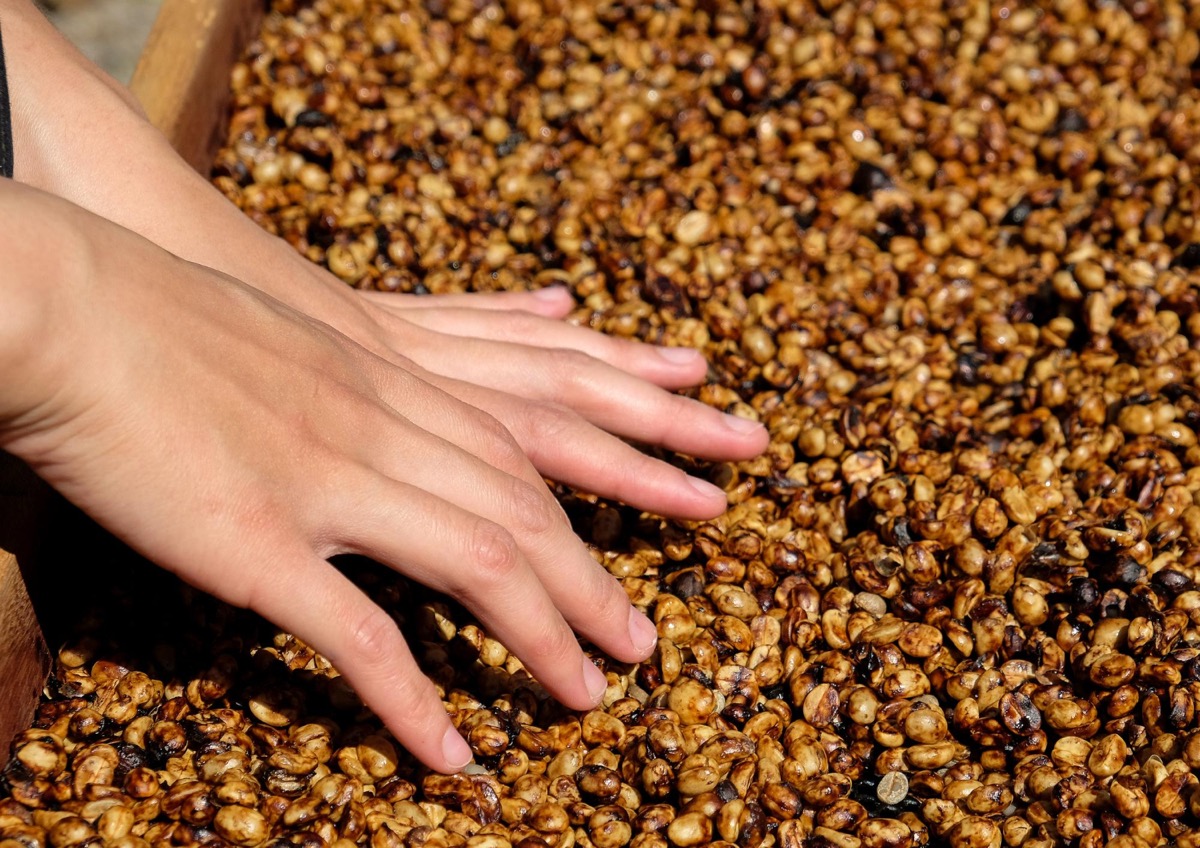
Why honey processing? — the middle path between washed & natural
Honey coffees aim for a balanced expression: more sweetness, texture, and fruit than washed lots, with better cleanliness and predictability than many naturals. By tuning how much mucilage remains and how quickly it dries, mills can steer flavour from citrus-floral clarity to jammy red fruit.
- Sweet & syrupy: Increased residual sugars drive honeyed sweetness and fuller mouthfeel.
- Cleaner than naturals: Less ferment risk than full cherry drying when QC is strong.
- Water efficient: Lower water use than classic washed; good fit for dry seasons.
Honey styles — yellow, Red & black explained
Colour names are shorthand for mucilage amount and drying pace. They are not strict standards, but they help predict cup direction:
| Style | Typical Approach | Expected Cup Direction |
|---|---|---|
| Yellow Honey | Less mucilage; faster drying; frequent turning; more airflow. | Clean, bright, citrus/stone fruit; lighter body. |
| Red Honey | Moderate mucilage; moderate drying speed; careful shade use. | Riper fruit, caramel sweetness, rounder texture. |
| Black Honey | High mucilage; slow drying; heavy shade; minimal movement. | Dense sweetness, berry/tropical hints, bigger body; higher defect risk if QC slips. |
Honey process — the step-by-step workflow
Top honey programmes start with ripe-only picking and strict sanitation. The following control points shape flavour and risk:
| Stage | Key Actions | Cup Impact |
|---|---|---|
| Sorting | Floatation and hand/optical sorting; remove under/overripe fruit. | Reduces astringency and ferment faults. |
| Depulping | Skin removal; set pulper pressure to avoid parchment damage. | Controls mucilage retention and uniformity. |
| Mucilage Target | Define % mucilage left (style goal). No tank fermentation for classic honey. | More mucilage → more sweetness/body; slower drying needed. |
| Drying | Beds/patios; layer 2–4 cm; shade nets; turning schedule by style. | Even moisture loss preserves clean fruit and limits defects. |
| Conditioning & Milling | Rest in parchment; hull, size/density, colour sort; hand pick. | Uniform roast/extraction; fewer quakers. |
Risk map — where honey lots fail
With mucilage on the seed, honey coffees can drift toward over-ferment, phenolic, or mouldy notes if drying is uneven or too slow. Thick layers trap heat and humidity; dirty patios seed off-notes. Well-run programmes maintain thin layers, shade/rain covers, airflow, and rigorous sorting before bagging at ~10–12% moisture.
Over-Ferment
Keep layers thin; manage shade; don’t stack wet parchment.
Mould/Earthy
Sanitise patios/rakes; cover in rain; ensure nighttime airflow.
Phenolic/Rubber
Avoid smoke/diesel; remove damaged seeds; steady drying pace.
Where honey processing thrives — regional snapshots
The honey method is closely associated with Costa Rica and neighbouring Central American origins, but it is now used worldwide where dry seasons allow careful patio/bed control.
| Region/Country | Usage | Typical Cup Direction |
|---|---|---|
| Costa Rica | Pioneers of yellow/red/black honey programmes | Citrus to jammy red fruit; cane sweetness; clean finish |
| El Salvador | Estate honey with shade-managed slow drying | Caramel, stone fruit, rounded body |
| Guatemala | Selective honey in dry belts | Apple/citrus, floral, balanced texture |
| Nicaragua | Honey as water-saving alternative | Brown sugar, cocoa, red fruit |
| Brazil | Pulped-natural (Brazil-style honey) | Chocolate/nut base with gentle fruit lift |
Taste & brewing — how honey coffees show up in the cup
Expect sweet, syrupy notes with clean fruit and a smoother mouthfeel than typical washed lots. Yellow honeys lean toward citrus/stone fruit with crisp finishes; red/black honeys tilt to berry, panela, molasses, and deeper texture. For filter, use gentle agitation and target balanced extraction; for espresso, coarsen slightly and moderate yield to avoid heaviness.
Filter baseline
1:16–1:16.5, 92–95 °C, medium grind; pulse pours; protect clarity.
Espresso baseline
~18 g → 38–44 g in 27–32 s; slightly coarser to keep sweetness bright.
Milk guidance
Shines in small/medium milk ratios where caramel/fruit notes carry.
Buying honey lots — reading offer sheets & managing risk
Look for ripe-only picking, style (yellow/red/black), turning schedule, shade/rain protocol, average drying days, and arrival moisture. Ask whether eco-pulpers were used (less water) and how sanitation is maintained. For feature menus, target honey programmes with documented drying control; for blends, pulped-natural Brazils can add sweetness and crema without overpowering chocolate bases.
Spec snapshot — evaluating honey process lots
| Parameter | Target | Why It Matters |
|---|---|---|
| Style | Yellow/Red/Black defined with method notes | Predicts flavour/body and risk profile |
| Layering | 2–4 cm; consistent turning | Even drying; fewer defects |
| Shade/Covers | Shade nets; rain covers ready | Controls heat/re-wetting |
| Moisture | ≈10–12% | Roast stability; shelf life in humid climates |
How Scofi helps — cup-verified honey coffees from Malaysia stock
As Scofi (Soo Hup Seng Trading Co Sdn Bhd), we match your flavour targets to honey lots in local Malaysia inventory. We re-check moisture/screen/cup on arrival, keep retention samples, and provide roast/brew baselines so your team moves from sample to launch smoothly.
- Traceable proposals with style, drying control, and QC notes.
- Packaging guidance (GrainPro/vacuum) to protect sweetness and aromatics.
- Launch planning aligned to harvest calendars and café promotions.
FAQ: Honey (Pulped-Natural) Coffee Processing
1) What makes a coffee “honey processed”?
The cherry skin is removed but the mucilage remains on the parchment during drying; no full washing or tank fermentation in classic honey.
2) How do yellow, red, and black honey differ?
They indicate mucilage amount and drying pace: yellow (lighter/faster), red (moderate), black (heavier/slower). Expect increasing sweetness/body from yellow → black.
3) Are honey coffees risky like naturals?
Less risky than full naturals but still sensitive to drying control. Thin layers, shade management, and sanitation are essential.
4) Do mills ever ferment honey coffees?
Classic honey avoids tank fermentation. Some producers experiment with short rests or cultured yeasts, but that’s a variant—ask for method notes.
5) What water savings are typical?
Significantly less water than washed since there’s no extended washing/soaking; exact savings depend on pulper type and sanitation routines.
6) How should I roast honey coffees?
Protect the charge, steady Maillard, avoid scorching. Finish light–medium for filter clarity; add a touch of development for syrupy espresso.
7) Do honey coffees work in milk drinks?
Yes. Red/black honeys pair well with milk thanks to deeper sweetness and body; keep ratios modest to preserve fruit notes.
8) What should I check on an offer sheet?
Style (yellow/red/black), turning schedule, layer thickness, shade/rain protocol, drying days, and arrival moisture (~10–12%).
9) Are honey coffees age-sensitive?
All coffees fade over time. Honey lots hold up well when dried/packed correctly (e.g., GrainPro/vacuum) and stored cool/dry.
10) Can Scofi supply honey lots now?
Yes—tell us your flavour targets and volume. We’ll shortlist honey lots from Malaysia stock, send samples, and arrange delivery or pickup.
