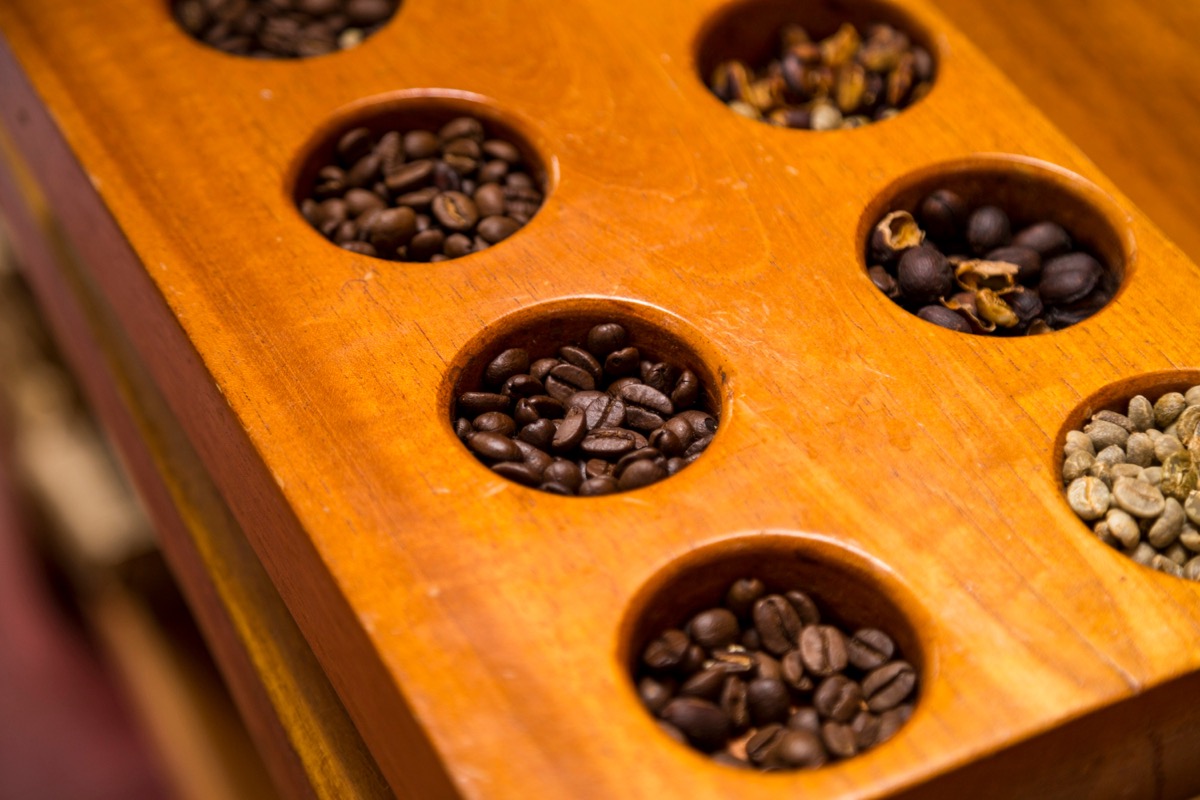
What SCA (SCAA) grading means
The Specialty Coffee Association’s system is a standardised blind tasting that assigns calibrated scores to core attributes. Coffees that reach 80.00+ on the 100-point scale are recognised as “specialty.” Above 84 are typically solid single-origins; 86–88 signal notable distinctiveness; 90+ are rare showcase lots. Scores are not marketing hype—they are the shared language that roasters, importers, and baristas use to compare quality across origins, processing styles, and harvests.
Scoring framework — from attributes to 80+
The SCA form evaluates positive attributes on a 6.00–10.00 band (to hundredths), sums them, and subtracts penalties for defects. Uniformity, Clean Cup, and Sweetness are checkbox-based multipliers (typically five cups per sample). Here’s how the math usually works at the table:
| Category | Description | Scoring Notes |
|---|---|---|
| Fragrance/Aroma | Dry grounds and wet crust/break aromatics | Intensity & quality; note florals, fruit, cocoa, spice |
| Flavour | Integrated perception of taste + retro-nasal aroma | Complexity, distinctiveness, and cleanliness |
| Aftertaste | Length and pleasantness after swallowing | Look for clean, sweet persistence |
| Acidity | Quality (not just intensity) of brightness | Citric, malic, tartaric; integration with sweetness |
| Body | Tactile weight/texture | Silky to syrupy; absence of roughness/astringency |
| Balance | How well attributes fit together | Harmony of acidity, body, and flavour |
| Uniformity | Cup-to-cup consistency across bowls | Five cups; each non-defective cup adds points |
| Clean Cup | Absence of taints/defects in each cup | Five cups; cleanliness rewarded per cup |
| Sweetness | Perception of pleasant sugars | Five cups; baseline sweetness boosts total |
| Overall | Trained panelist’s holistic impression | Captures excellence not isolated elsewhere |
| Defects | Quakers, phenolic, mould, ferment faults | Subtracts from total; Primary vs Secondary |
Category deep dive — aroma, acidity, balance
Three categories often shape buying decisions for cafés: Fragrance/Aroma drives first impression and differentiation; Acidity gives structure and liveliness; Balance predicts how well the cup performs across brew methods and milk ratios. Below are practical cues we use at Scofi when shortlisting lots for Malaysian programmes.
- Aroma: Look for clarity and specificity: jasmine/bergamot (washed Ethiopia), cocoa/caramel (Brazil pulped-natural), red berry/tropical (clean naturals). Vague or “flat” aromatics usually track to lower flavour scores.
- Acidity: Quality > intensity. A lively but integrated citric/malic profile reads sweet and refreshing; sharp, sour acidity drags “Balance” down even if the “Acidity” number is high.
- Balance: Harmony of sweetness, acidity, and body. Balanced coffees are easier to roast and dial in, reducing waste on busy bars and stabilising flavour for regulars.
Uniformity, clean cup & defects — protecting the score
Specialty status depends on cleanliness. A coffee with beautiful aromatics can fall below 80 if cups show phenolic, mouldy, or intense over-ferment notes. We separate defect risk into green grading and post-harvest handling, then verify again on arrival in Malaysia.
| Type | Examples | Impact |
|---|---|---|
| Primary | Full black, full sour, fungal/mould, severe insect damage | Strong negative; can disqualify from specialty |
| Secondary | Broken/chipped, partial black/sour, shells | Moderate deduction; may be acceptable within spec |
| Process Faults | Phenolic, potato (certain regions), dirty naturals | Clean Cup/Uniformity losses; penalties scale with frequency |
From sample to approval — a reproducible cupping workflow
Consistency wins more than “perfect.” Adopt a simple protocol your production team can repeat weekly. Our baseline (adapt per lab):
- Grind size: cupping grind targeting 800–1000 μm; 8.25 g per 150 ml cup.
- Water: 93–94 °C, low mineral variance week-to-week; rinse bowls/spoons.
- Break at 4:00; evaluate fragrance/aroma dry, crust, and break.
- Slurp at 8–12 minutes as temperature drops; score in ranges, then refine.
- Mark outliers; re-taste cups with suspected faults.
- Record green metrics: moisture, density, screen, defects; attach roast log.
- Decide fit-for-purpose: filter feature vs house blend role vs iced signature.
- Confirm with a small production roast and bar test (espresso + milk ratio).
Spec checklist for buyers (Malaysia)
- SCA score sheet (panel, date) + descriptor notes
- Origin/region, elevation, variety, process, station/mill traceability
- Green metrics: moisture (~10–12%), density, screen, defect counts
- Drying method and rain logs (for naturals/honey)
- Packaging: jute vs GrainPro-lined vs vacuum
- Arrival QC data in Malaysia and retention sample policy
Go deeper with our related guides: Farming Methods, Climate Requirements, Altitude Impact, Filter-Brew Arabica, Espresso Arabica.
FAQ: SCA (SCAA) Grading
What does 80+ actually guarantee?
It signals specialty quality under SCA protocol—cleanliness, identifiable positive attributes, and acceptable uniformity. It does not guarantee your preferred flavour; always read notes and cup yourself.
Is 86 “twice as good” as 83?
No. The scale isn’t linear in experience. Each extra point reflects increasingly difficult improvements in clarity, intensity, or distinctiveness.
Why do different labs get different scores?
Calibration, water, roast approach, and environmental controls vary. Use the same protocol, panel, and water to compare like-for-like.
Are naturals penalised?
Clean naturals score well. They can be at higher risk for ferment faults; solid drying practices maintain “Clean Cup” and “Uniformity.”
How do I read “Acidity” on the form?
Quality is key—look for sweet, integrated citric/malic/tartaric character. High intensity without sweetness may still reduce “Balance.”
What is “Overall” supposed to capture?
The panelist’s holistic judgment. It can elevate a coffee that feels complete or restrain a technically fine but emotionally flat cup.
Do defects always remove specialty status?
Not automatically. But frequent primary defects or repeated cup faults will reduce totals below 80. Track frequency across the five cups.
Can I use SCA scores to price my menu?
They help justify tiers but don’t replace guest preference. Pair scores with compelling stories, brew execution, and service.
What should I request from suppliers with the score?
Score sheet, descriptors, roast plan used in cupping, green metrics (moisture/density/screen/defects), and arrival QC at your destination.
How does Scofi apply SCA grading?
We shortlist by score + cleanliness + purpose fit, then re-cup on arrival in Malaysia and hold retention samples so you can validate before committing volume.
