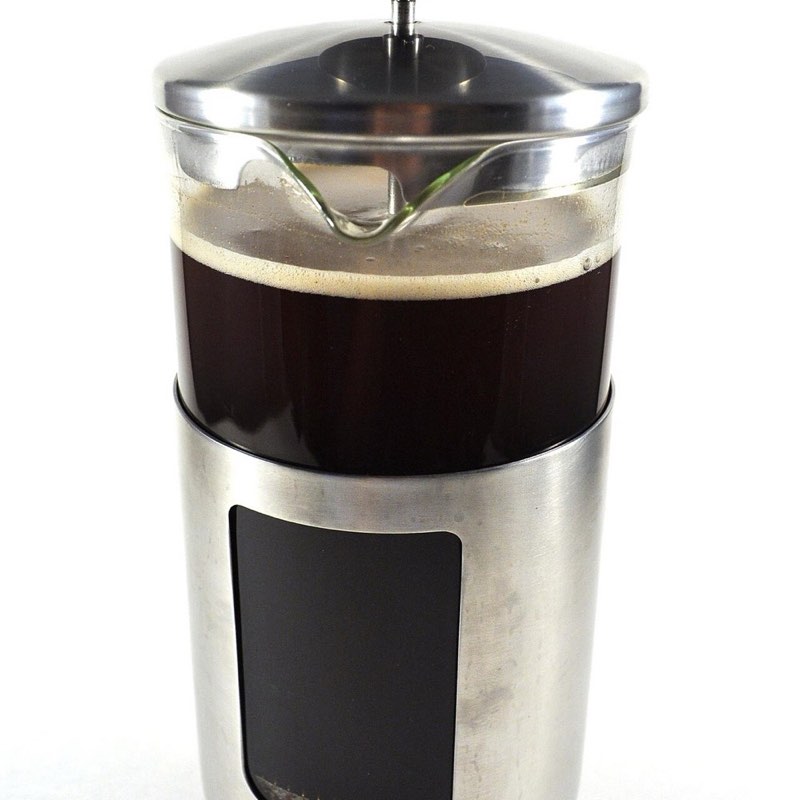
What is a French press?
A French press (also called a cafetière or coffee plunger) is an immersion brewer: coffee and hot water sit together in a glass or steel beaker, then a metal mesh filter is pressed down to separate the grounds. Because the mesh lets natural oils and some fine particles through, the cup is full-bodied and rich, with less clarity than paper-filtered coffee. See filter brew Arabica for paper-filter methods.
Best beans and roast for French press
Medium to medium-dark roasts suit French press well, because the body and chocolate, nut and caramel notes shine and the lower clarity does not hide them. Light roasts can taste thin or sour in immersion if the extraction is short. A little Robusta in the blend adds body, though quality matters. See roasting levels, light vs dark roast and Sumatra Arabica, which suits French press with its heavy body.
Grind size, ratio and water
| Variable | Starting point | If bitter or muddy | If weak or sour |
|---|---|---|---|
| Grind | Coarse, like coarse sea salt | Go coarser | Go slightly finer |
| Ratio | About 1:15 (30 g coffee to 450 ml water) | Use less coffee | Use more coffee |
| Water temperature | About 92–96 °C | Slightly cooler | Slightly hotter |
| Steep time | About 4 minutes | Shorten | Lengthen |
| Plunge | Slow, steady | Do not push hard | n/a |
Weigh coffee and water for repeatable results.
Step-by-step method
- 1. Warm the press with hot water, then discard it.
- 2. Add the coarse grounds and pour in about twice the weight of water to wet them; wait 30 seconds (the bloom).
- 3. Pour the rest of the water and place the lid on with the plunger raised.
- 4. Steep for about four minutes.
- 5. Stir gently, skim any foam if you like, then press the plunger down slowly.
- 6. Pour out all the coffee straight away. Leaving it on the grounds keeps extracting and turns bitter.
Follow the maker’s safety guidance, especially with hot water and glass.
Fixing common French press problems
| Problem | Likely cause | Fix |
|---|---|---|
| Bitter, harsh | Grind too fine, steeped too long, water too hot, left on grounds | Coarser grind, shorter steep, pour out at once |
| Sour or thin | Grind too coarse, steep too short, water too cool | Slightly finer, longer steep |
| Muddy, silty | Grind too fine or uneven; pressed hard | Coarser, even grind; press gently |
| Weak | Too little coffee | Use 1:15 or less water |
| Flat | Stale coffee | Use freshly roasted coffee. See resting roasted coffee |
French press vs other immersion and filter methods
Using French press in a café or roastery
French press suits tables and tasting flights: it is easy to train and forgiving. For batch brew or service volume, other methods may be faster. Keep your recipe on a card, use a timer and weigh the coffee. See how to choose a house blend and buy green coffee beans online. Scofi supplies green Arabica and Robusta from Butterworth, Penang, depending on availability.
FAQ: French press coffee
What grind size is best for French press?
Coarse, like coarse sea salt.
How long should I steep French press coffee?
About four minutes, adjusted to taste.
What ratio should I use?
About 1:15 coffee to water by weight.
What is the best roast for French press?
Medium to medium-dark.
Why is my French press coffee bitter?
Usually too fine a grind, too long a steep or leaving it on the grounds after pressing.
Why is my French press coffee muddy?
The grind is too fine or uneven, or the plunger was pushed too fast.
Is French press stronger than drip?
It tastes fuller-bodied because the filter lets oils through, but strength depends on ratio.
Where can I buy beans for French press?
Scofi supplies green coffee to roasters; contact us at our contact page.
