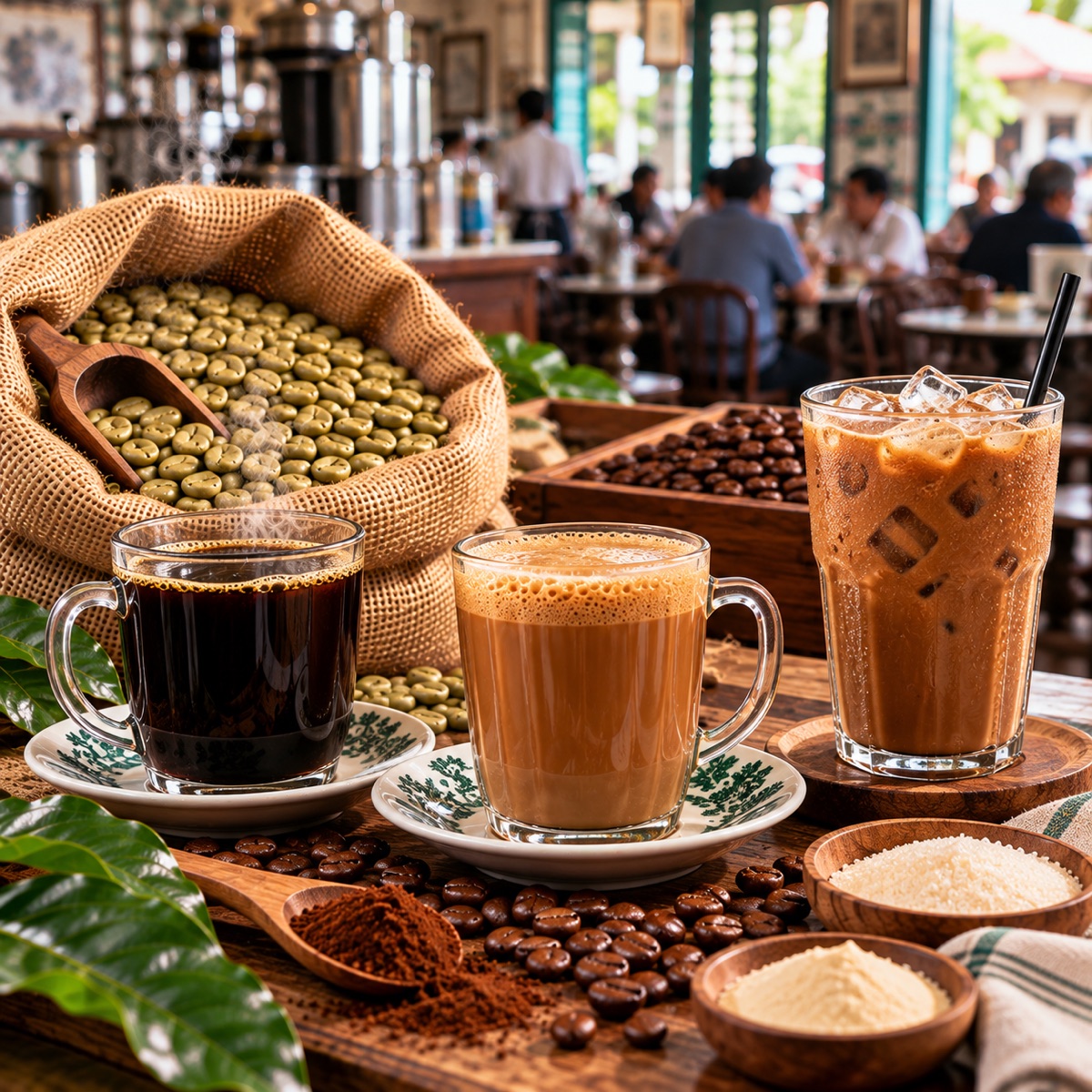
What is kopi?
“Kopi” is the local word for coffee in Malaysia and Singapore. In a traditional coffee shop, a drink is ordered with a short code that says how it is made. Knowing the codes helps customers order, and helps shop owners understand how recipes are built. Spellings (kopi, kopi-o) and exact recipes vary by region, community and shop, so treat this guide as a general reference.
Common kopi names and what they mean
| Name | What it means |
|---|---|
| Kopi | Coffee with sugar and condensed milk (shop default varies) |
| Kopi O | Black coffee with sugar |
| Kopi O Kosong | Black coffee with no sugar |
| Kopi C | Coffee with evaporated milk and sugar |
| Kopi Peng | Iced kopi, usually with milk and sugar |
| Kopi O Peng | Iced black coffee with sugar |
| Kopi Siew Dai | Less sugar |
| Kopi Gah Dai | Extra sugar |
| Kopi Gau | Thicker or stronger coffee |
| Kopi Po | Thinner, lighter coffee |
Many shops also use Hokkien, Cantonese or Malay terms, so ask if unsure.
What the cup is built from
A traditional kopi has three main parts: strong coffee, sweetener and milk. Condensed milk adds sweetness and body, evaporated milk adds creaminess with less sweetness, and black kopi relies on the coffee and sugar alone. Because milk and sugar are strong flavours, the coffee must be bold enough to stay noticeable. See kopitiam coffee.
What beans and roast sit behind each style
Traditional kopi is usually Robusta-led and dark-roasted, brewed strong. Iced kopi needs even more intensity, because ice dilutes the cup. Black kopi (Kopi O) shows the coffee most clearly, so it benefits from clean, well-roasted beans. See Hainanese-style kopi, how to roast Robusta and roasting levels.
| Drink | What matters most in the beans |
|---|---|
| Kopi O (black) | Clean, bold coffee with no harshness |
| Kopi C (evaporated milk) | Body and roasted depth that survive creamy milk |
| Kopi (condensed milk) | Strength to balance sweetness |
| Kopi Peng (iced) | High intensity so the drink stays bold after ice melts |
For a lighter, smoother alternative, see Ipoh white coffee.
Caffeine and strength
“Strong” in kopi usually describes taste and thickness. Caffeine depends on the beans (Robusta is generally higher than Arabica), the dose and the serving size. See caffeine content and does roast level change caffeine. This is general information, not medical advice.
Tips for coffee shop owners
- Keep a clear menu key explaining each term.
- Standardise dose, water and brew time so each cup tastes the same.
- Test iced drinks separately, because dilution changes the cup.
- Keep a reference sample of your blend and re-check each delivery.
See Robusta for Malaysian coffee shops and best practices for roasters.
FAQ: Kopi order terms
What is Kopi O?
Black coffee with sugar.
What is Kopi C?
Coffee with evaporated milk and sugar.
What does Kopi Peng mean?
Iced kopi.
What is Kopi Kosong?
Coffee with no sugar.
What is Kopi Siew Dai?
Coffee with less sugar.
What is Kopi Gau?
Thicker or stronger coffee.
Do all shops use the same terms?
No. Terms and recipes vary by region, community and shop.
What beans are in kopi?
Usually Robusta-led blends, roasted dark. See kopitiam coffee.
