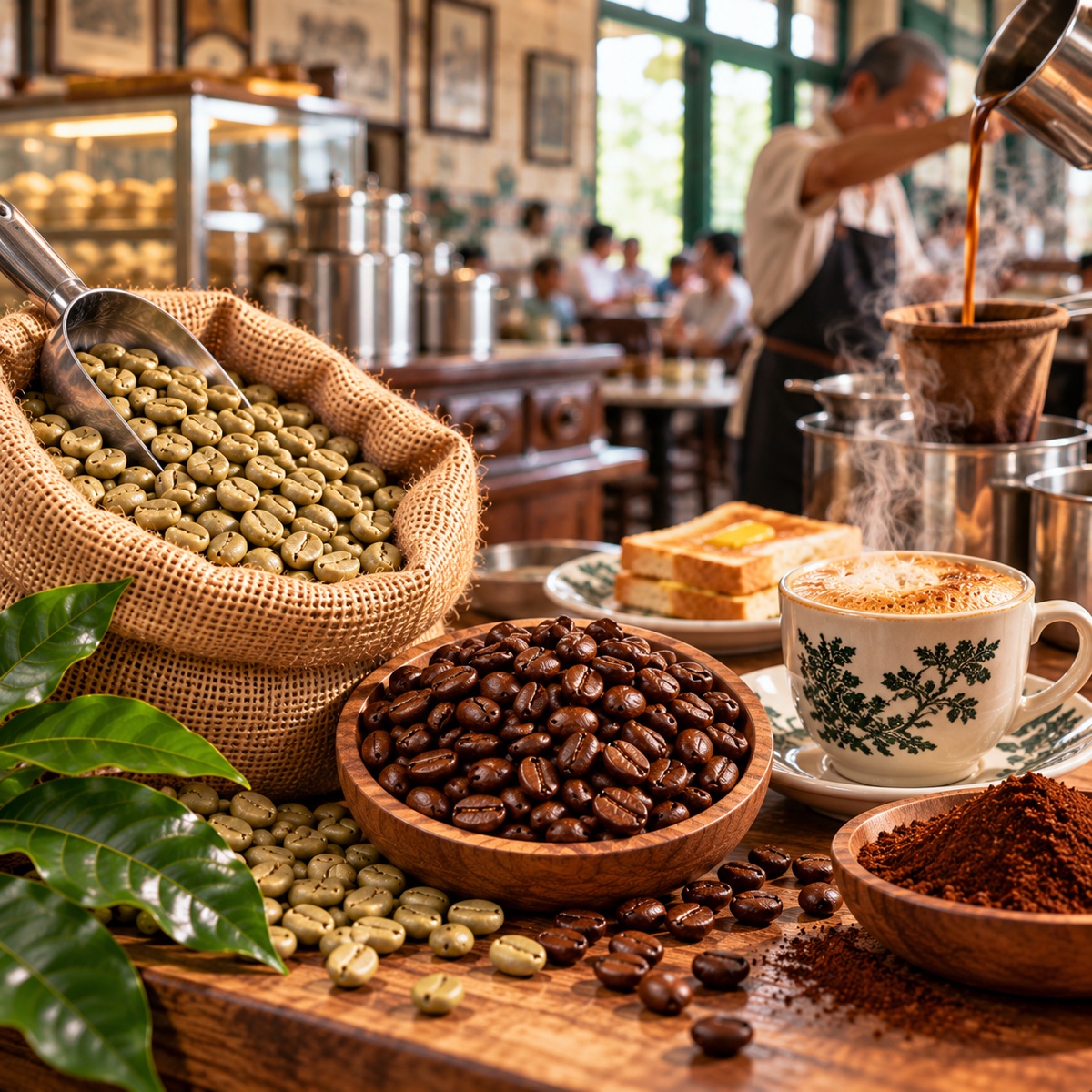
Where Hainanese kopi comes from
Many of Malaysia’s and Singapore’s traditional coffee shops were started by migrants from Hainan, a Chinese island, who ran kopitiams from the early twentieth century. Their style of strong, sweet, milky coffee, often brewed through a cloth filter, became part of local identity. Recipes vary by shop and family, and many are closely guarded. For the wider culture, see Malaysia coffee culture and kopitiam coffee.
What defines Hainanese-style kopi
- Strong and dark: a concentrated brew, typically from dark-roasted beans.
- Robusta-led blends: Robusta gives body and bitterness; some blends add Arabica for aroma.
- Cloth filter brewing: a long, heavy extraction that gives a thick, rich cup.
- Served sweet and milky: with sugar and condensed or evaporated milk. See the kopi order guide.
The “Hainanese” label is often used loosely, so styles differ. Treat it as a flavour direction (bold, roasty, sweet-balanced), not a strict standard.
How traditional kopi beans are roasted
Traditional kopi roasting usually goes dark, to develop a bold, bittersweet cup. Some traditional roasters add sugar or fat during roasting, which changes flavour and caramelises on the bean, and practices vary by roaster. If you add anything during roasting, check labelling and food-safety rules with the relevant authorities. Roasting dark increases the risk of scorching and harsh bitterness, so control heat and airflow. See how to roast Robusta, roasting levels and roast defects 101.
Choosing green beans for kopi
| Bean | Why roasters choose it | Watch out for |
|---|---|---|
| Indonesia Robusta | Cocoa, spice, heavy body; familiar bold taste | Variable defects; buy on spec. See Indonesia Robusta |
| Vietnam Robusta | Dark chocolate, nutty, malt | Check grade and moisture. See Vietnam Robusta |
| Robusta with Arabica | Adds roundness and aroma | Blend carefully. See pre-roast vs post-roast blending |
Compare origins in Indonesia vs Vietnam Robusta.
Brewing and serving notes
Cloth-filter (“sock”) brewing uses hot water and a long contact time, so grind size, dose and water temperature matter. Keep cloth filters clean and replace them regularly. Customers expect the same cup every time, so measure doses and keep records.
Sourcing kopi beans with Scofi
Scofi supplies unroasted Robusta and Arabica for Malaysian roasters and coffee shops, depending on availability, with samples, specs and delivery. See wholesale supplier, how to buy and Scofi Malaysia supplier.
FAQ: Hainanese coffee beans
What is Hainanese coffee?
A traditional strong, sweet, milky coffee style from kopitiams started by Hainanese migrants.
What beans are used for Hainanese kopi?
Mostly Robusta-led blends, sometimes with Arabica.
Is Hainanese kopi dark roast?
Typically dark, to give a bold, bittersweet flavour.
Why a cloth filter?
It gives a long, rich extraction and a thick body, and is part of the tradition.
Do roasters add sugar or margarine?
Some traditional roasters do. Practices vary, and rules on labelling apply.
Which Robusta is best for kopi?
Clean, well-graded Indonesian or Vietnamese Robusta, chosen by cup test.
Can I blend Arabica into kopi?
Yes, a small share can add aroma and roundness.
Can Scofi supply kopi-style Robusta?
Depending on availability, yes. Contact us.
