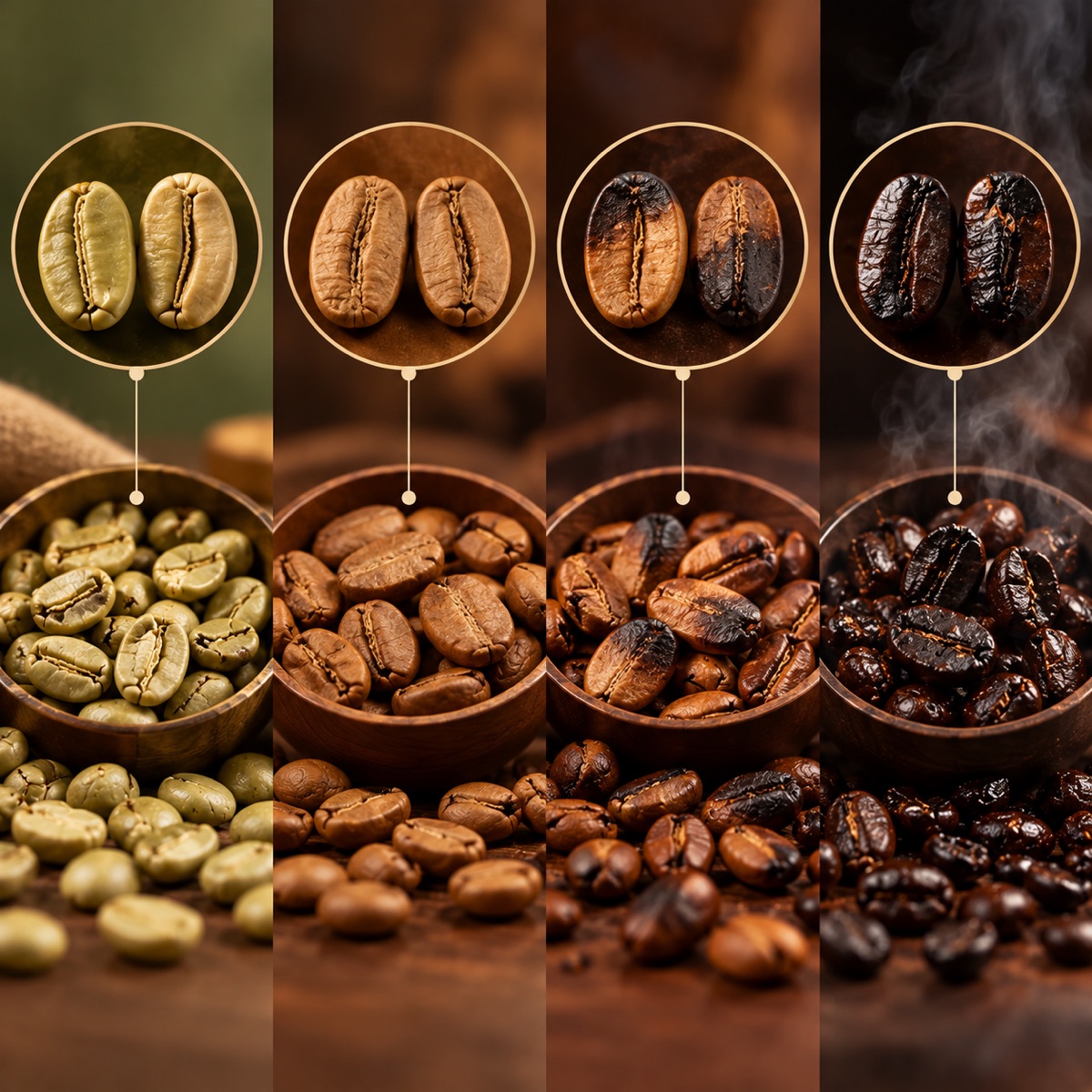
Roast defects vs green bean defects
Roast defects come from the roasting process, while green defects such as black, sour or insect-damaged beans come from the farm and mill. Both change the cup, so diagnose carefully. See defect detection for green coffee, and moisture levels because very wet or dry beans roast differently.
Baked coffee
Baked coffee tastes flat, bready, papery and lacks sweetness and acidity. It usually happens when the rate of rise stalls or the roast runs too long without enough energy.
- Signs: dull colour, flat aroma, little sweetness.
- Causes: stalled or very low rate of rise, too long a Maillard or development phase, too little heat after first crack.
- Fix: keep the rate of rise gently declining, add energy earlier, shorten the roast. See rate of rise.
Scorched coffee
Scorched beans are burnt on the surface, tasting acrid, smoky or ashy even in a light roast.
- Signs: dark spots or patches, burnt smell.
- Causes: charge temperature too high, too much early energy, too small a batch for the drum, beans stuck or poor drum speed.
- Fix: lower the charge temperature or early heat, check batch size and drum speed, and keep airflow even. See how to roast green coffee.
Tipped coffee
Tipping shows as dark or burnt ends on the beans, with a harsh taste.
- Signs: dark tips on otherwise lighter beans.
- Causes: excessive heat applied too early or in a rush through first crack.
- Fix: soften the heat approach, especially in drying and early Maillard, and keep development controlled. See first to second crack.
Underdeveloped coffee
Underdeveloped coffee tastes sour, grassy, nutty-raw or astringent with a harsh finish.
- Signs: pale colour, uneven roast, grassy smell, a short development time.
- Causes: the roast was dropped too early, or heat was applied so fast that the outside coloured before the inside developed.
- Fix: extend development slightly, and slow early heat so the beans roast evenly. See development time ratio.
Other common faults
- Roasty or flat: over-developed or too dark for the bean.
- Uneven roast: inconsistent bean size or density, or poor drum agitation.
- Smoky off-notes: smoke trapped by weak airflow or dirty exhaust.
- Chaff buildup: a fire and quality risk; clean regularly and follow your roaster’s safety guidance.
Process-specific advice: natural, honey, anaerobic, wet-hulled and decaf.
Quick diagnosis table
| Defect | Taste | Likely cause | First thing to try |
|---|---|---|---|
| Baked | Flat, bready, papery | Stalled rate of rise | Add energy earlier |
| Scorched | Acrid, smoky, ashy | Charge too hot, early heat too high | Lower charge or early heat |
| Tipped | Harsh, burnt edges | Heat rush near first crack | Soften heat approach |
| Underdeveloped | Sour, grassy | Dropped too early | Extend development a little |
How to troubleshoot systematically
- Cup first: confirm the fault with a fair tasting. See cupping guide.
- Check the green coffee: moisture and density can cause problems. See density and moisture.
- Review the log: look at the turning point, rate of rise, first crack and development time.
- Change one variable and roast again.
- Keep a reference sample for comparison.
Read the full roast profiles guide and the roasting guide.
FAQ: Roast defects
What does baked coffee taste like?
Flat, bready or papery, with little sweetness or acidity.
What causes tipping and scorching?
Too much heat too early, or too high a charge temperature for the batch.
How do I know if my coffee is underdeveloped?
It tastes sour, grassy and astringent and often looks pale and uneven.
Can green coffee cause roast defects?
Sometimes. Wet, dry or low-density beans react differently. See moisture levels.
Is a light roast always sour?
No. A well-developed light roast should be sweet and bright, not sharp.
How do I fix a baked roast?
Keep the rate of rise moving and avoid long, stalled phases.
How many variables should I change at once?
One at a time, so you know what caused the improvement.
Where can I get consistent green coffee to roast?
Scofi supplies green Arabica and Robusta with spec sheets and samples. See how to buy.
