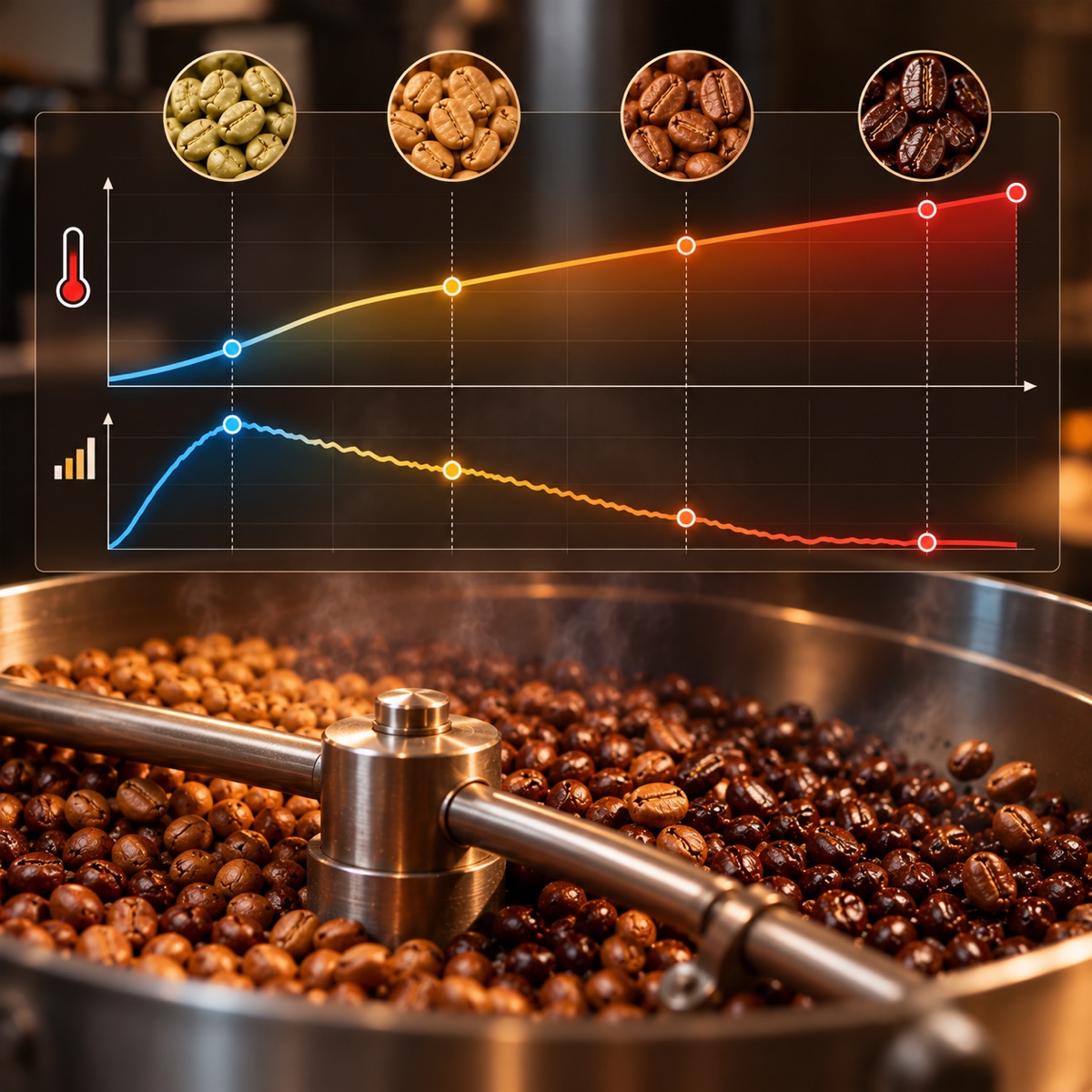
What is rate of rise?
RoR is the change in bean temperature over time, typically shown as degrees per minute on a second curve. It reflects how much energy the beans are absorbing. Because it is calculated from bean temperature, RoR is sensitive to probe noise, so many roasters smooth it over a short window. See bean temperature vs environmental temperature.
The ideal shape: a smooth decline
In most roasts, RoR starts high after the turning point and declines steadily through Maillard browning and development. A gentle, continuous decline usually gives sweetness and clarity. The actual numbers depend on your roaster, batch size and bean, so judge the shape more than absolute values. See roast profiles explained.
Crash: when RoR falls too fast
A crash is a sudden drop in RoR, often near first crack, when heat is cut too hard or the beans lose energy. It usually leads to baked, flat, bready coffee with little sweetness.
- Causes: reducing heat too much or too suddenly, or heat input that cannot keep up with the beans.
- Fix: ease heat down gradually and keep a gentle decline through first crack. See roast defects 101.
Flick: when RoR rises again
A flick is a sudden rise in RoR after the curve has been falling, often caused by adding heat or airflow late in the roast. It can produce harsh, roasty or scorched notes.
- Causes: too much late energy, or the exothermic phase of first crack combined with extra heat.
- Fix: hold energy steady or reduce it slightly before first crack, and avoid last-minute heat. See the first to second crack guide.
| Fault | Looks like | Tastes like | Usual cause |
|---|---|---|---|
| Crash | RoR drops sharply | Baked, flat | Heat cut too hard |
| Flick | RoR rises late | Harsh, roasty | Extra energy late |
How to control RoR
- Plan your heat changes before first crack, not during it.
- Make small adjustments to gas, power and airflow.
- Use consistent batch sizes and preheat. See how to roast green coffee.
- Match energy to the bean: denser beans take more energy; see density and moisture.
- Compare logs and change one variable at a time.
RoR and roast style
Light, filter-style roasts often use a gentler decline with careful development; espresso roasts may carry slightly more energy through development. The goal is the same: avoid a stall or flick. See espresso roast vs filter roast and development time ratio.
FAQ: Rate of rise
What is a good RoR in roasting?
There is no universal number. Aim for a smooth, steadily declining curve suited to your roaster and bean.
What does an RoR crash mean?
A sudden drop in rate of rise, commonly leading to baked, flat coffee.
What is an RoR flick?
A sudden rise late in the roast, often leading to harsh, roasty flavours.
Why does RoR matter?
It shows how smoothly heat is going into the beans, which affects sweetness and clarity.
Is RoR the same as temperature?
No. RoR is how fast temperature changes; it is calculated from bean temperature.
How do I smooth a noisy RoR curve?
Use a short smoothing window in your roasting software and a well-placed probe.
Can I roast without RoR?
Yes, but RoR makes profiles easier to repeat and troubleshoot.
Does RoR change with bean type?
Yes. Density, moisture and processing change how beans take heat. See roast profiles explained.
