Why green coffee properties matter
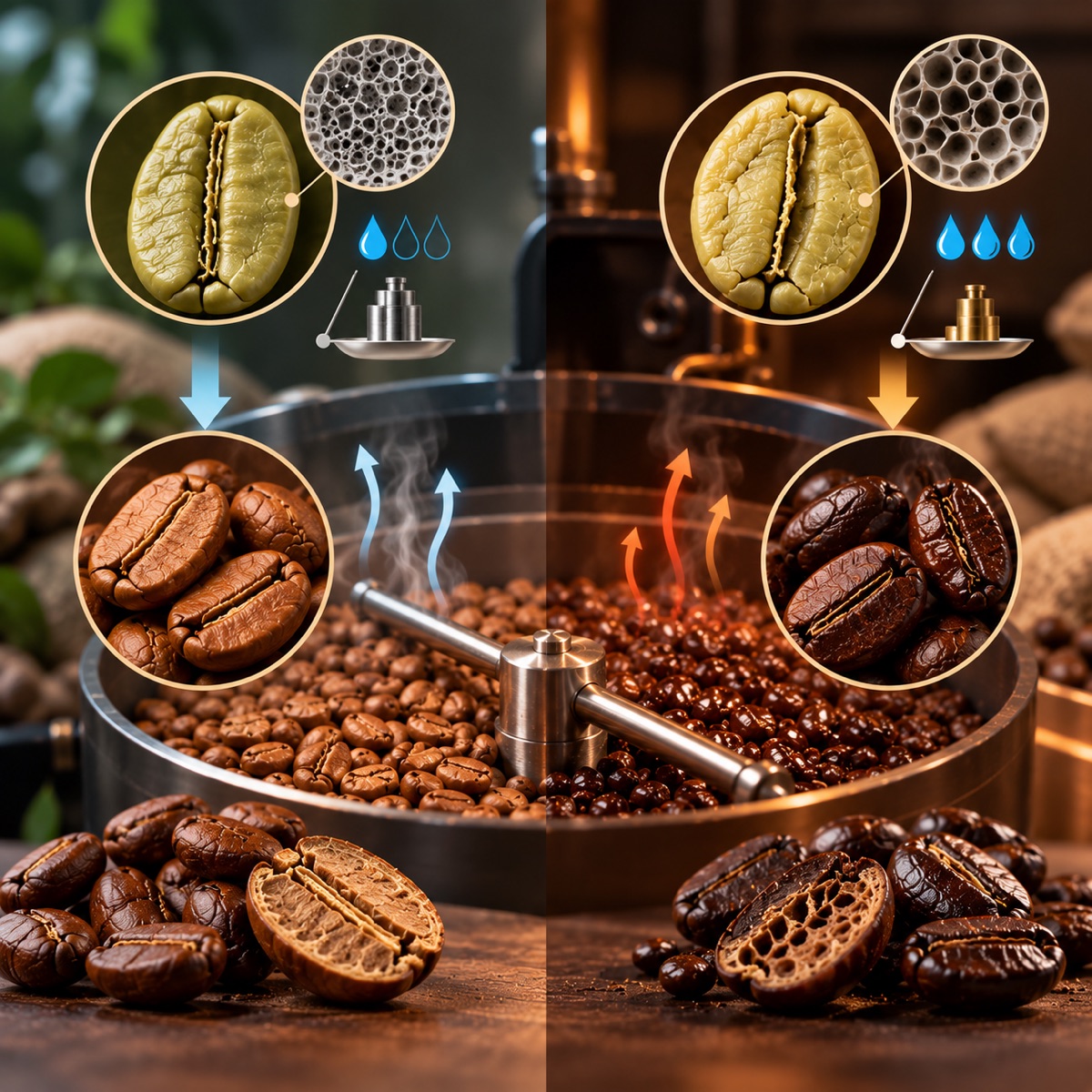
A roast profile is not a fixed recipe. The same settings give different results when the beans differ in density (how tightly packed the seed is) and moisture (how much water it holds). Two coffees of the same colour can need very different energy. Tracking both for each lot is one of the easiest ways to make roasting more consistent.
Bean density and roasting
Density reflects how tightly the cell structure is packed. High-altitude, slowly ripened beans are usually denser. See altitude impact.
- High density: absorbs heat slowly, tolerates more energy early and often benefits from a stronger start.
- Low density: heats quickly, scorches or bakes more easily and usually needs gentler early heat.
- Mixed density in one lot: can roast unevenly; consider sorting by size.
Density can be measured with a density tool; many roasters also use bean size and origin as clues.
Moisture and roasting
Specialty green coffee is usually about 10–12% moisture. Beans that are too wet roast slowly, need longer drying and age faster in storage. Beans that are too dry heat quickly and can taste thin or roasty. See moisture levels and storage tips.
| Property | Higher | Lower |
|---|---|---|
| Density | More energy needed; slower heat uptake | Faster heat uptake; scorch risk |
| Moisture | Longer drying; risk of baked flavour | Faster roast; thin, roasty risk |
| Water activity (aw) | Higher mould risk | More stable storage |
How to adjust your roast
- Measure moisture on arrival with a calibrated meter.
- Note density or size for each lot.
- Dense, moist beans: consider a slightly higher charge temperature or more early energy.
- Light, dry beans: use gentler early heat to avoid scorching.
- Roast a test batch, cup it and adjust one variable at a time.
See how to roast green coffee and roast defects 101.
Processing and origin effects
Natural processed coffees can have more variable moisture and density than washed lots, so profiles often differ. See processing methods and roasting naturals. For Robusta and Arabica differences see Arabica vs Robusta and how to roast Robusta.
Buying with roasting in mind
Ask suppliers for moisture, screen size, density where available and storage details. Scofi shares spec sheets and checks lots on arrival in Malaysia. See quality control, how to buy and Scofi Malaysia supplier.
FAQ: Density and moisture in roasting
What moisture should green coffee have?
Usually about 10–12% for specialty coffee. See moisture levels.
Why do dense beans need more heat?
They have a tighter structure, so they absorb heat more slowly.
What happens if beans are too wet?
They roast slowly, risk baked flavour and age faster in storage.
What happens if beans are too dry?
They heat quickly and can taste thin, scorched or roasty.
How do I measure density?
With a density tool, or by using size, origin and altitude as clues.
Does processing change density and moisture?
Yes, naturals often vary more than washed coffees.
Should I change my profile for every lot?
Adjust it for lots that differ in density, moisture or size.
Where can I get consistent green coffee?
Scofi provides spec data and samples. See how to buy.
