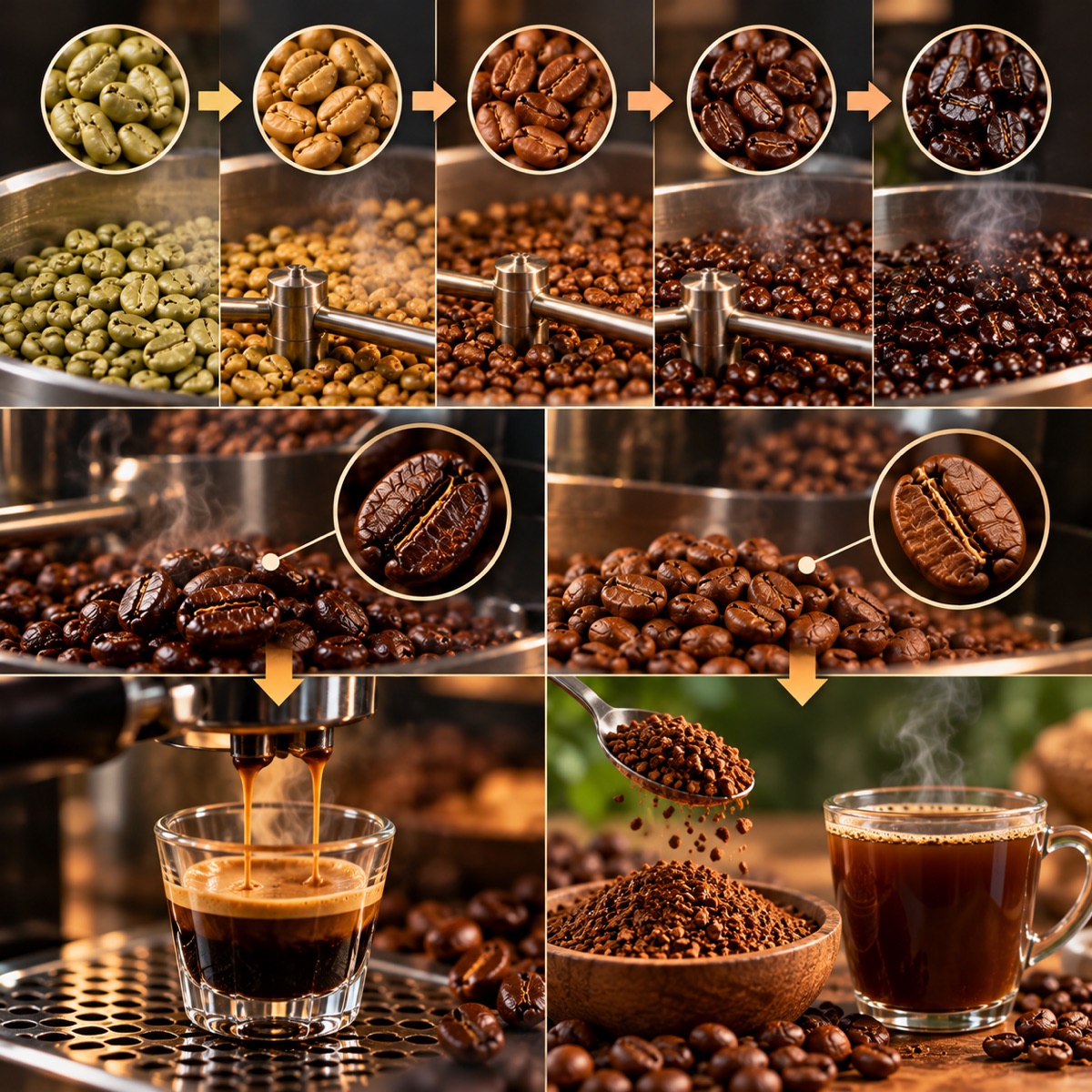
How Robusta differs from Arabica in the roaster
Robusta (Coffea canephora) has a denser, harder structure, less sugar, more chlorogenic acids and more caffeine than Arabica. In the cup this means more bitterness, heavier body and more crema, with less sweetness and acidity. In the roaster it means beans can take longer to absorb heat, then lose control quickly if pushed. See Arabica vs Robusta for the full comparison.
| Factor | Robusta | Arabica |
|---|---|---|
| Density | Typically denser | Varies; high-grown is dense |
| Sugar | Lower | Higher |
| First crack | Often quieter | Usually clear |
| Flavour risk | Harsh, rubbery, burnt | Sour, grassy, baked |
| Typical roast | Medium to medium-dark | Light to medium |
Profile strategy for Robusta
- Start steady: use enough early energy to heat dense beans evenly, but avoid a very hot charge that scorches the surface.
- Keep a smooth rate of rise: avoid crashes and flicks. See rate of rise.
- Plan development carefully: too short tastes raw and rubbery; too long adds harsh, burnt bitterness.
- Use temperature and colour: the first crack may be hard to hear. See first to second crack.
- Check airflow: Robusta can produce more chaff and smoke; keep the exhaust clean and follow your roaster’s safety guidance.
Roasting Robusta for espresso and milk drinks
A measured share of Robusta (often roughly 5–20% in milk-heavy blends) adds crema, body and punch. Medium to medium-dark roasts usually tame its bitterness while keeping structure. Test the blend as straight espresso, latte and iced latte. See espresso roast vs filter roast and pre-roast vs post-roast blending.
Roasting Robusta for instant and manufacturing
Manufacturers often set roast colour and extraction targets to suit their process and yield. Consistency matters more than a delicate cup, so use stable, well-graded green coffee and a repeatable profile. Confirm your specification with your production team. See Robusta for instant coffee.
Indonesia and Vietnam Robusta in the roaster
Indonesia Robusta often shows earthy, cocoa and spice notes with heavy body, while Vietnam Robusta tends towards dark chocolate, nuts and malt. Roast each in small tests and compare. See Indonesia Robusta, Vietnam Robusta and Indonesia vs Vietnam Robusta.
Common Robusta roast problems
- Rubbery or raw taste: underdeveloped; extend development gently.
- Harsh, burnt bitterness: too much heat or too dark; reduce heat and shorten the roast.
- Flat, papery: baked; keep rate of rise moving. See roast defects 101.
- Smoky off-notes: weak airflow or dirty exhaust.
FAQ: Roasting Robusta
What roast level is best for Robusta?
Often medium to medium-dark for espresso and milk blends, but cup to decide.
Why is Robusta first crack quiet?
Robusta’s structure often makes the crack less distinct. Use temperature and colour as well as sound.
Does Robusta need a higher charge temperature?
It depends on your roaster and batch; the dense beans need steady energy, not a harsh start.
Can I roast Robusta and Arabica together?
You can, but they roast differently. See pre-roast vs post-roast blending.
Why does my Robusta taste rubbery?
Likely underdeveloped or poor-quality green coffee. Cup a sample to check.
How much Robusta should go into an espresso blend?
Many milk-heavy blends use roughly 5–20%. Test in your drinks.
Is Indonesia or Vietnam Robusta easier to roast?
Neither is universally easier. Both vary by lot and grade, so sample first.
Where can I buy Robusta green beans in Malaysia?
Scofi can discuss Indonesia and Vietnam Robusta, depending on availability. See how to buy.
