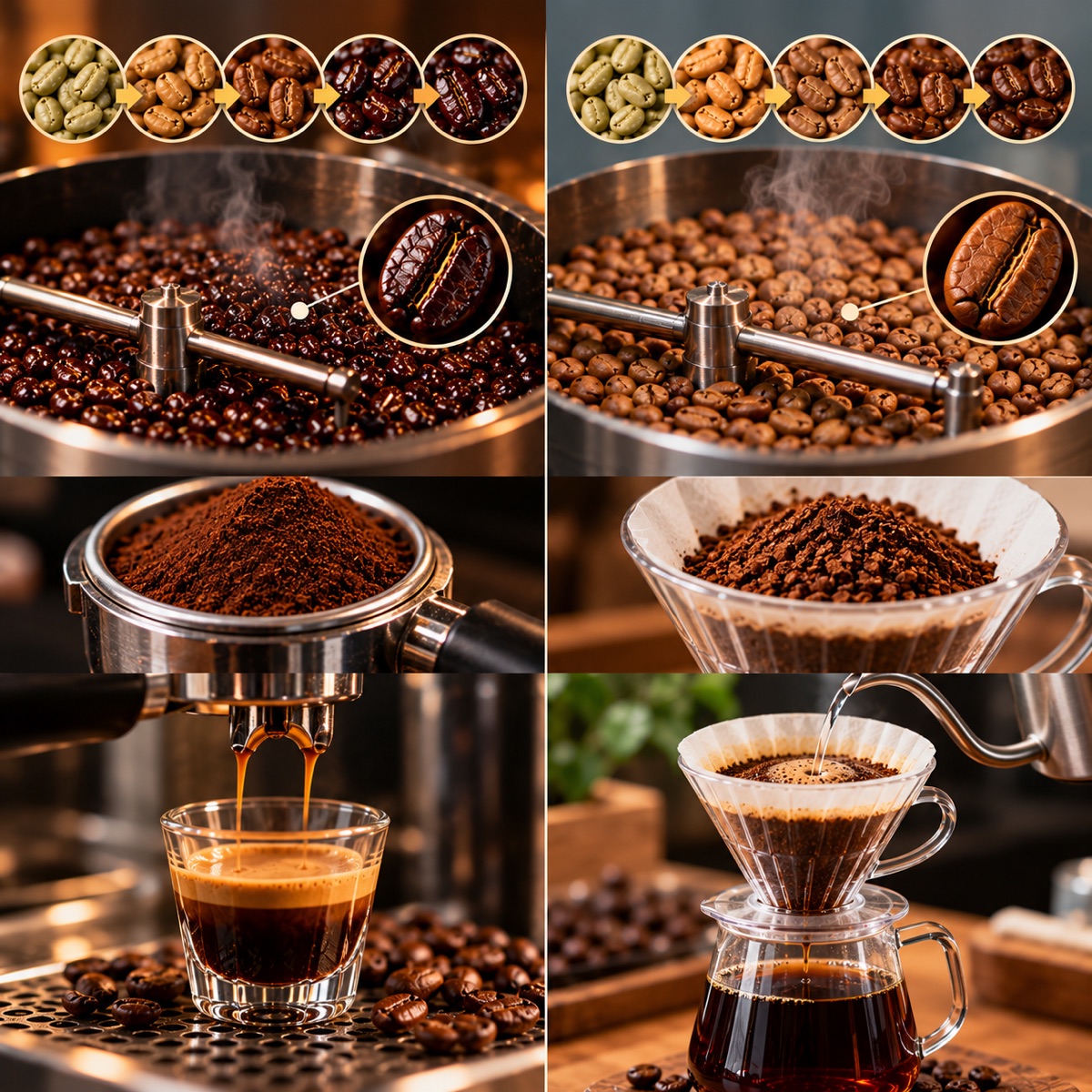
Why brew method changes the roast
Espresso uses fine grounds, high pressure and about 30 seconds, so it extracts compounds quickly and emphasises acidity and body. Filter coffee is slower and gentler, so it highlights aroma and clarity. A roast that tastes sour as espresso can taste excellent as filter, and the reverse. Adjust development and roast level to the method.
Espresso roast: what it needs
- Slightly more development to soften acidity and build sweetness. See development time ratio.
- Even roasting so the shot extracts consistently.
- Medium to medium-dark for milk-heavy drinks; lighter for modern, fruit-forward shots.
- Longer rest because of CO₂. See resting roasted coffee.
See espresso Arabica for blend design and crema.
Filter roast: what it needs
- Lighter development to keep florals, fruit and acidity.
- Cleaner finish: avoid baked or roasty flavours.
- Light to medium depending on origin and taste.
- Faster rest: a few days often suffices.
See filter brew Arabica and light vs dark roast.
| Factor | Espresso roast | Filter roast |
|---|---|---|
| Typical roast level | Medium to medium-dark | Light to medium |
| Development | Slightly longer | Slightly shorter |
| Flavour goal | Sweet, round, balanced with milk | Bright, aromatic, clear |
| Extraction | Fast, pressurised | Slow, gentle |
| Rest time | Often longer | Often shorter |
Omni roast: one roast for both
An omni roast is developed to taste good as espresso and filter. It sits between the two styles: enough development to tame acidity, not so much that clarity is lost. It simplifies inventory and training but may not reach the peak of either style. See roast profiles explained.
Roasting each origin for each method
Dense Ethiopian washed coffees shine as filter (how to roast Ethiopian coffee); Brazil and Latin American coffees suit espresso and milk (Brazil and Latin American roasting); Robusta adds crema (how to roast Robusta).
FAQ: Espresso vs filter roast
Can I use filter roast for espresso?
Yes, but light roasts can taste sour as espresso. Adjust grind and recipe or choose an omni roast.
Can I use espresso roast for filter?
Yes, but darker roasts lose clarity and florals.
Which roast is more developed?
Espresso roasts usually get slightly more development.
What is an omni roast?
A roast designed to work well as both espresso and filter.
Does espresso roast have more caffeine?
Not meaningfully. See does roast level change caffeine.
How long should espresso rest?
Often around 5–10 days.
What roast level is best for milk drinks?
Often medium to medium-dark.
Where can I buy green coffee for espresso blends?
Scofi supplies green Arabica and Robusta in Malaysia. See how to buy.
