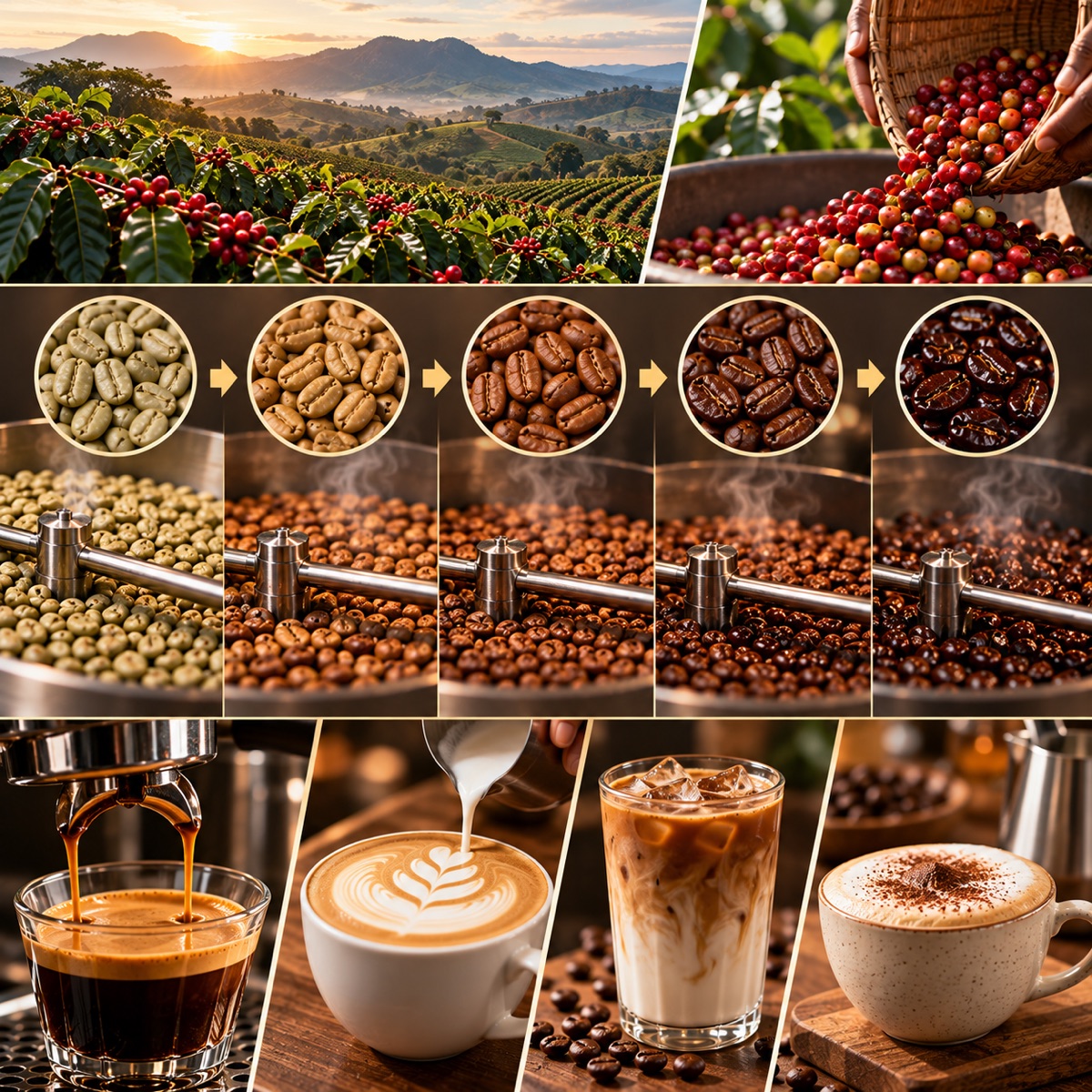
Why Brazil and Latin America suit milk drinks
Brazil produces much of the world’s coffee, usually with chocolate, nut and caramel notes, low-to-medium acidity and a heavy body, especially from natural and pulped-natural processing. Colombian and Central American coffees add citrus, red fruit and structured sweetness. Together they give Malaysian cafés a reliable, forgiving espresso base. See Latin America expansion.
Roasting Brazil
Brazil lots are often large, lower-density beans that heat quickly and tolerate a range of roast levels.
- Start with moderate energy so the beans do not scorch.
- Build Maillard sweetness with a smooth, declining rate of rise.
- Develop enough to bring out chocolate and nut without roasty bitterness.
- Typical target: medium to medium-dark for espresso and milk drinks.
See natural processing and roasting naturals for processing effects.
Roasting Colombia and Central America
Washed Colombian, Guatemalan and Costa Rican coffees are usually denser and clearer.
- Slightly more energy early helps dense, high-grown beans.
- Aim for medium to keep sweetness and acidity in balance.
- Use as the clarity component in a blend with Brazil.
See roasting washed Arabica and altitude impact.
| Origin | Typical flavour | Typical roast | Main watch-out |
|---|---|---|---|
| Brazil | Chocolate, nuts, caramel | Medium to medium-dark | Flat, roasty if over-developed |
| Colombia | Red fruit, panela, citrus | Medium | Sour if underdeveloped |
| Guatemala | Cocoa, spice, apple | Medium | Tipping on dense beans |
| Costa Rica | Citrus, stone fruit | Light-medium to medium | Scorching of honey lots |
Building a milk-ready roast
Milk softens acidity and amplifies chocolate and sweetness, so milk-based blends often work well at medium to medium-dark with a slightly longer development. A small share of Robusta can add crema and body: see how to roast Robusta and Arabica vs Robusta. Test as straight espresso, flat white and iced latte.
Blending Brazil with other coffees
You can roast components separately (post-roast blending) or together (pre-roast blending). Compare both: pre-roast vs post-roast blending and the espresso Arabica guide.
Common problems and fixes
- Flat, bready: baked; keep rate of rise moving. See rate of rise.
- Roasty, bitter: over-developed; shorten development.
- Sour, thin: underdeveloped; extend development. See roast defects 101.
FAQ: Roasting Brazil and Latin American coffee
What roast level suits Brazil coffee?
Often medium to medium-dark for espresso and milk drinks.
Why is Brazil good for espresso?
Chocolate, nut and caramel sweetness with low acidity and a full body.
Should I roast Colombian coffee lighter than Brazil?
Often yes: medium for Colombian washed lots to keep sweetness and acidity balanced.
How do I avoid flat Brazil roasts?
Keep a smooth rate of rise and avoid long, stalled phases.
Can I blend Brazil with Robusta?
Yes. A small share can add crema; test in milk drinks.
How long should espresso blends rest?
Often around 5–10 days. See resting roasted coffee.
Do natural Brazil coffees need a special profile?
Use a gentler start to protect surface sugars.
Where can I buy Brazil and Latin American green coffee?
Scofi curates these from local Malaysia stock. See how to buy.
