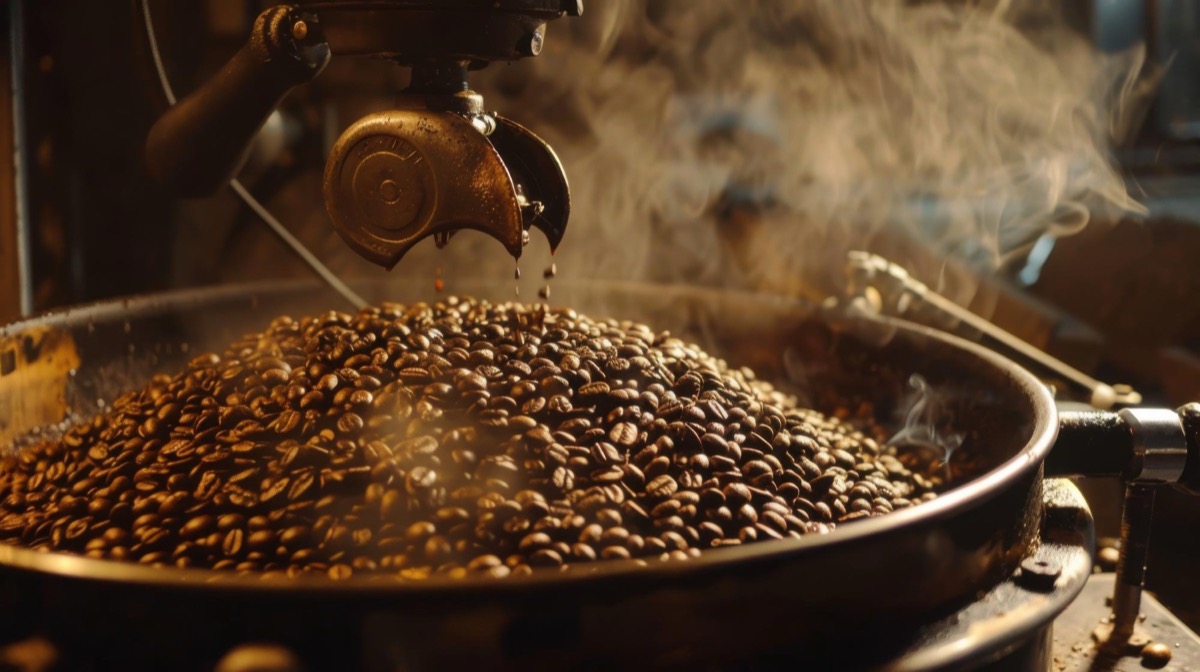
How washed Arabica behaves in the roaster
Washed Arabica doesn’t roast like naturals or honeys. During the washed process, sticky mucilage is removed with water, leaving a clean bean surface. This means less sticky sugar on the outside and more emphasis on internal development instead of surface caramelisation.
Many washed lots from highland origins are high density. Dense seeds can absorb and hold heat, but they need a solid push early in the roast to develop all the way through. If you underpower them, they taste thin and sharp; if you push too hard, scorching and tipping appear even at light colours.
Moisture is usually in the 10–12% range when green coffee is well-processed and properly stored. Combined with higher density, this gives washed coffees relatively predictable behaviour—if your roast profiles are structured and repeatable.
What you’re aiming for
- Clean flavour clarity where origin and variety are obvious in the cup.
- Bright but controlled acidity (citrus, florals, stone fruit) without harsh sourness.
- Sweet, balanced finish with enough body to support espresso or milk drinks.
For more big-picture fundamentals, see How to Roast Green Coffee for Roasters and Roast Profiles Explained: Charge Temp, ROR, Development Time.
Roast targets snapshot
| Parameter | Filter Target | Espresso Target |
|---|---|---|
| Total time | ~9–11 min | ~10–12 min |
| Dev. time after 1C | ~1:15–2:00 | ~1:30–2:30 |
| Dev. % of total | 15–20% | 18–24% |
| Roast level | Light–medium | Medium |
Learn how to read bean vs environmental probes in Bean Temp vs Environmental Temp.
Structuring a roast profile for washed Arabica
Think of a washed Arabica roast as three connected phases: drying, Maillard and development. Each phase shapes sweetness, acidity and body. Dense washed lots reward a steady, declining ROR—never crashing, never flat.
1. drying — charge to yellow
Aim for ~4–5 minutes depending on drum size and batch weight. The goal here is to safely drive off free moisture without burning the bean surface. A strong but controlled ROR coming out of turning point sets you up for the rest of the roast.
2. maillard — yellow to first crack
Another ~4–5 minutes. Here you build sweetness, body and complexity. For washed coffees, this phase is crucial: too short and the cup is sharp; too long at a very low ROR and it can start to taste flat.
3. development — first crack to drop
For filter, start with ~1:15–2:00 of development (15–20% of total time). For espresso, ~1:30–2:30 (18–24% of total time) often supports higher extraction and milk drinks. You want to round acidity and complete sugar development without tipping into baked or roasty notes.
For more detail on phase timing and ratios, see Roast Profiles Explained and First Crack to Second Crack: Temperature Guide.
Filter vs espresso profiles for washed lots
Filter roast — clarity & liveliness
For filter, you want washed Arabica to taste clean, layered and refreshing. Typically you’ll:
- Keep total roast slightly shorter than your espresso version.
- Use a lighter drop colour with 15–20% development.
- Maintain an active ROR into and through first crack; avoid crashes.
If the cup is sharp, nudge development longer or extend Maillard slightly. If it’s dull, you may be dragging development at too low an ROR.
Espresso roast — body & sweetness
For espresso, washed coffees should be sweet, structured and forgiving at typical espresso ratios. You’ll often:
- Extend Maillard a bit to build body and mid-palate.
- Increase development to roughly 18–24% of total roast.
- Drop at a slightly darker colour while avoiding heavy roast flavours.
For very bright origins (e.g. Kenya, some Ethiopian lots), the goal is to round and sweeten the acidity, not eliminate it. Adjust development in small 15–20 second steps and cup side by side.
Brew starting points
| Use | Ratio | Notes |
|---|---|---|
| Filter (V60 / batch) | 1:15–1:16 | Washed, light–medium; 92–96 °C water. |
| Modern espresso | 1:2–1:2.2 | Medium roast, 28–32 s target shot time. |
| Milk drinks | 1:1.8–1:2 | Slightly more development for structure. |
Adjust grind and roast development together. Track extractions with a refractometer if available.
Fixing flat, sour or scorched washed coffees
Most “bad” washed roasts fall into three buckets: baked (flat), underdeveloped (sour), or scorched/tipped (burnt). Once you know which you’re tasting, the fix is usually straightforward.
Flat or baked
Symptoms: muted aromatics, cardboard-like acidity, dry finish.
Likely causes: development too long at very low ROR, crashed ROR after first crack, underpowered roast.
Adjustments:
- Shorten development by 20–30 seconds and keep ROR slightly higher into drop.
- Reduce batch size or increase gas if your roaster struggles to maintain heat.
Sour or sharp
Symptoms: harsh acidity, green or grassy notes, thin body.
Likely causes: very short development, very short Maillard, or overly aggressive early heat forcing huge gas cuts later.
Adjustments:
- Add 20–30 seconds of development and cup side by side.
- Extend Maillard slightly to build sweetness and mid-palate.
- Avoid extreme charge temperatures that force you to crash ROR after first crack.
Scorching & tipping
Symptoms: dark burnt spots on bean face or tips; bitter, ashy notes even at lighter colours.
Likely causes: excessive initial heat, low airflow, or beans spending too long against hot metal.
Adjustments:
- Lower charge temperature or initial gas setting slightly.
- Increase or better tune airflow so hot air, not just metal, carries heat.
- Check drum speed for good bean movement and mixing.
For a deeper dive on roast defects, build out a dedicated Roast Defects 101 article and link to it from this section.
Defect cheat sheet
| Issue | Checklist |
|---|---|
| Flat / baked | • ROR crash at 1C? • Dev % > 25%? • Underpowered roast? |
| Sour / underdev | • Dev < 60–70 s? • Very short Maillard? • Very light colour? |
| Scorch / tip | • Charge too hot? • Low airflow? • Uneven bean movement? |
Log one variable change at a time: gas, airflow, or charge. Avoid “fixing” three things at once.
Process variants & building your roasting programme
Not all “washed” coffees behave the same. Classic fully washed lots are one thing; double washed East African coffees and wet-hulled (giling basah) Indonesians are another. Your profiles should reflect these differences.
Classic fully washed
Predictable, with clean bean surfaces and consistent moisture. The profile structure on this page (4–5 min drying, 4–5 min Maillard, 1:15–2:00 dev for filter) is a solid starting point.
Double washed
Often very clean and high-density, especially from Kenya and parts of Central America. They can take a firmer early ROR, but they will show scorch quickly if you push them too hard at charge.
Wet-Hulled (Giling Basah)
Common in Indonesia and quite different from conventional washed coffees. Moisture history is unusual, beans can be more fragile, and they often favour gentler drying and development. They deserve their own guide: Roasting Wet-Hulled Indonesia: Body vs Clarity.
Turning Scofi lots into a roasting programme
Every washed lot you buy from Scofi can come with baseline suggestions: density, moisture, recommended starting profile and dev % for both filter and espresso. As you roast and cup:
- Send your roast logs and cupping notes back to Scofi.
- Refine your house profiles for similar origins and densities.
- Build a simple internal “roast playbook” for your team.
Working with Scofi: from sample to production roast
Roasting well starts long before you charge the drum. Scofi’s role is to give you reliable green coffee and actionable data so your washed Arabica profiles scale smoothly from sample roasts to full production.
What Scofi provides with washed lots
- Physical specs: moisture, density, screen size and processing details.
- Cupping notes: reference flavour descriptors and sample brew parameters.
- Suggested starting profiles: target total time, phase splits and dev % for filter and espresso.
- QC feedback loop: space for you to send roast curves and notes back to our team.
How to use this guide with Scofi coffees
- Choose a washed Arabica lot from Scofi that fits your menu role (filter, espresso or blend).
- Run 2–3 small test roasts using the time and dev suggestions on this page.
- Cup the roasts blind with your team and mark which profile best matches your flavour target.
- Translate the chosen profile to your production batch size, adjusting gas and airflow to keep the same shape.
- Share your results with Scofi so we can refine recommendations for your next lot.
Over time, this turns the Roasting Washed Arabica — Clean Cups, Bright Acidity guide into a living playbook tailored to your roastery, not just theory on a page.
Sample to production checklist
| Step | Action |
|---|---|
| 1. Sample | Cup with Scofi notes; confirm it fits your menu. |
| 2. Test roasts | Run 2–3 profiles changing only dev time. |
| 3. Decide | Pick the best profile; log all curve details. |
| 4. Scale | Match curve shape when scaling batch size. |
| 5. Repeat | Update your house profile for similar lots. |
Treat each washed lot from Scofi as a chance to sharpen your roasting system, not just your roast of the week.
FAQ: Roasting Washed Arabica
What roast level works best for washed Arabica from Scofi?
Most roasters aim for light to medium roasts. For filter, many prefer the lighter side of medium with a development time around 15–20% of total roast. For espresso, a touch deeper into medium with 18–24% development often gives the best mix of sweetness, body, and balanced acidity.
How long should I develop washed Arabica after first crack?
As a starting point, use about 1:15–2:00 after first crack for filter roasts and 1:30–2:30 for espresso. These are guidelines—cup side by side with slightly shorter and longer development to find the sweet spot for each Scofi lot.
What charge temperature should I use for washed Arabica?
It depends on density, batch size and roaster design. High-density washed coffees often respond well to a moderate–high charge so they have enough momentum, while lower-density washed coffees usually benefit from a slightly lower charge to reduce scorching risk. Start conservative and adjust based on defects and cup results.
Why does my washed coffee taste flat even at a light colour?
Flat or dull cups at light colours usually mean baked development, not simply “too light.” If ROR crashes after first crack or development is long at a very low ROR, the coffee can taste lifeless. Shorten development by 20–30 seconds and keep ROR more active into drop.
My washed Arabica tastes sour and sharp. What should I change?
Sour, sharp cups suggest underdevelopment. Extend development by 20–30 seconds, slightly lengthen Maillard to build sweetness and body, and avoid extremely high charge temperatures that force you to cut heat aggressively and crash ROR later in the roast.
How is roasting washed coffee different from roasting naturals or honeys?
Washed coffees have cleaner bean surfaces and are often denser, so roasting focuses more on internal development and rate of rise control. Naturals and honeys carry more surface sugars and need extra care to avoid scorching and over-caramelisation. Build separate reference profiles for washed, natural and honey lots from Scofi.
Can I use one profile for both filter and espresso?
You can start from a single base profile, but small tweaks help a lot. For filter, use shorter development and a lighter drop. For espresso, extend Maillard and development slightly to increase body and sweetness while smoothing acidity. Many roasteries keep “filter” and “espresso” variants of the same core profile.
How should I store washed green beans from Scofi?
Store washed green coffee in a cool, dry, stable environment, away from sunlight and heat sources. Use GrainPro or similar liners where appropriate, keep bags sealed when not in use, and avoid big temperature and humidity swings. Good storage keeps moisture and density more predictable in the roaster.
How do I choose a starting profile for a new washed Scofi lot?
Look at Scofi’s data: origin, altitude, density, moisture and flavour notes. Start around 9–11 minutes total with balanced phase times, then adjust development length, Maillard duration and ROR based on cupping feedback. Log your changes so future lots with similar specs are easier to dial in.
Can Scofi help troubleshoot my washed roasts?
Yes. Scofi aims to be a technical partner for roasters, not just a supplier. Share your roast logs, cupping notes, roaster model and batch size for any washed Scofi lot and we can suggest targeted profile adjustments based on the principles in this guide.
