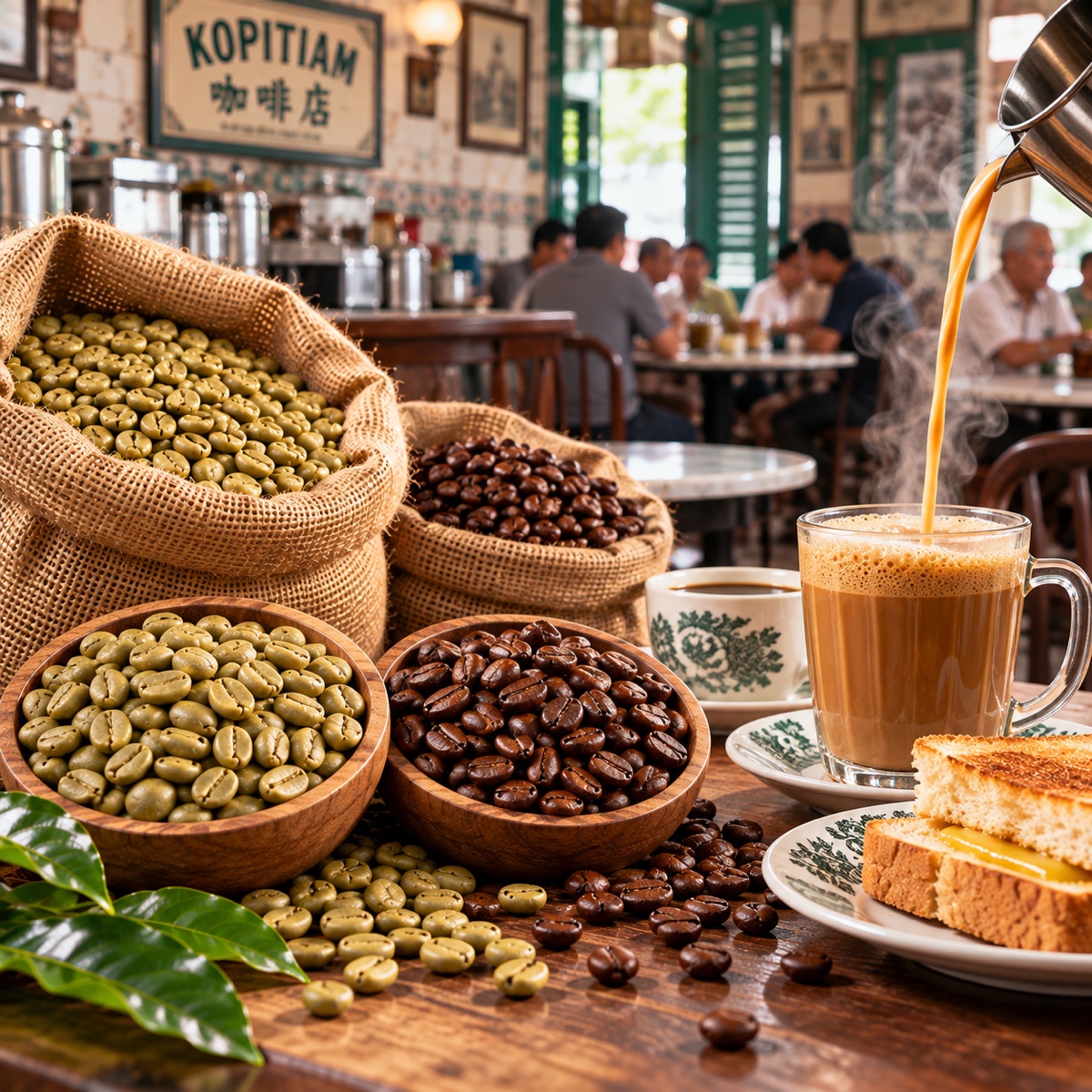
What is a kopitiam, and what is kopitiam coffee?
A kopitiam is a traditional coffee shop, a long-standing part of daily life in Malaysia where people meet for coffee, tea and simple meals. “Kopi” is the local word for coffee. Kopitiam coffee is typically brewed strong, often with a cloth filter, and served with sugar and condensed or evaporated milk. It is built for boldness and comfort, not for the delicate acidity of a single-origin filter. See Malaysia coffee culture for how cafés and kopitiams sit side by side.
Why Robusta suits kopitiam coffee
Several traits make Robusta a natural fit:
- Body: a heavy, dense mouthfeel that holds up to milk and sugar.
- Bitterness and roasted depth: dark cocoa, roasted nuts and spice that balance sweetness.
- Caffeine: generally higher than Arabica, matching the expectation of a “strong” coffee.
- Value and supply: steady availability and a cost that suits high-volume shops.
Robusta’s lower acidity also suits milk-based traditional drinks. For the species comparison, read Arabica vs Robusta.
The kopitiam flavour: what the cup should taste like
Traditional kopi usually tastes bold, roasty, slightly bitter and rich, with notes of dark chocolate, caramelised sugar and toasted nut. Different shops roast and blend differently, so the flavour varies, but customers expect it to be consistent every day. Consistency is a green-coffee and roasting question: see best practices for roasters.
Which Robusta works for kopitiam coffee?
| Origin | Typical profile | Why shops use it |
|---|---|---|
| Indonesia (Lampung, Sumatra, Java) | Cocoa, spice, earthy depth, heavy body | Familiar bold taste; strong supply. See Indonesia Robusta |
| Vietnam (Central Highlands) | Dark chocolate, roasted nuts, malt | Direct, chocolatey strength. See Vietnam Robusta |
| Blends with Arabica | Rounder, a little aroma | Smooths bitterness. See Indonesia vs Vietnam Robusta |
Grade matters: cleaner lots give a less harsh, more consistent cup. See Grade 1 vs EK-1.
What coffee shop owners should check when buying
- Cup quality: clean, no mould, rubber or burnt notes.
- Grade and defects: fewer defects mean a smoother cup and less waste.
- Moisture: stable and suited to storage. See moisture levels.
- Consistency between deliveries: keep a sealed reference sample.
- Price per usable kilogram, not just the headline price. See Indonesia Robusta price in Malaysia.
- Packaging and storage for Malaysia’s climate. See packaging options and storage tips.
From green beans to the cup
Traditional roasters usually roast medium-dark to dark for a bold flavour, then grind for a cloth-filter or similar brew. A careful roast avoids scorching and bitterness that is harsh rather than rich. See how to roast Robusta and roasting levels. To understand the drink names customers use, read the kopi order guide.
Supplying kopitiams and coffee shops with Scofi
Scofi is the coffee supply brand of Soo Hup Seng Trading Co Sdn Bhd, based in Butterworth, Penang. We can discuss Robusta and Arabica green coffee options, samples, packaging and delivery for coffee shops across Malaysia, depending on availability. See wholesale supplier, how to buy and Scofi Malaysia supplier.
FAQ: Kopitiam coffee and Robusta
What is a kopitiam?
A traditional Malaysian coffee shop serving coffee, tea and simple meals.
What coffee beans do kopitiams use?
Most traditional kopi is based on Robusta, sometimes blended with Arabica, though every shop has its own blend.
Why is kopitiam coffee so strong?
It is brewed concentrated and uses a bold, high-caffeine Robusta-based blend to stand up to sugar and milk.
Is kopitiam coffee Arabica or Robusta?
Typically Robusta-led. Arabica is used in some blends for aroma.
What roast level is used for kopi?
Usually medium-dark to dark, depending on the shop.
Is Robusta lower quality than Arabica?
Not necessarily. Different quality levels exist in both. Clean, well-graded Robusta suits traditional coffee. See Arabica vs Robusta.
Can Scofi supply Robusta for a coffee shop?
Depending on availability, yes. Contact us.
How do I keep kopi flavour consistent?
Keep a reference sample, log roasts and re-check every delivery.
