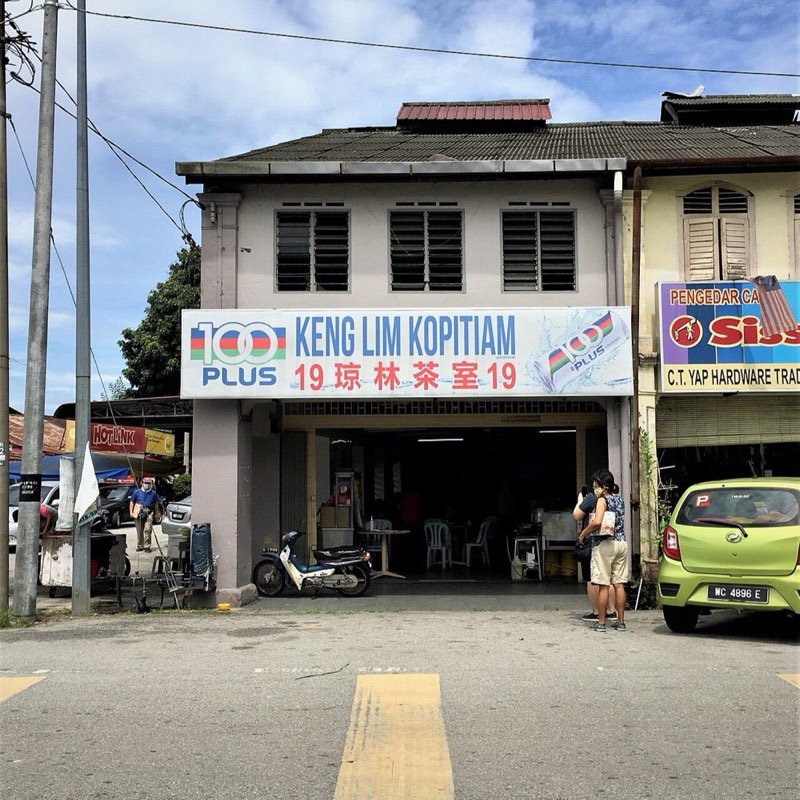
What makes kopitiam coffee taste the way it does
Traditional kopitiam coffee, or "kopi", is built on Robusta beans, roasted dark (often with a little sugar and margarine in the old Hainanese style), and brewed in a cloth filter called a kopi sock. The result is thick, bold, slightly bitter and smooth, with a roasted, caramel aroma that stands up to condensed milk. Read the background in kopitiam coffee explained and Hainanese coffee.
What you need
- A kopi sock (a cloth filter on a metal ring with a handle) and a pot or jug. Search for "kopi sock" or "coffee sock".
- Kopi beans or coffee powder: dark-roasted Robusta or a Robusta-heavy blend.
- A kettle and a scale.
- Sweetened condensed milk and evaporated milk.
- A cup (a small ceramic or glass cup for authenticity).
If you have no kopi sock, a French press or fine-mesh strainer with a cloth or paper filter works as a substitute.
Choosing the beans and roast
- Beans: Robusta gives the signature strength and body. A Robusta-heavy blend with a little Arabica is smoother. See Robusta guide, Indonesia Robusta and Robusta for coffee shops.
- Roast: dark, but not burnt. Traditional kopi roasts go dark and may be glazed with sugar and margarine. Many home and small-shop roasters now roast Robusta medium-dark without additives for a cleaner cup. See how to roast Robusta.
- Grind: medium-fine, like fine sand. Grind fresh if you can.
- Freshness: roasted Robusta is best within a few weeks. See resting roasted coffee.
Roasting your own? Start with the roast loss calculator to plan green coffee.
Step-by-step: the kopi sock method
1. Boil water and let it rest for 20–30 seconds, to about 90–95 °C. 2. Rinse the sock with hot water to remove cloth taste and warm it. 3. Add coffee: put 25–30 g (about 2–3 tablespoons) of ground kopi into the sock for one 200 ml cup. 4. Pour water: place the sock over a jug or cup and pour in 200 ml of hot water slowly. 5. Steep and dunk: stir and dunk the sock for 2–3 minutes. Longer makes it stronger and more bitter. 6. Remove the sock and squeeze lightly. 7. Sweeten and add milk to taste, then stir. 8. Serve hot or pour over ice for Kopi Peng. Rinse the sock in hot water after each use and store it in the fridge or freezer, in a bit of water, so it does not turn sour.
Kopi recipes: O, C, Peng and more
| Drink | Milk and sugar | Notes |
|---|---|---|
| Kopi (plain kopi) | 1–2 tbsp sweetened condensed milk | Sweet and creamy |
| Kopi O | Sugar only, no milk | Strong and black |
| Kopi O Kosong | No milk, no sugar | Strongest, unsweetened |
| Kopi C | Evaporated milk and sugar | Lighter, less sweet than kopi |
| Kopi Peng | Kopi with ice | Pour over a glass of ice, add more milk if needed |
| Kopi Gao | Less water | Extra thick and strong |
| Kopi Po | Less coffee | Weaker |
See the full ordering guide in Kopi O, Kopi C and Kopi Peng.
Troubleshooting your kopi
- Too bitter: steep for less time, use less coffee or cooler water.
- Too weak: use more coffee, a finer grind or longer steep.
- Sour cloth taste: boil the sock for a few minutes and replace it regularly.
- Muddy cup: the grind is too fine or the sock is worn.
- Flat taste: the coffee is old. Use fresher beans.
- Too much caffeine: drink smaller cups or blend with Arabica. See caffeine in coffee.
Making Ipoh white coffee style
Ipoh white coffee uses beans roasted with margarine only (no sugar), which gives a lighter, creamier and nuttier cup. Brew in the same way and add condensed milk. See Ipoh white coffee beans.
Buying beans for kopitiam coffee
Many people buy ready-ground kopi powder from shops. If you roast your own, buy green Robusta by specification, such as Indonesia Robusta Grade 1 or EK-1, and roast it yourself. See Indonesia Robusta grade 1 vs EK-1 and Robusta coffee price in Malaysia. Scofi supplies unroasted Robusta, depending on availability. Request a quotation.
FAQ: Kopitiam coffee at home
What beans are used in kopitiam coffee?
Mostly Robusta, roasted dark, sometimes blended with a little Arabica.
What is a kopi sock?
A cloth filter on a handle used to brew traditional Malaysian coffee.
How much coffee do I use for one cup of kopi?
About 25–30 g for 200 ml of water, adjusted to taste.
What is the difference between Kopi, Kopi O and Kopi C?
Kopi has condensed milk, Kopi O has sugar only, and Kopi C has evaporated milk and sugar. See the Kopi order guide.
Can I make kopitiam coffee without a kopi sock?
Yes, with a French press, a fine strainer or a paper filter, though the texture will differ slightly.
Why is kopitiam coffee so strong?
Because it uses Robusta, a dark roast and a strong brew.
How do I clean a kopi sock?
Rinse with hot water after each use, boil it occasionally and store it in water in the fridge.
Where can I buy Robusta for kopi in Malaysia?
Scofi supplies unroasted Robusta, depending on availability. Contact us.
