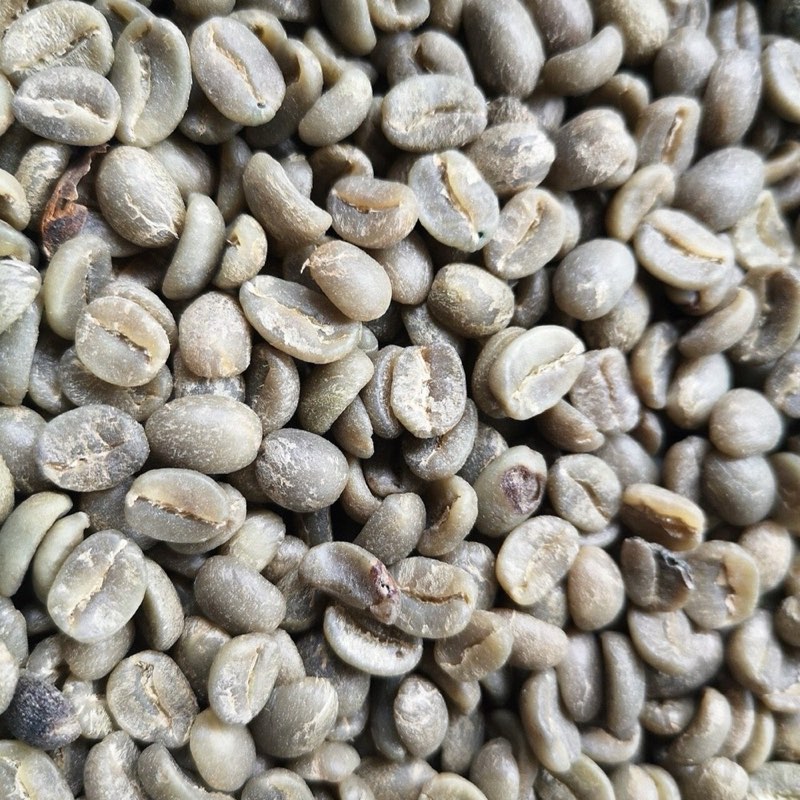
What are decaf green coffee beans?
Decaf green coffee beans are unroasted coffee beans that have been decaffeinated. Caffeine is removed from the green bean, before roasting, because roasting afterwards would destroy flavour compounds. Decaf is not completely caffeine-free; it is defined by how much has been removed. This page is general information and not medical advice. See caffeine content.
Decaf methods compared
| Method | How it works | Notes |
|---|---|---|
| Swiss Water Process | Water and activated carbon filters; no added chemicals | Clean, chemical-free label; can lose some flavour |
| CO₂ process | Pressurised carbon dioxide selectively removes caffeine | Good flavour retention; used for larger volumes |
| Sugarcane (ethyl acetate) process | Ethyl acetate derived from sugarcane fermentation, with water | Often sweet and fruity; common for Colombian decaf |
| Solvent-based (for example methylene chloride) | Solvent removes caffeine from steamed beans | Efficient and low-cost; some buyers avoid the solvent |
Ask your supplier exactly which method was used. Regulations and labelling vary by country.
How much caffeine is removed?
In many markets, decaf is defined as having at least about 97% of the caffeine removed, or a very low residual level in roasted coffee. Residual caffeine differs by method and lot. If caffeine matters to your customers, ask for test results. See caffeine content and roast level and caffeine.
What do decaf green beans look like?
Decaf green beans often look darker, browner or more uneven than normal green coffee, because processing changes the colour. That is normal. It also means roast colour can be harder to judge, so rely on temperature, time and cupping. See decaf roast guide.
Decaf coffee flavour
Decaf can taste sweet, clean and balanced, but poor-quality decaf can be flat, woody or papery. Flavour depends on the starting coffee, the method and the roast. Good decaf starts with good green coffee, so choose quality origins. Use the coffee flavour wheel to compare lots.
Roasting decaf green beans
Decaf beans are more brittle and porous, so they scorch and tip more easily. Use a lower charge temperature, steady heat and a little more development. Read the decaf roast guide, roast profiles explained and roast defects 101.
How to buy decaf green coffee beans
- Ask for the method (Swiss Water, CO₂, sugarcane or solvent) and the origin.
- Ask for caffeine testing and spec data: moisture, screen size and defects. See moisture levels.
- Request a sample and roast-test it. See green coffee sample packs.
- Check storage and age, because decaf stales quickly. See storage tips and packaging options.
- Confirm any claims you plan to make, such as chemical-free or organic, with documents. See certifications.
Scofi supplies green coffee from Butterworth, Penang, and can discuss decaf lots, depending on availability. See buy green coffee beans online.
Raw decaf coffee: buying and roasting
Roasters searching for raw decaf coffee want green decaf beans they can roast to their own profile. Decaffeination happens before roasting, so the beans arrive green but often darker or browner than regular green coffee.
- Ask about the method: Swiss Water, CO₂, sugarcane (EA) or solvent processes. See the methods table above.
- Check the caffeine level: commonly stated as a maximum percentage. Ask for it in writing.
- Roast gently: decaf burns faster. Read how to roast decaf.
- Pair it with a spec sheet: use our green coffee spec sheet.
Ask for samples and cup the decaf against your regular coffee.
FAQ: Decaf green coffee beans
What are decaf green coffee beans?
Unroasted coffee beans that have had most of their caffeine removed.
Is decaf coffee caffeine-free?
No. Decaf has most caffeine removed but a small amount remains.
What is the Swiss Water Process?
A water-based method that removes caffeine without adding chemicals.
Which decaf method is best?
None is best for everyone. Compare flavour, label claims and price.
Why do decaf green beans look darker?
The decaffeination process changes the bean colour.
Is decaf harder to roast?
It is more fragile, so use a gentler start. See decaf roast guide.
Does decaf taste worse?
Good decaf from quality beans can taste excellent; poor decaf can taste flat.
Can I buy decaf green coffee in Malaysia?
Scofi can discuss decaf lots, depending on availability. Contact us.
What is raw decaf coffee?
Raw decaf coffee is decaffeinated coffee that has not been roasted yet, also called decaf green coffee beans.
Where can I buy raw decaf coffee in Malaysia?
Ask a green coffee supplier such as Scofi about decaf lots and samples, depending on availability. Contact us.
