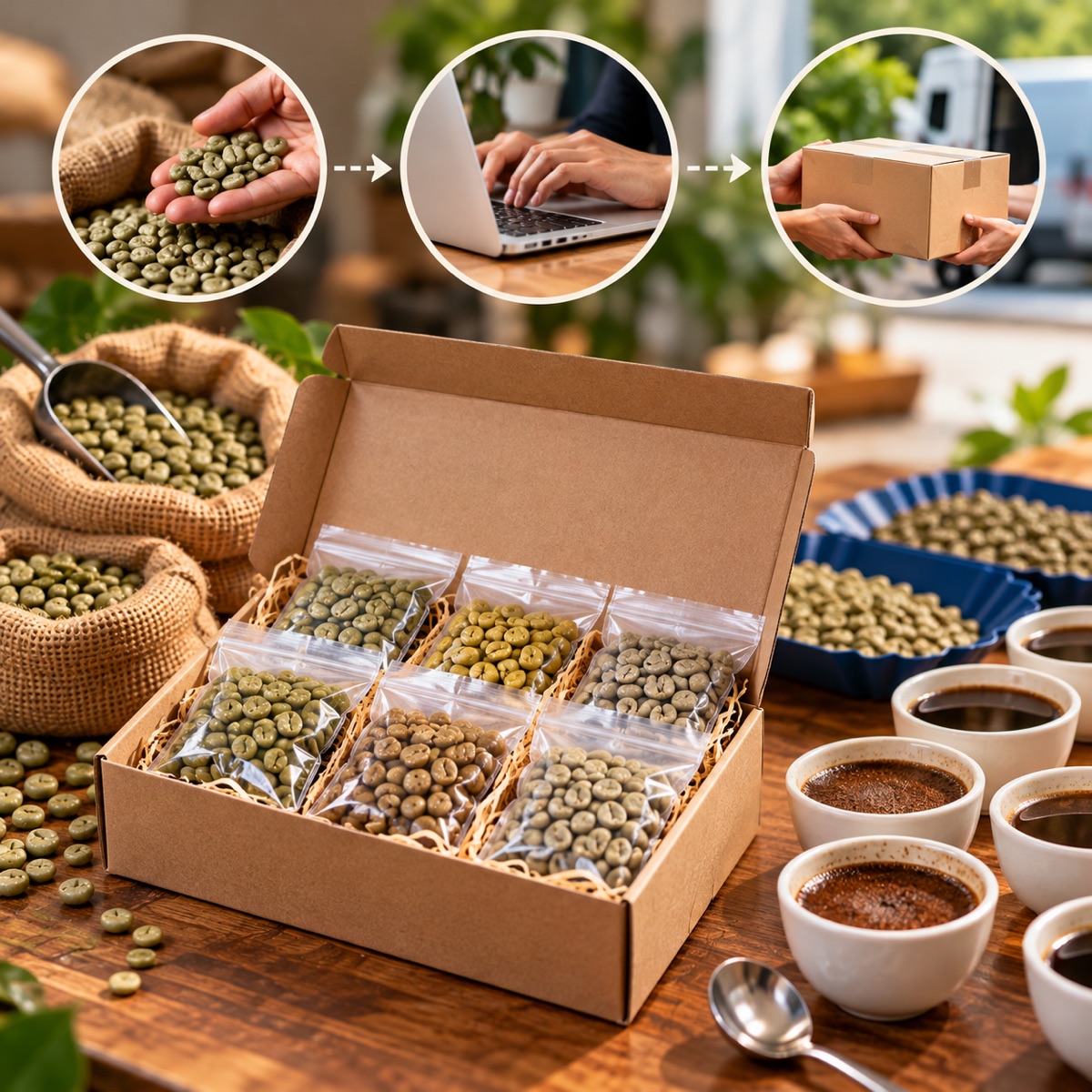
Why always sample before you buy
Green coffee varies from lot to lot, and a name or a photo cannot tell you how it will taste or roast. Samples let you see the beans, check the specs, roast them on your own machine and cup them before spending on volume. A few hundred grams can save you from a costly mistake. See how to buy for the full process.
What to ask for when you request samples
- The spec sheet: origin, altitude, variety, process, crop year, screen size, moisture and defect information.
- Cup notes and score, if available. See SCA grading.
- Packaging details for the bulk lot.
- Whether the sample represents the lot and when the bulk is available.
- Price and volume range so you can judge the match.
Send the supplier your use, flavour direction, monthly volume and budget so they can recommend sensible samples. Contact Scofi through WhatsApp or the contact page, depending on availability.
How much sample do you need?
| Purpose | Typical quantity | Notes |
|---|---|---|
| Cupping only | A few hundred grams | Enough for sample roasts and several cups |
| Cupping plus test roast on your roaster | About 1 kg or more | Lets you test a production profile |
| Several candidate lots | A small amount of each | Compare side by side |
| Manufacturers testing yield | Larger test lots | Match your process needs |
Ask the supplier what is available, since sample sizes depend on the lot.
How to test samples fairly
- Roast every sample the same way. Same batch size, same preheat, same target roast level and time. See sample roasting for cupping.
- Rest them for about 8–24 hours before cupping.
- Use the same cupping method: the same ratio, grind, water temperature and timing. See the cupping guide.
- Score and write notes using one form. See the coffee flavour wheel for descriptors.
- Test in your real product: espresso, milk drinks, kopi or premix.
What to record for each sample
| Field | Example |
|---|---|
| Sample and lot | Name, origin, process |
| Green data | Moisture, screen, defects |
| Roast data | Weight, time, first crack, drop, weight loss |
| Cup score and notes | Total score and flavour notes |
| Roast behaviour | Even, scorched, baked, easy to roast |
| Decision | Order, reject or re-sample |
Keep the record with the sealed sample. See quality control.
Approving a lot and ordering
Choose the sample that best matches your goal, then test it again with your production profile before ordering. Agree the specification and bag size, and place a trial order. Keep a sealed reference sample of the approved lot, and compare every delivery against it for flavour, moisture and defects. See moisture levels and defect detection.
Common sampling mistakes
- Judging a sample from one roast on a different day or roaster.
- Cupping too soon after roasting.
- Choosing by price instead of cup.
- Ordering volume without a reference sample.
- Not asking whether the sample matches the bulk lot.
FAQ: Green coffee sample packs
Can I get green coffee samples before buying?
Please ask. Scofi can discuss samples with specs, depending on availability. Contact us.
How much sample should I request?
A few hundred grams for cupping, or about 1 kg or more if you also want to test a production profile.
How should I roast samples for cupping?
Use the same method and roast level for each, then rest them 8–24 hours. See sample roasting.
What should be on the sample spec sheet?
Origin, process, crop, moisture, screen size, defects and cup notes.
Does the sample match the bulk lot?
Ask the supplier, and re-check the first delivery against your sealed reference sample.
Are samples free?
Sample terms depend on the lot and supplier. Ask when you request them.
How do I compare several samples?
Roast them the same day, cup them together and score them on one form.
Can manufacturers test samples for yield?
Yes. See Robusta for instant coffee.
