Why sample roast?
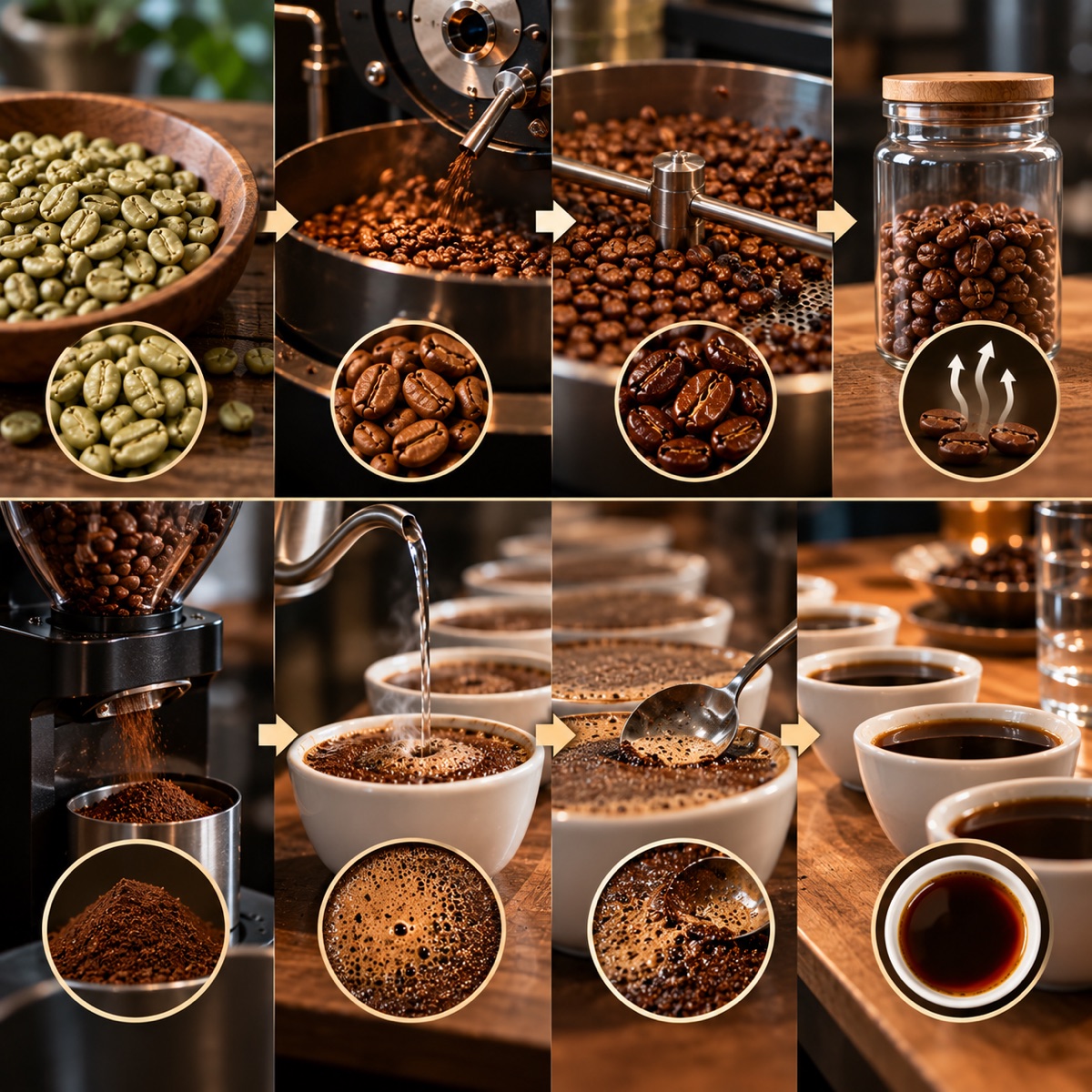
Before buying a lot, you need to know what it tastes like. A sample roast is a small, standard roast that shows a coffee’s true quality without hiding it under a dark roast or a custom profile. Roasting every sample the same way lets you compare origins, lots and suppliers fairly. See the cupping guide for the tasting side.
Equipment and set-up
- A sample roaster or a small batch on your production roaster, kept to a consistent size.
- Scales for green coffee weight.
- A timer and temperature log.
- Cooling tray, clean cupping bowls and a spoon.
- Grinder and filtered water for the cupping.
Follow your roaster manufacturer’s instructions and safety guidance.
A simple sample roasting protocol
- Weigh a consistent batch for every sample.
- Preheat to the same starting point each time.
- Roast to a light-to-medium target, commonly finished in about 8–12 minutes with first crack a few minutes before the end, so flaws and character show clearly.
- Drop and cool quickly.
- Label each sample with name, lot, roast time and weight loss.
- Rest about 8–24 hours before cupping.
Standards such as the SCA protocol set specific roast colour and timing; if you need to match them, follow the latest SCA documents. See SCA grading.
Cupping the samples
Grind just before cupping, use consistent coffee-to-water ratio and water temperature (commonly about 92–96 °C), and cup several bowls per sample. Evaluate fragrance, aroma, flavour, acidity, body, balance, sweetness and defects, and record scores. Use the coffee flavour wheel to describe what you find.
What to compare and record
| Field | Example |
|---|---|
| Sample and lot | Name, origin, process |
| Green data | Moisture, density, size |
| Roast data | Weight, time, first crack, drop, weight loss |
| Cup scores | Total and notes |
| Decision | Buy, reject or re-sample |
Keep reference samples so you can compare later deliveries. See quality control.
From sample to purchase
Once a sample scores well and fits your menu, re-test with your production profile and keep a sealed reference sample of the approved lot. Then follow how to buy to place a trial order. Compare arrival lots against the approved sample.
FAQ: Sample roasting for cupping
What roast level is used for cupping samples?
Typically a light-to-medium roast so that character and defects show clearly.
How long should a sample roast take?
Often around 8–12 minutes, depending on your roaster.
How long should samples rest before cupping?
Commonly about 8–24 hours.
Do I need a special sample roaster?
Not strictly, but consistent small batches help. A dedicated sample roaster is convenient.
How many cups per sample should I taste?
Many protocols use five per sample to check uniformity.
Why roast all samples together?
So the roast is the same and differences come from the coffee.
Can I approve a lot from a sample roast alone?
Use it to shortlist, then test with your production profile before ordering volume.
Where can I get green coffee samples?
Scofi supplies samples with specs. See how to buy.
