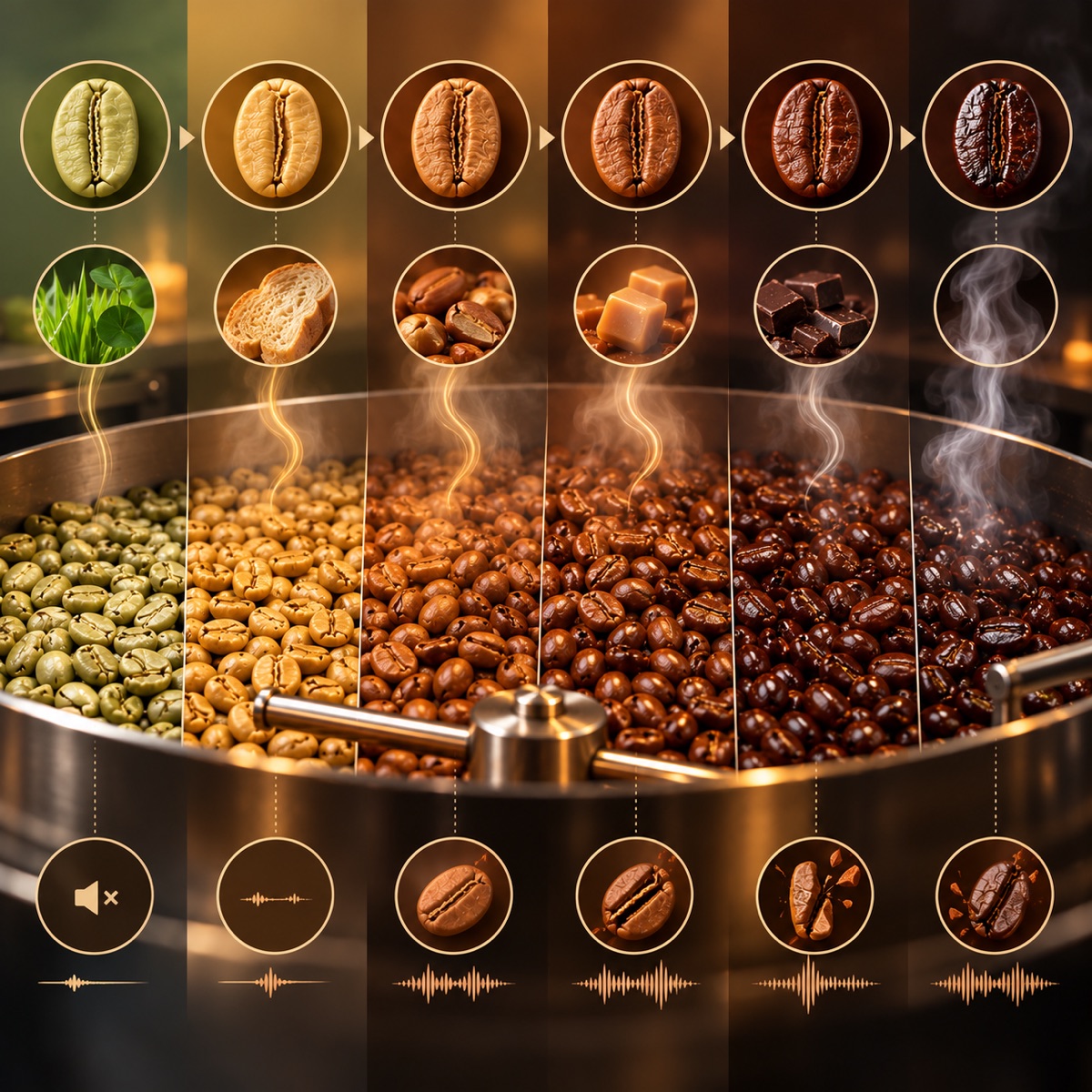
The roasting stages at a glance
| Stage | Colour | Smell | Sound / event |
|---|---|---|---|
| 1. Green | Green to pale green | Fresh, grassy | Silent |
| 2. Yellowing | Yellow, straw | Hay, bread dough | Silent; steam |
| 3. Light brown | Tan to light brown | Toast, cereal | Silent; Maillard begins |
| 4. First crack | Brown, expanding beans | Sweeter, caramel, nutty | Popping starts |
| 5. Light–medium | Even medium brown | Caramel, fruit, cocoa | Cracking ends |
| 6. Medium–dark | Dark brown | Chocolate, roasted nuts | Quiet, then second crack begins |
| 7. Dark | Very dark brown, oily | Smoky, bittersweet | Second crack rolling |
| 8. Very dark | Near black, shiny oils | Burnt, carbon | Crackle fades |
Temperatures differ by roaster, so rely on colour, smell and sound with your logs. See first to second crack.
Stage 1 and 2: green to yellow
Green beans smell grassy. As water leaves, they turn yellow and the smell becomes like bread or hay. This is the drying phase. See roast profiles explained. If beans stay too long in this stage the roast can become baked later; if heated too hard they can scorch.
Stage 3: Maillard browning
Beans move from tan to light brown. Aromas become toasty, cereal-like and sweet. This long stage builds body and sweetness. A smooth rate of rise keeps flavour clean. See rate of rise.
Stage 4 and 5: first crack and light roasts
First crack is audible popping. Light roasts stop around or shortly after it, keeping fruit, florals and bright acidity. Light–medium roasts continue a little more for sweetness. See roasting levels.
Stage 6 and 7: medium-dark and dark
Roasting past first crack builds chocolate and roasted flavour but reduces acidity and origin character. At second crack, oils begin to surface and bitterness rises. See light vs dark roast.
Stage 8: very dark
Beans are near black and shiny. Flavour is dominated by carbon and smoke; most of the original character is lost. Few specialty roasters aim for this, and it increases weight loss and fire risk. Follow your roaster’s safety guidance.
Mapping stages to roast levels
| Roast level | Drop around | Typical brew |
|---|---|---|
| Light | Stage 4–5 | Filter |
| Medium | Stage 5–6 | Filter or espresso |
| Medium-dark | Stage 6 | Espresso, milk drinks |
| Dark | Stage 7 | Traditional strong coffee |
Always cup to confirm. Colour on the outside may not match the inside, so use a ground-colour meter or cup tests. See development time ratio and the roasting guide.
FAQ: Coffee roasting stages
How many stages are there in coffee roasting?
Commonly described as eight colour stages from green to very dark, grouped into drying, Maillard, development and optional second crack.
What does yellowing mean in roasting?
The end of the drying phase, when green beans turn yellow and smell like hay or bread.
When does first crack happen?
Around 196 °C bean temperature, though it varies by roaster. See first crack guide.
Which stage is a light roast?
Around or shortly after first crack, before development goes far.
When do oils appear on beans?
Usually around second crack or beyond, in dark roasts.
Can I judge roast level by colour alone?
No. Use colour with smell, sound, time and cup tests.
What is the best stage for espresso?
Often medium to medium-dark, depending on the blend. See espresso roast vs filter roast.
Where do I buy green coffee for roasting?
Scofi supplies green Arabica and Robusta in Malaysia. See how to buy.
