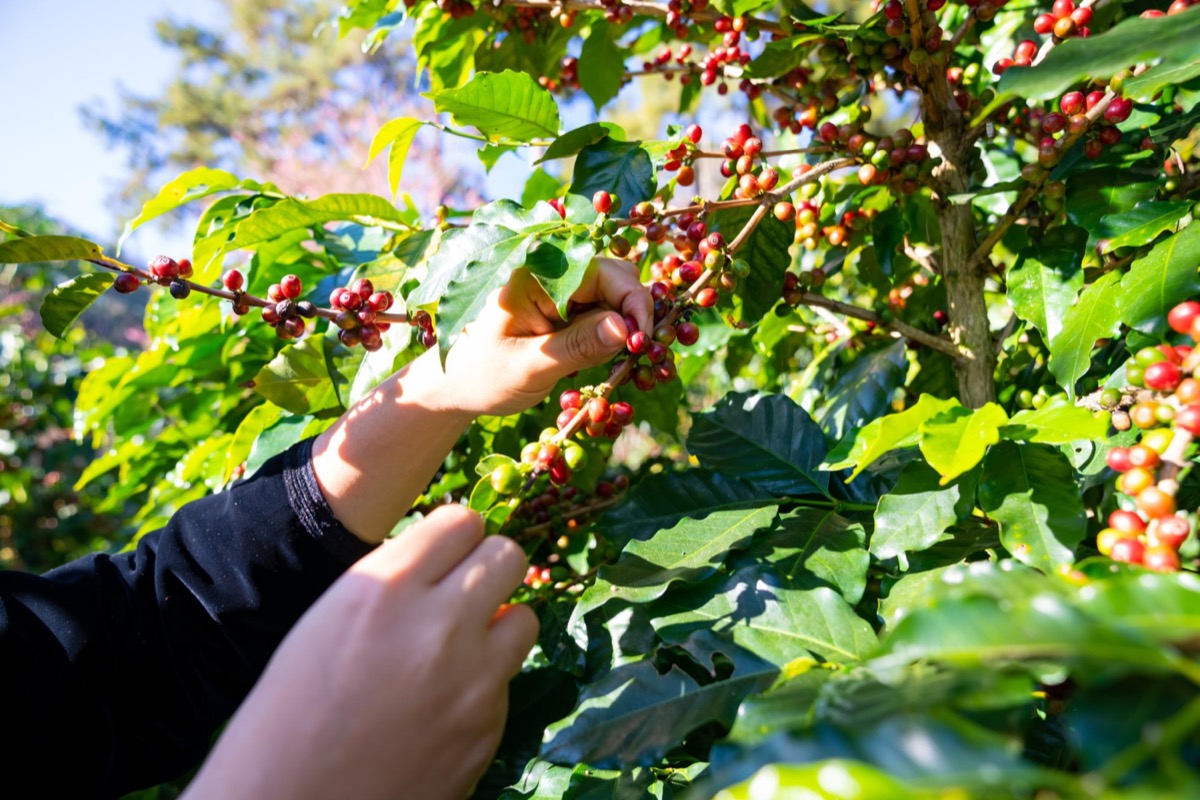
Shade-grown farming: what it means in practice
“Shade-grown” describes coffee cultivated under a managed canopy of native or planted shade trees. The canopy creates a cooler, steadier microclimate, buffers wind and delivers ecological services: leaf-litter nutrients, pollinator habitat and erosion control. On the plant, moderated light and temperature slow cherry ripening, often giving denser seeds and refined acidity in the cup.
There is no single recipe. Canopies range from traditional rustic forest systems to modern, pruned multi-layer agroforestry. Well-run farms adjust shade density through the seasons to balance disease pressure, yield and flavour. Many origins in Ethiopia, parts of Central America and Asia-Pacific highlands have long shade experience. See also climate requirements, altitude impact, soil conditions and farming methods.
Environmental and flavour benefits
Shade trees act like natural climate control. By lowering peak leaf temperature and slowing water loss, they steady plant physiology through hot spells. Leaf litter builds organic matter, improves water infiltration and cycles nutrients, and roots hold slopes together in heavy rain.
- Biodiversity: habitat for pollinators and birds, plus more resilient ecosystems.
- Soil health: organic matter, beneficial fungi, better water retention and less erosion.
- Microclimate: a cooler canopy on hot days, smaller day-to-night swings and wind buffering.
- Carbon: extra biomass stores carbon and supports climate goals.
In the cup, slower cherry development under balanced shade commonly gives cleaner acidity, layered sweetness and longer finishes: floral-citrus elegance from highland washed lots, or rounded fruit in naturals when drying is well managed. For Malaysian cafés that means pour-over clarity and modern espresso with sweet structure.
| Profile | Examples | Menu use |
|---|---|---|
| Floral-citrus clarity | Washed highland Ethiopians, Central America | Filter bars, light modern espresso |
| Sweet cocoa and stone fruit | Balanced washed Colombia or Guatemala | House espresso, milk-friendly |
| Fruit-forward with body | Clean naturals (Guji, select Latin and Asian lots) | Iced signatures, aromatic espresso |
Deep dive: Arabica vs Robusta and altitude impact.
Eco-conscious demand and labelling
Urban consumers across Malaysia increasingly ask about origin stories, environmental impact and fairness. Shade-grown resonates because it is tangible: guests can picture trees over coffee shrubs. When you feature shade-grown lots on a menu, pair them with organic, sustainable farming claims or station-level traceability to build trust.
- Menu copy that links canopy function to flavour outcome performs best.
- Train staff to explain why shade helps sweetness and aroma.
- Offer a filter flight: shade-grown washed against a sun-grown benchmark to educate guests.
- Use concrete farm details such as shade species, elevation band, station name and drying method.
How to evaluate shade-grown lots: a buyer’s checklist
- Context: filter or espresso, milk ratio and iced signature share.
- Specs: elevation, variety, process, station, screen, moisture about 10–12%, defect counts and SCA score.
- Canopy notes: shade species, density percentage, pruning plan and humidity management.
- Drying data: patio or raised bed, covered or open, and rain logs for naturals.
- Test roast: protect aromatics with a moderate charge and even Maillard phase; avoid scorching dense beans. See roasting levels.
- Extraction baselines: filter at 1:15–1:17 and 92–96 °C; espresso at 1:2 in about 28–32 seconds, then dial in. See filter brew and espresso.
- Packaging: jute for cost, GrainPro for barrier or vacuum for premium longevity, matched to turnover. See packaging options.
- Arrival QC in Malaysia: re-cup against the pre-shipment sample to confirm a match.
Background reading: climate requirements and soil conditions.
Scofi’s role: cup-verified shade-grown options from Malaysia stock
Scofi curates shade-grown Arabica lots that fit Malaysian beverage programmes. We keep retention samples and QC logs, verify moisture, screen, defects and cup against target profiles on arrival, and provide roast and brew baselines to speed up your R&D. Because inventory is local, you move from request to sampling to approval without import delays.
- Spec sheets with elevation, process, station and score.
- Traceability and documents where certified. See certifications.
- Sampling, delivery or pickup across Malaysia.
Next steps: how to buy, quality control and Scofi Malaysia supplier.
FAQ: Shade-grown Arabica
What does shade-grown coffee mean?
Coffee grown beneath a managed canopy of native or planted trees that moderates temperature, protects soil and supports biodiversity.
Does shade-grown coffee taste better?
Often it is cleaner and sweeter because cherries ripen more slowly, but shade alone does not guarantee quality. Altitude, variety, picking and processing matter just as much.
Is shade-grown the same as organic?
No. Organic is a certified farming standard. Shade-grown describes a canopy system. A farm can be shade-grown, organic, both or neither. See organic Arabica.
How much shade is ideal for Arabica?
Many specialty farms aim for roughly 30–60% filtered light, adjusted for altitude, rainfall and disease pressure.
Is shade-grown coffee better for the environment?
Generally yes. It supports birds and pollinators, builds soil, reduces erosion and stores extra carbon.
Can too much shade hurt coffee?
Yes. Excess shade cuts yield and raises humidity, which can increase disease, so good farms prune the canopy through the year.
How can a café market shade-grown coffee?
Link canopy to flavour in plain language, share farm details such as shade species and elevation, and run a filter flight against a sun-grown benchmark.
Does Scofi supply shade-grown Arabica in Malaysia?
Yes. We curate shade-grown lots from Malaysia stock with samples, specs and delivery. Contact us for a quotation.
