Three core methods — what they are & why they matter
Harvesting separates top-tier lots from average coffee. Methods differ by labor, terrain, and market goals. Selective hand-picking targets only ripe cherries (often multiple passes per tree). Strip picking removes most cherries on a branch at once—mixing ripe with unripe/overripe unless followed by rigorous sorting. Mechanical harvesting uses vibrating combs or harvesters to shake cherries free; it suits uniform, low-slope farms and can be tuned for ripeness with skilled operators and post-harvest selection.
- Selective hand-picking: Highest cup potential; costly; multiple passes; best for microlots & specialty.
- Strip picking: Faster; needs float/screen sorting; quality depends on follow-up QC.
- Mechanical: Scale + speed; terrain-dependent; relies on calibration and downstream sorting.
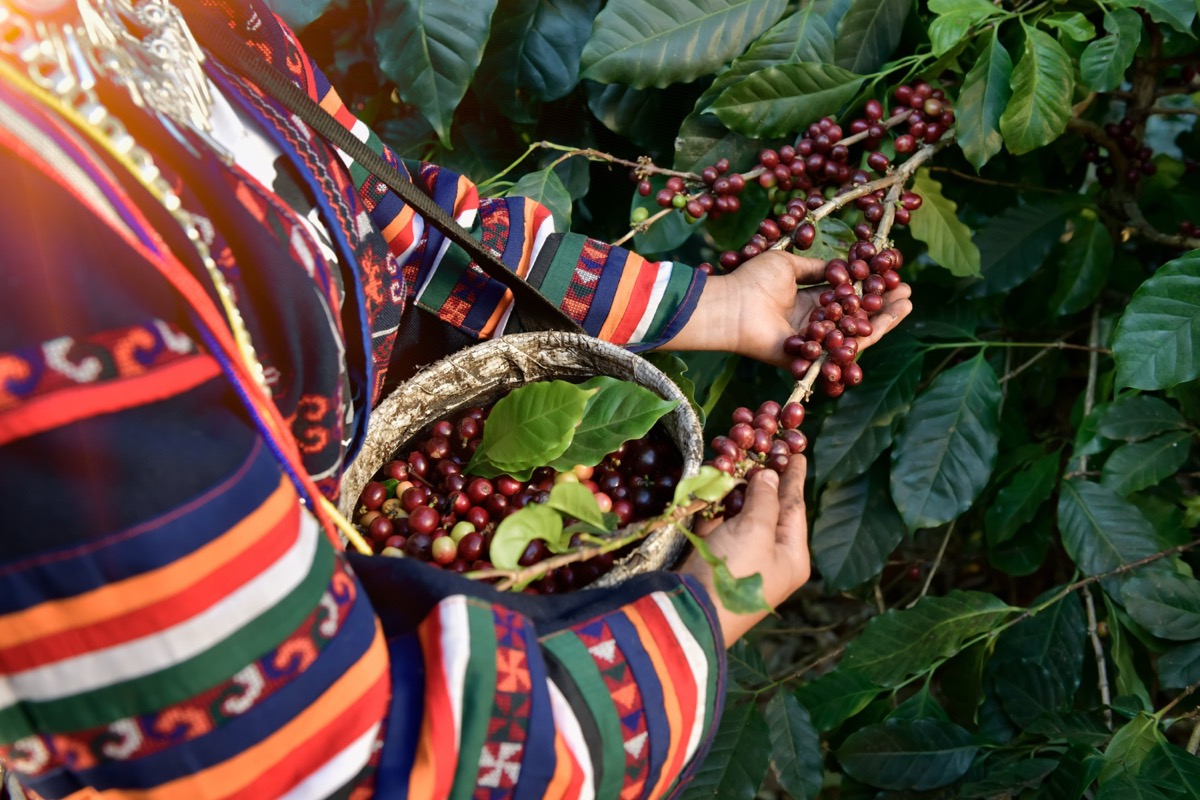
Selective hand-picking — ripe-only for clarity & sweetness
In ripe-only picking, workers harvest cherries at deep red (or yellow for certain varieties), leaving unripe fruit for later rounds. Farms may do two to five passes across the block, tracking picker training, colour charts, or °Brix. The payoff is higher sweetness, fewer astringent notes, and tighter lot uniformity. Costs rise due to labor intensity, but the cupping advantage supports premium pricing and competition-grade lots.
- Pros: Maximum flavour clarity; fewer phenolic/green notes; cleaner fermentation control.
- Cons: Highest labor cost; slower throughput; weather risk between passes.
- Buyer tells: Mention of “multiple passes,” picker bonuses, and post-harvest colour sorting.
Strip picking — speed first, then sort hard
Strip picking is common where labor is scarce or terrain is difficult. Pickers pull cherries off in one motion per branch. Without robust sorting, the mix of ripe/unripe/overripe reduces cup quality. With floatation tanks, density screens, and optical sorting, strip-picked lots can reach solid specialty levels—especially when combined with pulped-natural/washed workflows that purge light defects.
- Pros: Fast; predictable cost per hectare; stable scheduling.
- Cons: Risk of green/astringent cups; requires strong QC and discard rates.
- Buyer tells: Detailed sorting steps (float/screen/optical) and defect targets on the offer sheet.
Mechanical harvesting — calibration, terrain & post-harvest QC
Mechanical harvesters thrive in Brazil-style farm layouts with uniform rows and manageable slopes. Operators adjust shaker frequency and speed to minimise unripe drop. Even then, machines collect a spectrum of ripeness, so post-harvest selection (floatation, colour sorting) is non-negotiable for specialty. Properly run estates can deliver clean, sweet, and consistent profiles at scale—the key is discipline.
- Pros: Scale; labor efficiency; fast reaction to weather windows.
- Cons: Capex; terrain limits; still needs rigorous QC to hit top scores.
- Buyer tells: Machine model & settings, slope maps, and downstream sorting specs.
Ripeness management — how it shows up in the cup
Unripe cherries raise chlorogenic acids and push green/vegetal notes; overripe cherries add ferment, phenolic, or boozy tones. Mixed ripeness complicates fermentation, increasing variance. Specialty workflows aim to concentrate the ripeness band entering the depulper or drying bed, then maintain even moisture loss to preserve volatiles. Buyers should read defect targets (e.g., primary/secondary) and moisture/activity at arrival (≈10–12%).
- Float test: Removes light/immature cherries; first line of defense after harvest.
- Colour sorting: Optical/manual removal of under/overripe fruit pre- and post-drying.
- Drying control: Raised beds, thin layers, covered in rain; prevents phenolics and fade.
Harvest timing by region — planning offers & launches
Seasons vary by hemisphere, altitude, and rainfall. The windows below are indicative; microclimates shift by weeks. Use them to plan sampling, approvals, and launch calendars in Malaysia.
| Region | Typical Main Harvest | Notes |
|---|---|---|
| Brazil (South/Cerrado) | May–September | Large mechanical/strip operations; arrivals staggered by process (PN/natural/washed). |
| Colombia | Sept–Dec (main), Apr–Jun (mitaca) | Bimodal; fresh washed lots available most months. |
| Central America (CR/Guatemala) | Nov–Mar | Selective hand-picking common at altitude; washed & honeys. |
| Ethiopia | Oct–Jan | Selective picking; washed & natural; drying discipline is key for florals. |
| Kenya | Oct–Dec (main), Jun–Aug (fly) | Ripe-only picking typical; factory-level QC; auction calendars apply. |
| Indonesia (Sumatra/Java) | May–Oct (varies) | Methods vary; wet-hulled lots require special drying care. |
| PNG | May–Sept | Smallholder selective picking; logistics affect consistency. |
Buying guide — reading offer sheets through a harvest lens
Ask how the cherries were picked and how mixed ripeness was managed. Solid offer sheets specify: method (selective/strip/mechanical), number of passes, sorting steps (float, density screens, optical/manual), drying approach, and arrival analytics. For feature coffees, prioritise selective hand-picked or mechanically harvested with rigorous sorting. For blend anchors, well-sorted strip or mechanical lots can be excellent value.
Offer matching
Tell us flavour targets; we shortlist lots with harvesting + QC details to match.
QC on arrival
We re-check moisture/screen/cup; retention samples support repeatability.
Ops & logistics
Local sampling and delivery/pickup from Malaysia stock.
How Scofi helps — cup-verified lots from local Malaysia stock
As Scofi (Soo Hup Seng Trading Co Sdn Bhd), we connect Malaysian roasters to traceable green coffee with clear harvesting workflows. We validate lots on arrival, keep retention samples, and advise on roast/brew baselines so your menu translates harvest discipline into consistent cups.
- Shortlists by flavour & process (washed/pulped-natural/natural).
- Packaging guidance (GrainPro/vacuum) for humid storage.
- Menu planning aligned to harvest calendars and arrivals.
FAQ: Coffee Harvesting Methods
1) Which method gives the best cup quality?
Selective hand-picking, because it concentrates ripe fruit and reduces green/overripe defects. Mechanical can approach it when followed by rigorous sorting.
2) Can strip-picked coffee still be specialty?
Yes—if farms run robust floatation, density screens, and optical/manual sorting to remove unripe/overripe fruit before processing.
3) Why do some estates prefer mechanical harvesting?
Scale, labor efficiency, and weather responsiveness. It requires uniform terrain and strong downstream QC to reach top cup scores.
4) Do multiple passes always mean better coffee?
They increase the chance of ripe-only picking, but results still depend on sorting, drying discipline, and farm management.
5) How does ripeness affect flavour?
Unripe adds green/astringent notes; overripe can add ferment or phenolics. Tight ripeness bands yield sweeter, clearer cups.
6) What should I look for on an offer sheet?
Harvest method, number of passes, sorting steps, drying method, and arrival analytics (moisture ≈10–12%). Photos/logs add confidence.
7) Does harvesting method change my roast?
Lots with tighter ripeness typically tolerate lighter end-temps (filter clarity). Mixed-ripeness lots may benefit from slightly longer development for balance.
8) How do seasons impact my buying calendar?
Plan samples and launches around regional harvest windows; target approvals within weeks of harvest for peak aromatics.
9) Is hand-picking always sustainable?
It improves quality but depends on fair labor and economics. Many farms blend methods to balance quality, cost, and worker welfare.
10) Can Scofi help verify harvest claims?
Yes. We request detailed harvest/QC notes, re-cup on arrival in Malaysia, and keep retention samples so you can validate performance.
