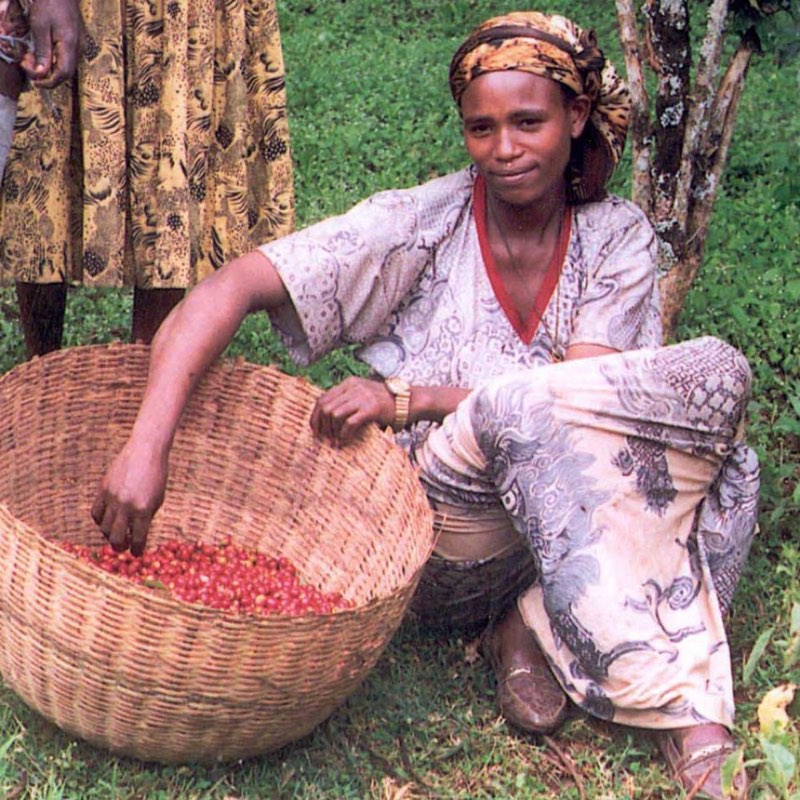
What is Yirgacheffe coffee?
Yirgacheffe is a coffee-growing area in the Gedeo Zone of southern Ethiopia, and one of the most recognised names in specialty coffee. The area's high altitude, rich soils and local heirloom varieties produce coffee with exceptional aroma. See the wider country in our Ethiopia coffee origin guide.
Washed vs natural Yirgacheffe
| Washed | Natural | |
|---|---|---|
| Flavour | Jasmine, bergamot, lemon, tea-like | Blueberry, strawberry, tropical fruit, winey |
| Body | Light, silky | Fuller, juicier |
| Acidity | Bright, clean | Softer, fruit-driven |
| Best use | Filter, light roasts | Filter, short feature runs |
Washed lots are cleaner and more delicate, while naturals are bolder and fruitier but need careful sorting to stay clean. Read processing methods.
Grading and sub-areas
- Ethiopian grades: run from Grade 1 (best) to Grade 9. Washed Grade 1 and 2 lots are the usual specialty offers.
- Sub-areas: names such as Kochere, Konga, Aricha, Idido and Gedeb often appear on lots.
- What to check: station name, crop year, process, moisture (about 10–12%), screen size and cup score. See grading standards and moisture levels.
Roasting and brewing Yirgacheffe
Roast light to medium-light and keep development moderate so the florals survive. Brew as filter, near 1:16, and serve black or in small pours. See how to roast Ethiopian coffee, roasting levels and the brew ratio calculator.
How to buy Yirgacheffe coffee in Malaysia
1. Choose washed or natural. 2. Ask for the grade, sub-area and crop year. 3. Write a spec. 4. Request a sample and cup it. 5. Confirm packaging; premium lots justify GrainPro. See packaging options. Scofi can discuss Ethiopian lots, depending on availability. Request a quotation.
Yirgacheffe history and heirloom varieties
Ethiopia is the birthplace of Arabica, and the Yirgacheffe area has some of the most diverse coffee populations in the country. Most plants are local "heirloom" selections and improved lines from Ethiopian research stations, often grouped on offer sheets as heirloom or by numbers such as 74110 and 74112. This genetic diversity is one reason Yirgacheffe cups are so aromatic and varied from one lot to the next. For the wider picture, see our Ethiopia coffee origin guide and the history of Arabica.
Yirgacheffe sub-areas and washing stations
Offer sheets often name a sub-area or station, such as Kochere, Konga, Aricha, Idido, Gedeb or Koke. These names do not guarantee quality, but they help you compare lots and repeat a good buy. Washing stations collect cherries from many smallholders, sort them, pulp them, ferment and wash the beans, then dry them on raised beds. The care taken at the station is often what separates a clean, floral lot from an ordinary one. See washed Arabica coffee for how the method works.
Understanding Ethiopian grades
Ethiopian coffee is graded from Grade 1 to Grade 9, mainly by the number of defects in a sample, with Grades 1 and 2 used for specialty-quality washed lots. Grade 1 has the fewest defects, and Grade 2 allows slightly more. A lot is also described by process (washed or natural) and by screen size. When you read an offer, confirm the grade, defect count and screen size, and check that the cup notes match your target. See grading standards.
Yirgacheffe lot Scofi lists
Scofi lists a Ethiopia Yirgacheffe Washed Koke Arabica. Koke is a well-known washing station area in Yirgacheffe, and washed lots from there are popular for jasmine, lemon and tea-like flavour. Check the product page for the current lot and contact Scofi for samples and a quotation.
How to roast Yirgacheffe: a protective profile
Yirgacheffe is dense and aromatic, so it can handle a reasonable charge but must not be pushed in the late stage. A common approach is a medium-high charge, steady heat through drying and Maillard, first crack at a controlled pace and a short development of roughly 15–18% of total time. Stop before the cup turns roasty. Rest for a few days before tasting. See how to roast Ethiopian coffee, rate of rise and development time ratio. Log every batch with the roast log template.
Brew recipes for Yirgacheffe
| Method | Dose | Water | Notes |
|---|---|---|---|
| Pour-over | 15 g | 250 g at 93–95 °C | 2:30–3:00 total, rinse the filter first |
| AeroPress | 15 g | 225 g | 2 minutes. See AeroPress guide |
| Cold brew | 100 g | 1,000 g | 12–14 hours for a floral, tea-like iced coffee |
| Espresso | 18 g | 40 g out | Bright and aromatic, best as a feature |
Use the brew ratio calculator to scale recipes.
Buyer checklist before ordering Yirgacheffe
1. Choose washed or natural. 2. Ask for grade, sub-area or station, and crop year. 3. Check moisture (about 10–12%), screen size and defect count. 4. Cup a sample and score it with the cupping score sheet. 5. Choose protective packaging such as GrainPro for premium lots. See packaging options. 6. Plan timing against the harvest calendar.
FAQ: Yirgacheffe coffee beans
What does Yirgacheffe coffee taste like?
Washed Yirgacheffe is floral and citrusy with jasmine, bergamot and lemon, and a light, tea-like body. Natural lots are fruitier with berry notes.
Where is Yirgacheffe coffee from?
It is from the Yirgacheffe area in the Gedeo Zone of southern Ethiopia.
Is Yirgacheffe washed or natural?
Both exist. Washed is the classic style, and naturals are also produced. Ask for the process on the lot.
What is Grade 1 Yirgacheffe?
Grade 1 is the top Ethiopian quality grade, with the fewest defects and best cup quality.
How should I roast Yirgacheffe?
Light to medium-light roasts with moderate development protect the floral and citrus notes.
How do I brew Yirgacheffe?
Use filter methods near 1:16 with water around 92–94 °C, and drink it black.
When is Yirgacheffe harvested?
Around October to January. See the harvest calendar.
Can I buy Yirgacheffe green coffee in Malaysia?
Scofi can discuss Ethiopian lots, depending on availability. Contact us.
What does Koke mean in Yirgacheffe coffee?
Koke is the name of a washing station area in Yirgacheffe. Coffee from there is washed and known for floral, citrus and tea-like flavour.
Is Yirgacheffe Grade 1 or Grade 2 better?
Grade 1 has fewer defects than Grade 2, but cup quality matters most. Both are specialty-quality grades, so cup samples.
What variety is Yirgacheffe coffee?
Mostly Ethiopian heirloom varieties and improved local lines, which give the cup its complexity.
How is Yirgacheffe different from Sidamo and Guji?
All three are southern Ethiopian regions. Yirgacheffe is usually the most delicate and floral, while Sidamo and Guji can be fruitier and heavier. See Ethiopia origin.
Is Yirgacheffe good for espresso?
It can be used as a bright feature in a blend or single-origin espresso, but filter usually shows it best.
