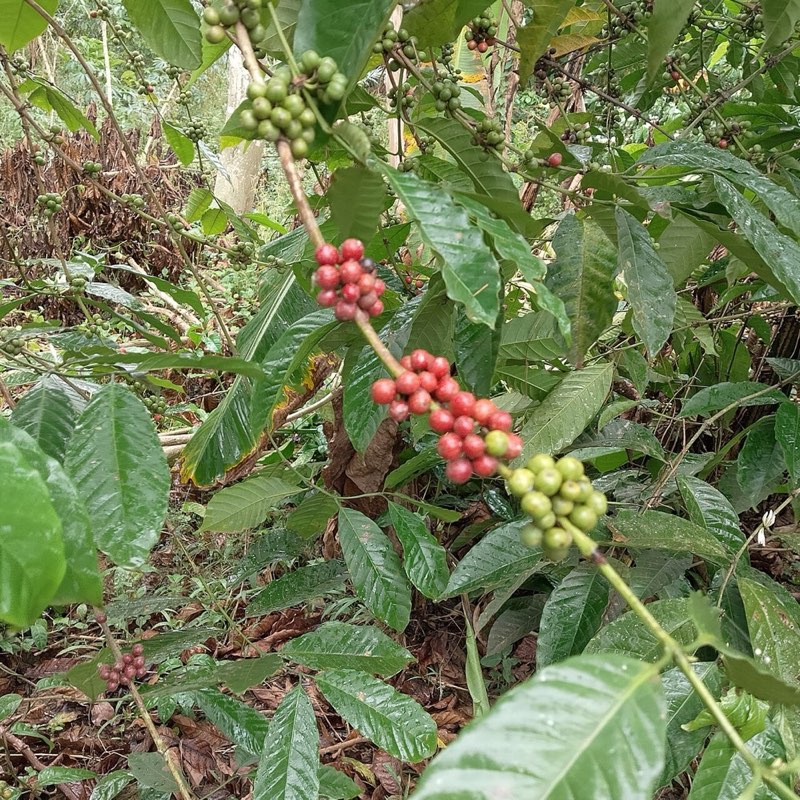
Why Rwanda coffee stands out
Rwanda is small, hilly and high, with volcanic soils and a climate that suits Arabica. Coffee is grown mostly by smallholders who deliver cherries to washing stations, where cherries are sorted, pulped, fermented, washed and dried on raised beds. That shared processing is why Rwanda coffee beans are often clean and consistent. Read about the method in our washed Arabica coffee guide.
Rwandan flavour profile
Expect red fruit, citrus, floral notes and tea-like clarity, with sweetness in the finish. The cup is usually less sharp than Kenya and more structured than Ethiopia. Naturals and honey lots are made in smaller quantities and are fruitier.
| Process | Typical cup | Best use |
|---|---|---|
| Washed | Red fruit, citrus, florals, black tea | Filter, light-to-medium roasts |
| Honey | Sweet, juicy, soft acidity | Filter or aromatic espresso |
| Natural | Berry, ripe fruit, heavier body | Short feature runs |
See also processing methods.
Growing regions and varieties
- Varieties: mainly red Bourbon, plus some other lines. See Bourbon.
- Regions: lots often come from the Western, Southern and Northern areas, including the Lake Kivu zone. Ask for the washing station name for traceability.
- Altitude: commonly around 1,500–2,000 m, which builds density and acidity. See altitude impact.
Quality: what to check and the potato defect
Some Rwandan lots can suffer from the potato taste defect, a raw, earthy off-note linked to damage from insects. Good washing stations sort carefully to avoid it, but it is a reason to always cup before you buy. Also check moisture (about 10–12%), screen size, defect count and crop year. Use the cupping score sheet and the defect detection guide.
Roasting and brewing Rwanda coffee
Roast light to medium to protect florals and fruit. Filter methods show Rwandan coffee best. See how to roast washed Arabica and the brew ratio calculator.
How to buy Rwanda coffee beans in Malaysia
1. Choose the process and flavour target. 2. Ask for the washing station, crop year and grade. 3. Write a spec. 4. Cup a sample. 5. Confirm packing, especially for fresh crop. See packaging options. Scofi can discuss Rwandan lots, depending on availability. Request a quotation.
Rwanda coffee history in brief
Coffee was introduced to Rwanda in the early twentieth century and became a major export crop. After the 1994 genocide, the sector was rebuilt with support for cooperatives and new washing stations, and quality became a national priority. Rwanda has hosted a Cup of Excellence competition, which helped put its best lots in front of international buyers. Today the industry is built around smallholders delivering cherries to washing stations, so quality depends heavily on how well each station sorts and processes. For buyers, the main takeaway is traceability. Many Rwandan lots can be traced to a station or cooperative, and the better ones publish details of altitude, process and cup score.
How a Rwandan washing station works
Smallholders bring cherries to the station at the end of each day. Good stations follow a careful routine.
- Sorting and flotation: unripe and floating cherries are removed.
- Pulping and fermentation: skins are removed and the mucilage is fermented off.
- Grading in water channels: denser beans sink and are separated from lighter ones.
- Drying on raised beds: beans are turned often and sorted by hand to remove defects.
Each of these steps shapes the clean, sweet cup Rwanda is known for. See the general process in our washed Arabica coffee guide, and compare it with natural processing.
Rwanda coffee grades and the potato defect
Rwandan lots are described by screen size and quality, and by the washing station they came from. You may see terms such as screen 15 and above, A and B grades, or specialty and fully washed. Always ask for the exact screen size, moisture and defect count. The potato taste defect is a raw, earthy off-note caused by insect damage to the cherry. It appears in some lots across the Great Lakes region and, while careful sorting reduces it, a single bad bean can spoil a cup. That is why you should cup several cups of a sample, not just one, and why a reputable supplier will tell you how the lot was screened. See defect detection.
Rwanda lot Scofi lists
Scofi lists a Rwanda SC 15 Arabica on its product page. "SC 15" refers to the screen size, meaning most beans are retained on a size 15 screen. Listings change with the crop, so check the product page for the current lot and contact Scofi for samples, specs and a quotation.
Brewing and roasting recipes
Roast light to medium and avoid long development. A medium-light roast with first crack at a steady pace usually keeps the red fruit and tea-like notes. See how to roast washed Arabica.
| Method | Dose | Water | Notes |
|---|---|---|---|
| Pour-over | 20 g | 320 g at 93–95 °C | 2:45–3:15 total time |
| AeroPress | 15 g | 225 g | See AeroPress guide |
| French press | 30 g | 450 g | 4 minutes, press slowly |
| Espresso | 18 g | 40 g out | Bright shot, best in a fruit-forward blend |
Rwanda compared with Kenya and Ethiopia
| Origin | Typical cup | Best for |
|---|---|---|
| Rwanda | Red fruit, floral, black tea, balanced | Filter and clean espresso blends |
| Kenya | Blackcurrant, juicy acidity, winey | Bold filter. See Kenya |
| Ethiopia | Floral, citrus, tea-like | Delicate filter. See Ethiopia and Yirgacheffe |
| Uganda | Chocolate, wine, fruit | Blends. See Uganda Robusta |
Buyer checklist before ordering Rwanda coffee
1. Confirm station, process, variety and crop year. 2. Ask about screening and how the lot was checked for potato defect. 3. Check screen size, moisture and defect count. 4. Cup the sample with at least five cups. 5. Confirm packaging; GrainPro helps preserve delicate lots. See packaging options. 6. Confirm delivery terms and arrival timing against the harvest calendar.
FAQ: Rwanda coffee beans
What do Rwanda coffee beans taste like?
Typically red fruit, citrus, florals and black tea, with sweetness and balanced acidity. Naturals can taste of berries.
What variety is Rwandan coffee?
Mostly Bourbon, with smaller amounts of other Arabica lines.
What is the potato defect in Rwanda coffee?
It is a raw, earthy off-note found in some lots, which careful sorting and cupping help avoid.
Is Rwanda coffee similar to Kenya?
Somewhat. Both are bright, fruity and washed, but Rwanda is usually softer and sweeter. See Kenya coffee beans.
How should I roast Rwandan coffee?
Light to medium roasts keep the florals and fruit.
When is Rwanda coffee harvested?
Roughly March to June. See the harvest calendar.
Is Rwandan coffee good for espresso?
It can be, as a bright component in a blend or as a fruity single origin. Filter is more common.
Can I buy Rwanda green coffee in Malaysia?
Scofi can discuss Rwandan lots, depending on availability. Contact us.
What does SC 15 mean on Rwanda coffee?
SC 15 refers to screen size 15, meaning most of the beans are retained on a screen with 15/64 inch holes. It describes bean size, not quality on its own.
Why is Rwanda coffee so clean?
Because it is processed at washing stations that sort, ferment, wash and dry cherries under control, which reduces defects and gives a clean cup.
Does Rwanda coffee taste like Kenya?
They share brightness and fruit, but Rwanda is usually softer, sweeter and more floral, with less of Kenya's blackcurrant punch.
How do I avoid the potato defect?
Buy from suppliers who screen their lots, cup multiple cups of a sample and avoid lots with raw, earthy off-notes.
Is Rwanda coffee good for cold brew?
It can be, particularly lighter roasts with floral and red fruit notes. Use a coarse grind and a ratio of about 1:12 to 1:15 for ready-to-drink.
