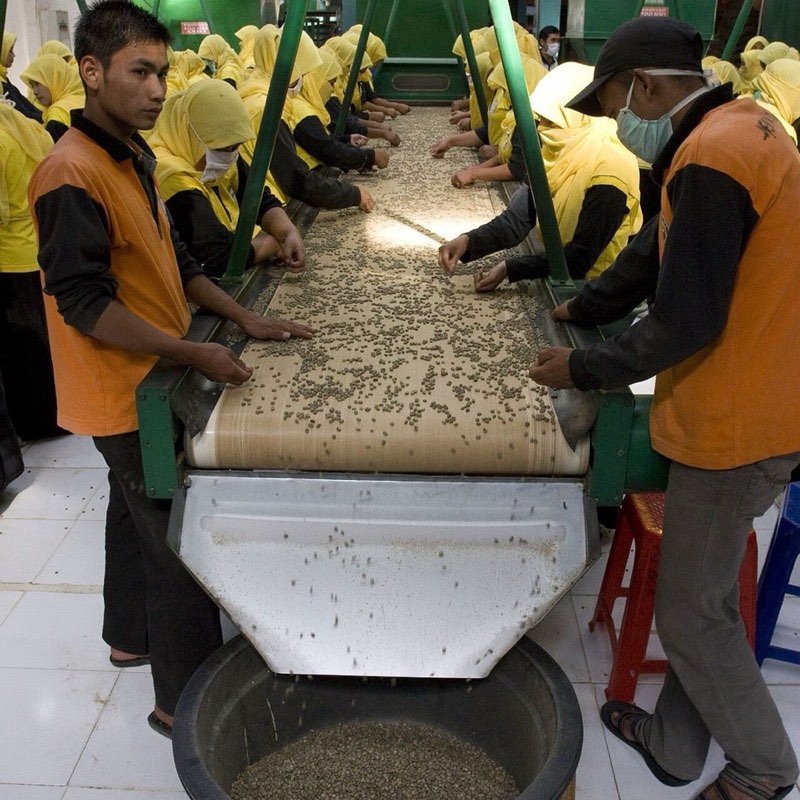
Why Robusta grading matters
Robusta is traded in huge volumes, and small differences in size and defects change roasting, extraction and price. Unlike Arabica, there is no single worldwide specialty grade system, so each producing country uses its own standard. Understanding the pieces lets you compare offers. For Indonesian grades see Grade 1 vs EK-1.
Screen size: how Robusta beans are sized
Beans are passed through sieves with round holes. A screen number is the hole diameter in 64ths of an inch.
| Screen | Hole size | Typical meaning |
|---|---|---|
| 13 | About 5.2 mm | Smaller beans; common for Vietnam Robusta Grade 2 |
| 15 | About 6.0 mm | Medium |
| 16 | About 6.3 mm | Medium-large |
| 18 | About 7.1 mm | Large beans |
Bigger beans usually roast more evenly, but size alone does not mean better flavour.
Defects: the second half of the grade
Grades also limit defects such as black beans, broken beans, insect-damaged beans, husks, sticks and stones. The standards count them differently: some use a percentage of black and broken beans, others a defect-value count per sample. See defect detection for what each defect does to the cup.
Robusta grading by origin: a general guide
| Origin | Common way to describe grade |
|---|---|
| Vietnam | By screen size and a maximum percentage of black and broken beans (for example Grade 2, screen 13, 5% black and broken) |
| Uganda | By screen size, such as Screen 15 or Screen 18, with defect limits; sold as dry-processed (often called Drugar) or washed |
| Indonesia | By defect value per 300 g sample, Grade 1 to 6; see Grade 1 vs EK-1 |
| India | By estate or cherry and parchment type, with size grades |
Standards and wording change, so always confirm the exact standard in writing and check against your own sample.
Washed (wet-processed) vs natural Robusta
Most Robusta is natural (dry-processed): cherries dried whole. Washed Robusta is depulped, fermented and washed, then dried, like Arabica. Washed lots usually have fewer defects and a cleaner, sweeter cup, but are less common and cost more.
| Factor | Natural | Washed |
|---|---|---|
| Flavour | Heavier, earthy, nutty, bitter | Cleaner, sweeter, less harsh |
| Defects | More variation | Usually fewer |
| Availability | Very common | Less common |
| Price | Lower | Higher |
See processing methods, wet processing and fine Robusta.
What to put in a Robusta specification
- Origin and process (natural or washed).
- Screen size and distribution.
- Defect limit in the origin’s own terms.
- Moisture range. See moisture levels.
- Crop year, packaging and net weight. See packaging options.
- Cup quality: no mould, rubber, smoke or chemical notes.
Add an approved reference sample.
How to buy graded Robusta
Ask for the grade, size, defect test and a sample, then cup and roast-test it. See green coffee sample packs, Indonesia Robusta price in Malaysia and how to buy. Scofi supplies green coffee from Butterworth, Penang, and can discuss Robusta lots, depending on availability. See Scofi Malaysia supplier.
Wet polished Robusta explained
Wet polished Robusta is a term used in the trade for washed (wet-processed) Robusta that is also polished after hulling. Polishing removes silverskin and loose chaff, which gives a cleaner appearance and a more consistent roast.
- Washed vs natural: washed Robusta is usually cleaner and sweeter. See fine Robusta.
- What to ask for: screen size, maximum defects, moisture and the grading system used (for example EK-1 for Indonesia). Read Grade 1 vs EK-1.
- Use it for: espresso blends and cafés that want a cleaner Robusta. See Robusta in espresso blends.
Terms vary by origin and supplier, so always confirm exactly what is on the specification.
FAQ: Robusta coffee grading
How is Robusta graded?
By screen size and defects, using each origin’s own standard.
What does Robusta screen 18 mean?
Beans retained on a sieve with about 7.1 mm holes, so large beans.
What is Vietnam Robusta Grade 2?
A common grade described by screen size (often 13) and a maximum percentage of black and broken beans. Confirm the exact standard.
What is washed Robusta?
Robusta processed with the wet method, like Arabica, for a cleaner cup.
Is bigger Robusta better?
Bigger beans roast more evenly, but flavour depends on quality and processing.
Is EK-1 a Robusta grade?
It is an Indonesian trade term, not a separate grade tier. See Grade 1 vs EK-1.
How do I compare Robusta from different countries?
Compare screen size, defects, moisture and a cupped sample, not the grade name alone.
Can Scofi help me specify Robusta?
Yes, depending on availability. Contact us.
What is wet polished Robusta?
It is washed Robusta that has been polished after hulling to remove silverskin and give a cleaner, more uniform bean. The exact meaning can vary by supplier, so confirm it on the spec.
Is wet polished Robusta better?
It is usually cleaner and more consistent than a basic natural Robusta, but whether it is better depends on your cup target and price.
