
Roasting Honey Process: Managing Caramelization & Sweetness
Honey process coffees sit between washed and naturals—sticky mucilage, controlled fruit, and big sweetness potential. This guide shows you how to roast honey process green coffee beans from Scofi so you get layered caramelization and clean fruit, without scorching, stripy color or baked cups.
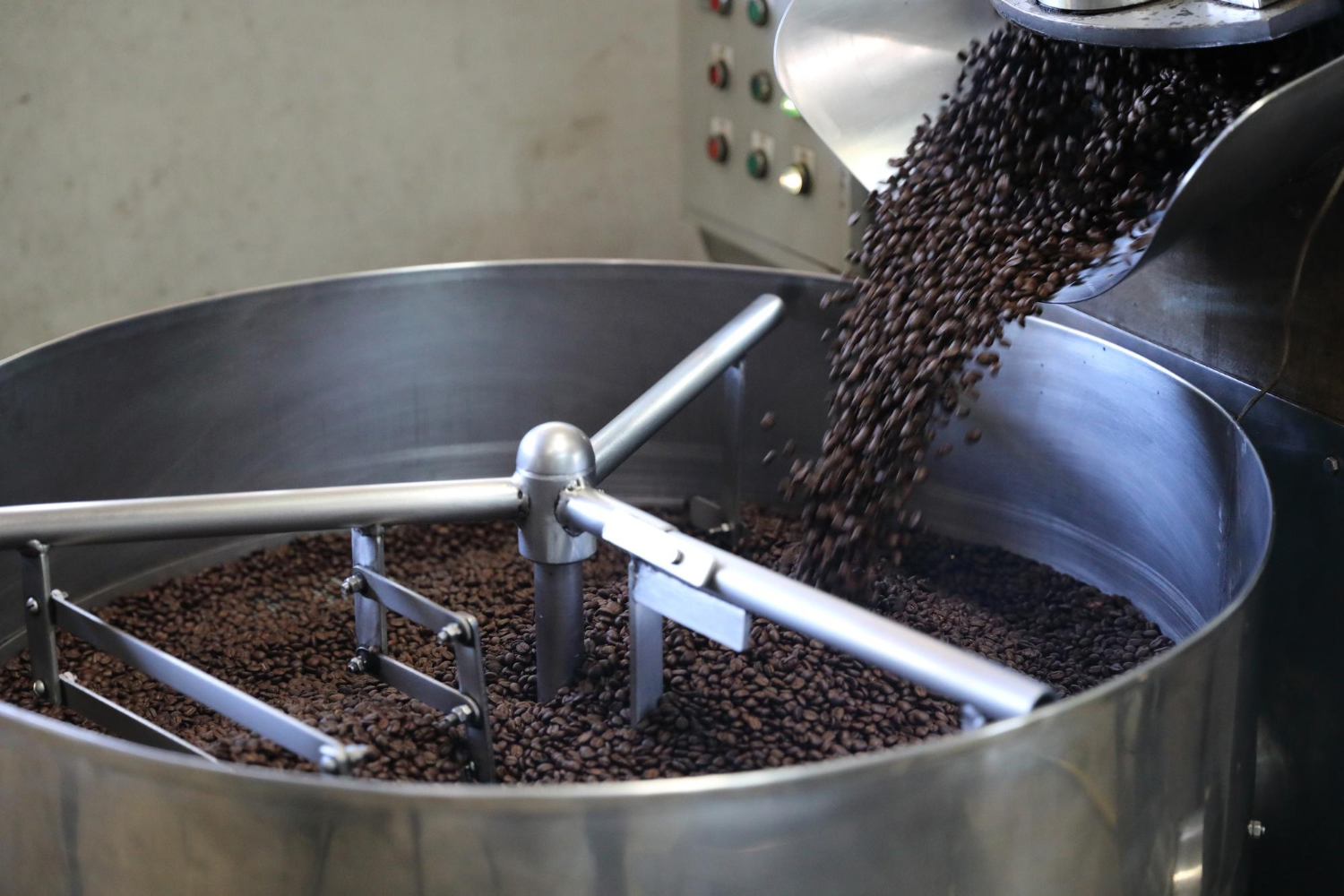
How Honey Process Coffees Behave In The Roaster
In honey processing, producers mechanically remove the cherry skin but leave part of the sticky mucilage on the seed while it dries. Depending on how much is left—and how the lot is turned or shaded—you get **yellow, red or black honey** styles with increasing fruit intensity and risk.
Compared with washed and natural coffees, honey lots usually show:
- Some surface sugars (not as much as naturals, more than washed) that can scorch or darken quickly.
- Moderate to high sweetness potential when caramelization is well-managed.
- More even moisture than many naturals—but still sensitive to drying and storage conditions.
Honey coffees can taste stunning—honey-like sweetness, ripe fruit and syrupy body—if you control **caramelization and development** carefully. When things go wrong, you often see **stripy, uneven color**, cups that are **smoky or ashy**, or sweetness that feels heavy and flat instead of clean.
The goal of this page is to help you roast honey lots from Scofi with the same confidence you have with washed coffees. We’ll reference fundamentals from How To Roast Green Coffee For Roasters, Roasting Washed Arabica and Roasting Natural Process.
Honey vs Washed vs Natural — Snapshot
| Attribute | Honey | Washed | Natural |
|---|---|---|---|
| Surface sugars | Medium | Low | High |
| Fruit intensity | Medium–high | Low–medium | High |
| Common risk | Scorch, stripy color, smokiness | Sour or baked | Baked jam, phenolics |
| Typical role | Sweet filter, modern espresso | Clarity, blend base | Fruit-forward features |
Profile Strategy — Steering Caramelization & Sweetness
Honey coffees reward profiles that are slightly more careful than washed, but less fragile than naturals. Think of them as a “bridge” between the two. You want **even heat application**, **strong but clean airflow** and a **steady ROR** that avoids both stalls and runaway caramelization.
1. Charge & Drying — Respect The Sticky Surface
Honey lots rarely like extreme charge temperatures. Too hot and you see scorch and stripy color; too low and you end up stretching the roast into baked territory.
- Charge slightly below washed but not as low as your most delicate naturals.
- Avoid full gas right after turning point; ramp steadily instead of spiking ROR.
- Use moderate-to-strong airflow from early on to keep smoke and chaff moving out of the drum.
Aim for a drying time in the 4–5 minute range for most drums and batch sizes. You want beans well-dried and warmed through before pushing Maillard reactions.
2. Maillard — Building Caramel & Body
Maillard is where honey coffees shine. As sugars and amino acids react, you build the caramel, toffee and panela notes many baristas love.
- Give Maillard adequate time: 4.5–5.5 minutes is common for medium-density honey lots.
- Keep ROR **gently declining**, not flat or rising; stalls here often taste like stale caramel or cardboard.
- Monitor smoke—if it spikes, increase airflow or check for chaff build-up.
If cups taste like **raw sugar and undercooked pastry**, Maillard was too short. If they taste **heavy, one-note sweet and smoky**, Maillard and development likely dragged at low energy.
3. Development — Finish Sweetness Without Ash
After first crack, honey coffees can darken quickly. Your job is to let internal development catch up while avoiding a rush into roasty or ashy territory.
- Filter: roughly 1:15–2:05 after first crack (16–20% of total time).
- Espresso: roughly 1:35–2:30 after first crack (18–24% of total time).
You may finish at a slightly deeper color than your cleanest washed filter roasts, but lighter than classic chocolate-heavy espresso blends. You want **structured sweetness and gentle fruit**, not smoke and carbon.
When transitioning from washed to honey, keep the same basic curve shape but soften charge, add a bit more Maillard time and watch color closely in development. The goal is smooth caramelization—no burnt edges, no pale centers.
Filter vs Espresso — Where Honey Process Shines
Filter Roast — Comfort & Clarity
Honey filter profiles are ideal when you want a cup that sits between bright washed and wild naturals: **comforting sweetness, clean fruit, easy to drink**.
- Roast to light–medium with 16–20% development.
- Highlight flavors like honey, panela, stone fruit, citrus rather than heavy roast notes.
- Use brew ratios of 1:15–1:16 at 92–96 °C and moderate extraction yields.
If filter cups feel **too dense or sticky**, reduce development by 15–20 seconds and check whether Maillard is overly long.
Espresso Roast — Sweet, Modern Shots
For espresso, honey coffees give you **dense sweetness and rounded acidity** that works for both straight shots and milk drinks when profiles are tuned.
- Roast to a solid medium with 18–24% development.
- Target flavor notes like caramel, dried fruit, nougat, gentle citrus.
- Start with espresso ratios around 1:2–1:2.1, 28–32 seconds, and calibrate for sweetness and texture.
Honey espresso that tastes **ashy or smoky** usually needs lower charge or shorter development; espresso that tastes **thin and sugary but weak** may need a bit more Maillard and a slightly deeper drop color.
Menu Roles For Honey Coffees
| Role | Roast Direction | Notes |
|---|---|---|
| Comfort filter | Light–medium | Highlight honeyed sweetness and soft fruit. |
| Modern espresso | Medium | Dense sweetness, gentle acidity in milk. |
| Blend sweetener | Medium | Use 20–50% with washed base for sweetness. |
Common Honey Roast Defects & How To Fix Them
Honey lots have their own defect patterns. Most issues Scofi sees fall into a few predictable buckets.
1. Stripy, Uneven Color
Symptoms: beans with light centers and dark edges, or a “tiger stripe” look in the cooling tray; cups taste inconsistent.
Likely causes:
- Charge too hot, with beans hitting metal before heat distributes.
- Low drum speed or poor bean movement in the early roast.
- Uneven green moisture or poorly sorted honey processing.
Fixes: lower charge by a few degrees, ensure good drum speed and agitation, and keep airflow active. If green coffee is very uneven, adjust expectations or use as a blend component.
2. Smoky Or Ashy Sweetness
Symptoms: caramel notes pushed into burnt sugar; lingering smoke or ash in the finish.
Likely causes:
- Development too long at relatively high color levels.
- Insufficient airflow; smoke trapped in drum around sticky beans.
- Chaff buildup or dirty roaster surfaces.
Fixes: shorten development by 20–30 seconds, increase airflow, and confirm your roaster is clean. Honey coffees often reveal roaster hygiene issues quickly.
3. Flat, Heavy Sweetness (Baked)
Symptoms: sweetness is present but feels heavy, dull and tiring; aromatics muted.
Likely causes:
- Very long total roast times with flat or stalled ROR in Maillard and development.
- Overly cautious charge leaving the roaster underpowered.
Fixes: increase energy slightly earlier in the roast, keep ROR gently declining but active, and avoid stretching the roast much beyond what your washed and natural profiles use.
For reference across all processes, you can build or consult a full Roast Defects 101 guide linked from this section.
Honey Defect Cheat Sheet
| Issue | Check |
|---|---|
| Stripy color |
• Charge too hot? • Drum speed / mixing? • Uneven green moisture? |
| Smoky / ashy |
• Dev too long? • Airflow strong enough? • Roaster cleanliness? |
| Flat, heavy sweet |
• Total time excessive? • Stalled ROR? • Undercharged batch? |
Honey Process Variants — Yellow, Red & Black
Not all honey coffees are created equal. The labels “yellow”, “red” and “black” usually reflect how much mucilage is left on the seed and how the coffee is dried. While exact practices differ by farm, you can treat them as a spectrum.
Yellow / White Honey
These styles remove most of the mucilage and dry coffee more quickly, often with more sun exposure. They:
- Behave closer to washed coffees in the roaster.
- Show moderate fruit and bright sweetness.
- Handle slightly higher charge temps and shorter Maillard compared with darker honeys.
Red Honey
Red honey keeps more mucilage and often uses more shade or slower drying. Expect:
- Higher sweetness and body than yellow honey.
- More risk of scorch and smokiness if charge is too aggressive.
- Profiles closer to the middle ground between washed and natural.
Black Honey
Black honeys retain the most mucilage and are usually dried under heavy shade with very limited turning. They can be extraordinary—but demanding.
- Fruit intensity and sweetness approach natural level.
- Charge and Maillard must be very controlled to avoid stripy color and smoke.
- Often benefit from dedicated profiles, especially for espresso.
When Scofi offers honey lots, the spec sheet will note the honey style, moisture, density and suggested starting curves. You can then adapt guidance from our Natural and Washed guides as needed.
Unsure how aggressive to be with a new honey lot? Share the Scofi spec sheet, your roaster model and menu plan. We can position the coffee on the washed–honey–natural spectrum and suggest starting profiles that suit its style.
Working With Scofi: Designing Honey Roast Playbooks
Honey coffees can become a signature for your roastery if you treat them systematically. Scofi’s role is to provide both **reliable green coffee** and **actionable data** so you can design repeatable profiles.
What Scofi Provides For Honey Lots
- Physical specs: moisture, density, screen size and honey style (yellow, red, black, etc.).
- Cupping notes: reference flavor descriptors, brew recipes and ideal applications.
- Profile suggestions: starting charge, phase splits and dev% for filter and espresso.
- Ongoing feedback: we welcome your roast curves and cupping notes to refine recommendations.
Simple Protocol For New Honey Coffees
- Sample roast and cup the Scofi lot to confirm flavor and process style.
- Choose the primary role: comfort filter, modern espresso or blend sweetener.
- Design 2–3 test roasts that vary Maillard length and development, keeping charge and airflow constant.
- Cup blind with your team; pick the curve that best balances caramelization, sweetness and clarity.
- Log gas, airflow and timings so you can repeat the profile with confidence.
Do this a few times and you’ll have a **honey-specific playbook** for your roastery—making each new Scofi honey lot faster to dial in and easier to feature on your menu.
Honey Profile Checklist
| Step | Key Action |
|---|---|
| 1. Understand | Read Scofi specs: honey style, density, moisture, flavor notes. |
| 2. Test | Run a few curves varying Maillard and dev time only. |
| 3. Choose | Cup blind and pick the sweet spot profile. |
| 4. Standardize | Write a profile sheet; train staff. |
| 5. Review | Re-cup mid-season; adjust as coffee ages. |
FAQ — Roasting Honey Process Coffees
How is roasting honey coffees different from washed and naturals?
What development time works best for honey filter roasts?
How should I roast honey coffees for espresso?
Why do my honey roasts look stripy or uneven in color?
How can I avoid smoky or ashy flavors in honey coffees?
Do yellow, red and black honey coffees need different profiles?
Can I use honey coffees in blends?
How long should I rest honey roasts before serving?
What brew ratios work well for honey filter coffees?
Can Scofi help design honey roast profiles for my roaster?
Keep Exploring Roasting Guides With Scofi
Big-picture fundamentals: temperatures, profiles and best practices.
Clean cups, bright acidity and structured sweetness.
Keep fruit intensity while avoiding baked or phenolic cups.
Harness experimental processes without harsh ferment.
Balance big body with clarity in giling basah coffees.
Lower charge temps, longer development without baking.
Plan Your Next Honey Process Roast With Scofi
Tell us your menu role, flavor targets and roaster setup. We’ll recommend honey process green coffee beans from Scofi stock, share starting profiles, and help you manage caramelization and sweetness without defects.