How long does green coffee last?
Green coffee is a dried seed, so it is much more stable than roasted coffee. Under good conditions most buyers treat 6 to 12 months from harvest as the window for best quality. Many lots stay drinkable for longer, but flavour fades gradually. Denser, high-grown beans usually hold up better than soft, low-grown ones. Fresh crop (the newest harvest) tastes best, and "past crop" or "old crop" lots are often discounted. See the harvest calendar to know when new crop arrives.
| Storage | What to expect |
|---|---|
| Jute bag in a hot, humid room | Faster ageing, risk of mould and smells. Use within a few months |
| Jute bag in a cool, dry, ventilated room | Good quality for about 6–9 months |
| Sealed barrier bag (GrainPro, vacuum) in a cool room | Good quality for 9–12 months or longer |
| Opened bag with no resealing | Quality drops faster, especially in humid weather |
These are guidelines. Always check the beans before you roast.
Signs that green coffee has aged or gone bad
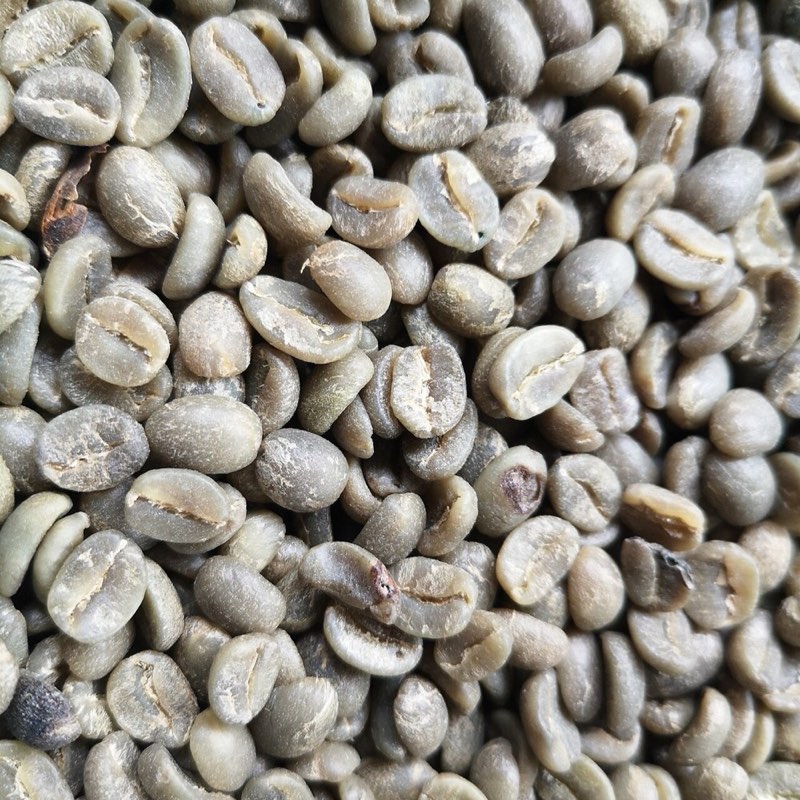
- Colour: fresh beans look green to blue-green. Aged beans turn pale yellow, tan or brown.
- Smell: fresh beans smell grassy or sweet. Old beans smell like hay, straw or wood. Musty, sour or mouldy smells are warning signs.
- Texture: beans should feel hard and dry. Soft, damp or sticky beans are a problem.
- Mould or powder: any visible mould, white dust or black spots means the beans should not be roasted.
- Roasting behaviour: aged beans often roast faster, show weak first crack and taste flat or "baggy". See roast defects.
What damages green coffee
- High humidity: beans absorb moisture from the air, which can raise moisture above the safe level and invite mould.
- Heat: warm rooms speed ageing and flavour loss.
- Light: long exposure fades colour and dulls flavour.
- Strong smells: green coffee absorbs odours from fuel, paint, spices and cleaning products.
- Poor packing: thin bags or open sacks let humidity and smells in.
- High starting moisture: beans over about 12% moisture are at higher risk. Check on arrival. See moisture levels.
How to store green coffee in Malaysia
Malaysia is hot and humid all year, so storage matters more here than in cooler countries. 1. Keep it cool and out of the sun. An air-conditioned room is ideal. Avoid rooftops, kitchens and garages. 2. Control humidity. Aim for a relative humidity of roughly 50–60% if you can. A dehumidifier helps. 3. Use barrier packaging. GrainPro or vacuum bags protect against humidity far better than jute alone. See packaging options. 4. Raise bags off the floor on pallets or shelves, and leave space from walls. 5. Keep it away from smells. Store coffee away from chemicals, fuel and food with strong aromas. 6. Seal after opening. Roll and clip the liner, or move beans to airtight food-grade containers. 7. Rotate stock. Use older lots first (first in, first out) and label bags with arrival dates. 8. Buy what you can use. Plan orders around your roasting volume. Use the roast loss calculator to estimate how much you need. For more detail, read green coffee storage tips and post-harvest storage.
Can you roast older green coffee?
Yes, if it is clean and dry. Older beans often need a slightly different approach.
- Lower the charge temperature and shorten the roast a little, because aged beans lose moisture faster.
- Expect lower acidity and sweetness and less aroma. Medium-dark roasts hide ageing better than light roasts.
- Blend them. Using older coffee as part of a blend can save cost without hurting the cup too much.
- Log the result. Use the roast log template so you can repeat it.
Cup a small batch first. If it tastes flat, papery or musty, do not use it for light-roast single origins.
Buying green coffee that lasts
- Ask for the crop year and moisture on every lot. See the spec sheet.
- Request barrier packing for premium or long-storage lots.
- Cup a sample before you commit to a large order. See the sample pack.
- Check on arrival. Open a few bags, check the smell, colour and moisture, and keep a retention sample.
- Order in realistic quantities. Smaller, regular orders are safer than one huge stock.
Scofi supplies unroasted Arabica and Robusta in Malaysia, depending on availability. Request a quotation and tell us how quickly you roast so we can suggest pack sizes.
FAQ: Does green coffee go bad?
How long does green coffee last?
Under good storage, commonly about 6–12 months for best quality, and longer in barrier bags. Beans slowly lose aroma and sweetness over time.
Does green coffee expire?
It has no hard expiry date, but quality declines with age, and damp storage can cause mould. Check smell, colour and feel before use.
Can green coffee go mouldy?
Yes, if it absorbs moisture. Beans above about 12% moisture or stored in humid rooms are at higher risk. Do not roast mouldy beans.
Should I refrigerate green coffee?
Usually not. Fridges are humid and full of smells. A cool, dry, ventilated room or airtight container is better.
Is old green coffee safe to roast?
If it is clean, dry and smells normal, yes, though the cup may be flatter. Discard any beans with mould or musty smell.
How do I know if green coffee is fresh?
Fresh beans are green to blue-green, smell grassy or sweet, feel hard and dry, and come with a recent crop year.
Does GrainPro really help?
Yes. GrainPro and similar barrier bags slow moisture and oxygen exchange, which helps preserve quality, especially in humid climates.
Where can I buy fresh green coffee in Malaysia?
Scofi supplies unroasted green coffee beans, depending on availability. Contact us with your volume and delivery location.
