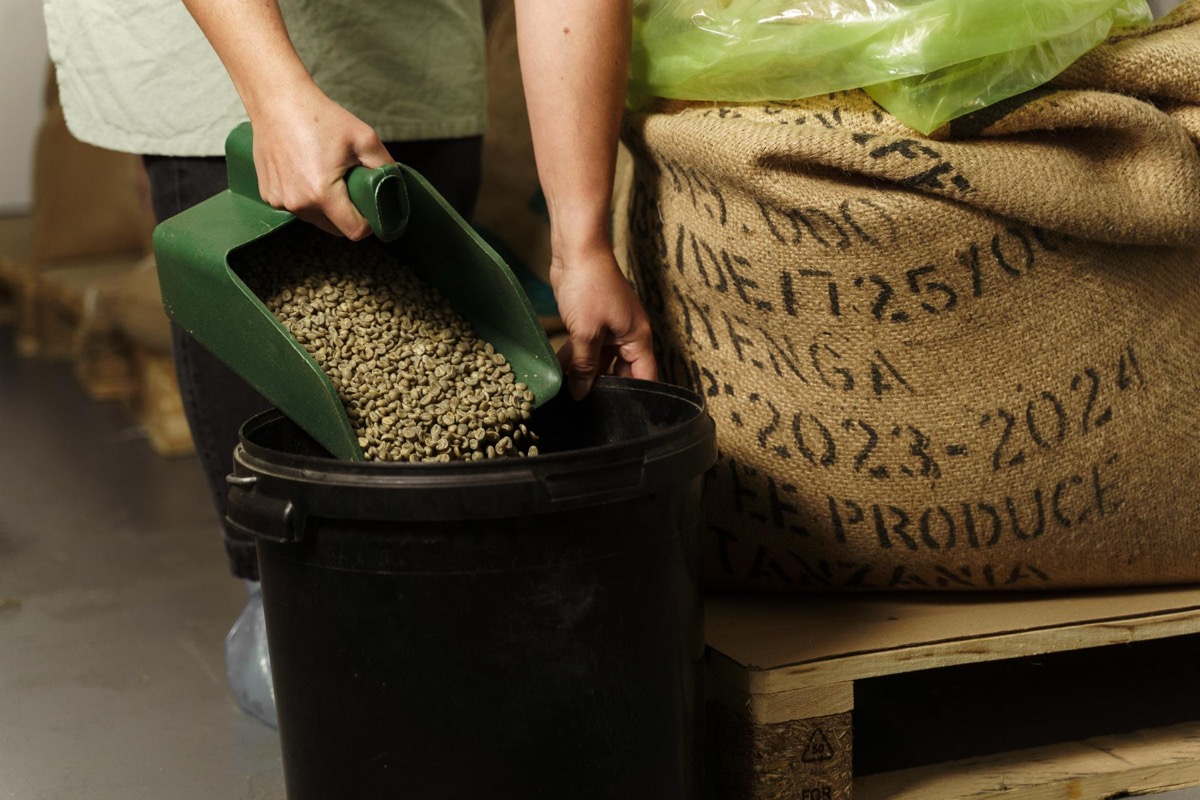
Why post-harvest storage matters
This guide explains moisture control, jute vs GrainPro vs vacuum, warehouse practices, and a practical QC checklist. With Scofi’s Malaysia-local stock, you can sample, approve, and receive domestically—no import waiting.
After processing and grading, green coffee begins a slow race against staling. Aromatic compounds oxidise and volatile acids dissipate faster when humidity swings, heat builds up, or beans re-absorb moisture. Proper storage stabilises the chemistry you paid for: clarity, sweetness, and clean finishes. For cafés in Malaysia’s tropical climate, a disciplined approach prevents mould, baggy notes, and inconsistency between shipments.
- Flavour integrity: Stable moisture keeps organic acids and sugars in balance, preserving clarity and sweetness.
- Roast consistency: Even moisture and density reduce scorching, tipping, and baked cups across batches.
- Waste reduction: Good storage lowers defect risk (mould, phenolic taints), protecting margin and brand trust.
Moisture control — targets, water activity & monitoring
Most specialty buyers target ~10–12% moisture for export and arrival. Within this band, beans roast predictably and resist microbial growth when stored correctly. Water activity (aw) adds nuance: acceptable ranges vary by programme, but lower, stable aw typically correlates with slower staling and mould resistance.
- On Arrival (Malaysia): Re-check % moisture and cup against pre-shipment samples to confirm match.
- Stability Over Time: Use FIFO rotation; log readings each time a pallet is opened or moved.
- Microclimate: Avoid sun-exposed walls, hot ceilings, or damp corners—micro-pockets skew moisture.
- Air Exchange: Gentle ventilation is good; drafts or direct AC blasts are not.
- Tools: Calibrated moisture meter; thermo-hygrometer for warehouse; optional aw meter for high-value lots.
- Logs: Record lot, bag count, readings, and location in the warehouse. Small habits prevent large losses.
- Cup checks: Periodic cupping catches subtle drift before it reaches your customers’ cups.
Packaging options — jute, GrainPro, and vacuum
Packaging determines how easily humidity and oxygen move in and out of beans. In Malaysia’s climate, barrier liners often pay for themselves by preserving aromatics and preventing re-wetting. Here’s how the common options compare and when to choose them.
| Option | What It Is | Strengths | Watch Outs | Use Case (MY) |
|---|---|---|---|---|
| Jute (no liner) | Breathable natural fibre bag | Low cost, easy handling, traditional | Humidity ingress; faster staling; odour absorption | Short turnover lots in climate-controlled rooms |
| GrainPro-lined | Jute outer + hermetic plastic liner | Humidity/oxygen barrier, aroma retention | Seal integrity; avoid punctures | Default for most specialty lots and longer storage |
| Vacuum pack | Air removed; plastic/aluminium laminate | Maximal aroma protection; slowest staling | Cost; careful handling; avoid sharp pallet edges | Microlots, competition coffees, slow-moving SKUs |
- Seal discipline: For liners or vacuum, train staff to inspect and re-seal carefully after sampling.
- Pallet practice: Use slip-sheets and corner guards; keep bags off concrete; allow airflow on all sides.
- Odour control: Never store coffee near chemicals, spices, or strong aromas—beans absorb smells.
Warehousing & transport — tropical reality, practical controls
Malaysia’s heat and humidity mean storage is never “set and forget.” Aim for cool, dry, clean rooms with stable conditions. If air-conditioning isn’t feasible, prioritise ventilation, shading, and barrier packaging.
- Layout: Pallets at least 10–15 cm off the floor; leave aisles for airflow and inspections.
- Stacking: Lower, stable stacks reduce compression and hot spots; rotate positions periodically.
- Monitoring: Place thermo-hygrometers at different heights/locations; log daily highs/lows.
- Pest Management: Proactive sanitation; physical barriers; avoid chemical odours.
- Transport: Keep trucks dry and shaded; avoid mid-day heat where possible; cover pallets.
- Sampling SOP: Minimise bag openings; re-seal immediately; mark sample points to avoid weak spots.
- FIFO rotation: First in, first out. Label pallets with arrival dates and lot codes that match your ERP.
- Incident logs: Record any leaks, spills, or temperature excursions and re-cup affected lots.
Risk map — what damages green coffee & how to respond
Catching storage issues early prevents flavour loss and claim disputes. Use this quick map to triage symptoms and fixes.
| Symptom | Likely Cause | Immediate Action | Prevention |
|---|---|---|---|
| Baggy, flat aroma | Humidity re-absorption; oxygen exposure | Cup multiple bags; isolate lot; check moisture | Barrier liners; stable room humidity; faster turnover |
| Musty/mouldy notes | Wet floors, leaks, or condensation | Stop movement; inspect all pallets; quarantine | Pallet height; roof checks; moisture logs |
| Inconsistent roasting | Moisture variance between bags | Blend pre-roast; adjust charge; re-measure | Uniform packaging; rotate stacks; mix lots carefully |
| Foreign odours | Co-storage with chemicals/spices | Move immediately; re-cup; claim if affected | Dedicated room; odour-free cleaning agents |
Spec checklist for Malaysian buyers
When you request offers or schedule deliveries, include these items so storage quality survives the last mile:
- Packaging type (jute, GrainPro-lined, vacuum) and seal verification on arrival.
- Target export moisture (~10–12%) and whether water activity is monitored for the lot.
- Warehouse conditions: palletisation, airflow, and position away from heat/damp sources.
- Handling SOPs: sampling steps, reseal instructions, incident reporting.
- QC at arrival in Malaysia: moisture re-check and cup match to pre-shipment sample.
- Turnover plan: FIFO rotation, labeling, and micro-lot prioritisation.
- Documentation: packing list, bag counts, and lot codes aligned to invoices and ERP.
- Local sampling: With Scofi’s Malaysia stock, you can validate lots quickly before scheduling deliveries.
- Packaging choice: Default to GrainPro for most lots; reserve vacuum for small high-value coffees.
- Turnover windows: Match inventory to roast cadence; avoid long holds for delicate aromatics.
FAQ: Post-Harvest Storage
What moisture level should green Arabica have on arrival?
Most specialty programmes target ~10–12% moisture. Re-check on arrival in Malaysia and cup against the pre-shipment sample.
Is GrainPro necessary in Malaysia?
While not mandatory, hermetic liners significantly reduce humidity ingress and aroma loss in tropical conditions, so they are recommended for most lots.
When should I choose vacuum packaging?
For microlots, competition coffees, or slow-moving SKUs where maximum aroma retention is critical and handling can be carefully controlled.
How often should I measure moisture?
At receipt, after any warehouse move, and periodically during storage—especially before large production runs.
What warehouse conditions are ideal?
Cool, dry, clean rooms with stable temperature and gentle airflow. Keep pallets off the floor and away from sun-exposed walls.
Can coffee absorb odours?
Yes. Store away from chemicals, spices, fuel, and perfumes. Even cleaning agents can taint coffee if not chosen carefully.
What causes “baggy” flavours?
Humidity re-absorption and oxygen exposure over time. Barrier liners and stable rooms slow this process.
Do I need water activity measurements?
Not always, but aw adds confidence for high-value lots. Lower, stable aw correlates with slower staling and reduced mould risk.
How should I handle sampling?
Minimise openings, mark sample points, and reseal carefully (especially with GrainPro or vacuum). Log each sample event.
Can Scofi provide Malaysia-local samples?
Yes. We hold/coordinate stock in Malaysia, enabling quick sampling, approvals, and domestic delivery or pickup.
