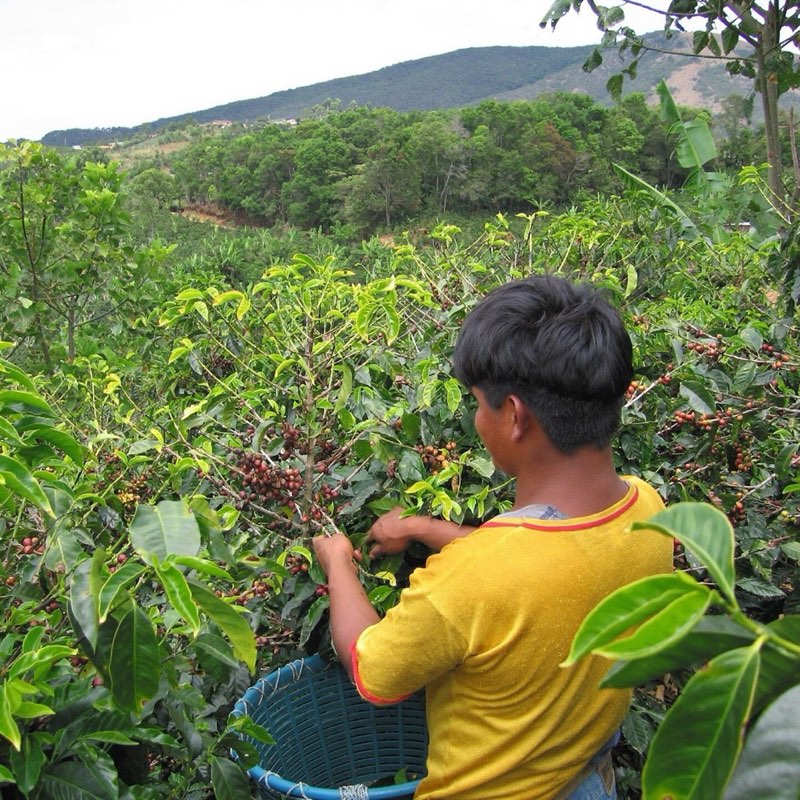
What are Costa Rica coffee beans?
Costa Rica coffee beans are Arabica grown in volcanic highlands, usually between about 900 and 1,900 metres. Costa Rica allows only Arabica to be grown, and it is known for careful, quality-focused processing. Many farms process their own coffee at small micro-mills, which made the country a leader in experimenting with processing styles. See Latin America expansion for the regional picture.
Costa Rica coffee flavour profile
Costa Rican coffee is typically clean, sweet and balanced:
- Bright citrus and orange
- Stone fruit and honey
- Caramel and brown sugar sweetness
- Medium body with a smooth finish
Honey-processed lots add a syrupy, fruity sweetness. Describe individual lots with the coffee flavour wheel.
Costa Rica coffee regions
| Region | Typical character |
|---|---|
| Tarrazú | High altitude; bright, structured and sweet |
| West Valley | Balanced, sweet, fruity |
| Central Valley and Tres Ríos | Clean, balanced, volcanic soils |
| Orosi | Mild, balanced |
| Turrialba | Floral and fruity; a different microclimate |
| Brunca | Southern region with sweet, balanced coffee |
Confirm region, mill and altitude on offer sheets.
Honey process in Costa Rica
In honey processing, the cherry skin is removed but some sticky mucilage (the “honey”) is left on the bean while it dries. More mucilage and slower drying give a sweeter, fuller cup. Costa Rican mills describe styles by colour:
| Style | Mucilage and drying | Cup tendency |
|---|---|---|
| White honey | Little mucilage, faster drying | Clean, bright |
| Yellow honey | Some mucilage | Sweet citrus and stone fruit |
| Red honey | More mucilage, slower drying | Deeper sweetness, red fruit |
| Black honey | Most mucilage, slowest drying | Heavy, syrupy, fruity |
Honey coffee needs careful drying to avoid defects. Read honey process coffee and how to roast honey process coffee.
Costa Rica coffee varieties and processing
Common varieties include Caturra, Catuaí, Villa Sarchí and others, with some Geisha and specialty lots. Besides honey, mills make washed and natural coffees. See Caturra, Catuaí and processing methods.
How to roast and brew Costa Rica coffee
A light to medium roast keeps citrus and sweetness; honey lots need steady heat to avoid scorching the sugars. See roasting levels, roast profiles explained and filter brew Arabica.
How to buy Costa Rica coffee beans
- Ask for specs: region, mill, altitude, variety, process (white, yellow, red, black honey or washed), crop and moisture. See moisture levels.
- Ask for drying details on honey lots, because quality depends on them. See defect detection.
- Request samples. See green coffee sample packs.
Scofi supplies green Arabica from Butterworth, Penang, and can discuss Costa Rican lots, depending on availability. See buy green coffee beans online.
FAQ: Costa Rica coffee beans
What do Costa Rica coffee beans taste like?
Clean and sweet, with citrus, stone fruit, honey and caramel, and a balanced body.
What is honey process coffee?
Coffee dried with some mucilage left on the bean, which builds sweetness and a syrupy texture.
Does honey coffee contain honey?
No. The “honey” is the sticky mucilage of the coffee fruit.
What are the honey colours?
White, yellow, red and black, from least to most mucilage.
Which Costa Rica region is best?
There is no single best. Tarrazú is famous; cup samples to choose.
Is Robusta grown in Costa Rica?
No. Costa Rica allows only Arabica.
What roast level suits Costa Rica coffee?
Often light to medium.
Can I buy Costa Rica green coffee in Malaysia?
Scofi can discuss Costa Rican lots, depending on availability. Contact us.
