
Roasting Anaerobic / Carbonic Maceration: Avoiding Phenolics
Anaerobic and carbonic maceration coffees can be intensely aromatic and complex—but also risky. This guide shows you how to roast these experimental lots from Scofi so you keep layered fruit and sweetness while avoiding harsh phenolics, vinegar notes and rubbery cups.
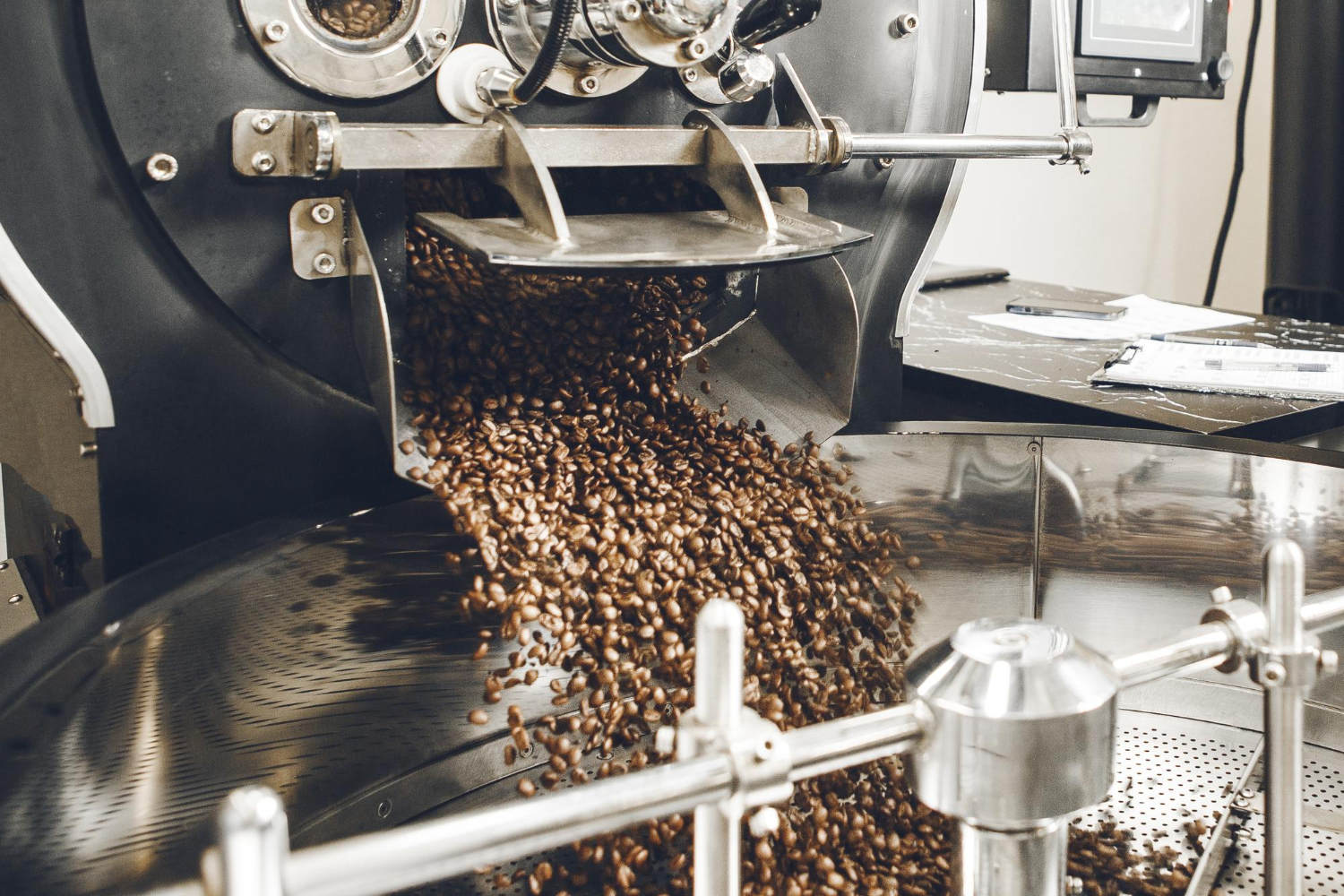
What Are Anaerobic & Carbonic Maceration Coffees?
In traditional washed and natural processing, fermentation happens in open tanks or on patios, where yeast and bacteria work in the presence of oxygen. In anaerobic and carbonic maceration (CM), producers ferment coffee in sealed tanks with very limited or no oxygen, often controlling temperature, time and pressure.
Common patterns you’ll see on Scofi offer sheets:
- Anaerobic natural: whole cherries sealed in tanks, then dried as naturals.
- Anaerobic honey: depulped coffee with mucilage left on, sealed in tanks, then dried like honey process.
- Anaerobic washed: controlled tank fermentation followed by a washed process and clean drying.
- Carbonic maceration: whole cherries in tanks saturated with CO₂, often borrowed from wine techniques.
Done well, these methods can produce intense fruit, florals, spice and sweetness that stand out on any menu. Done poorly—or roasted without care—they can highlight acetic, phenolic and solvent-like notes that guests interpret as “boozy”, “vinegar” or “chemical”.
Your job as a roaster is not to “burn out” the ferment, which isn’t possible, but to shape it: showcase the structured, ripe side of the profile while keeping defects in check.
Anaerobic & CM vs Classic Processes
| Feature | Anaerobic / CM | Classic |
|---|---|---|
| Fermentation | Sealed tanks, low oxygen | Open tanks / patios |
| Aromatics | Intense fruit, spice, florals | Origin- and process-driven |
| Risk | Phenolics, vinegar, solvent-like | Sour, baked, simple |
| Roast sensitivity | High—profile exaggerates ferment | Moderate |
How Anaerobic & CM Coffees Behave In The Roaster
Physically, many anaerobic and carbonic coffees look similar to naturals or honeys: dense seeds (especially at altitude), sticky surfaces and strong aromatics. In the roaster, they often:
- Carry high aromatic load that releases aggressively around first crack.
- Show strong surface reactions (browning and caramelization) if charge is too aggressive.
- Respond badly to extreme profiles—both overly slow and overly fast curves can highlight defects.
Instead of aiming for maximum intensity, most roasteries succeed by treating these coffees as **high-aromatic naturals** that need:
- Gentle but sufficient charge temperature.
- Smooth, declining rate of rise (ROR) with no stalls or spikes.
- Strong, clean airflow to carry away smoke and volatile ferment compounds.
The rest of this guide walks through how to design those profiles, drawing on fundamentals from:
Don’t try to “erase” ferment character. Instead, build profiles that turn wild edges into structured fruit, spice and sweetness. If a green lot is truly over-fermented, roasting alone cannot fix it—use Scofi cupping notes as your baseline.
Profile Strategy — Avoiding Phenolics, Keeping Structure
Phenolic and vinegar-like notes in anaerobic or CM coffees show up fastest when profiles are too extreme: very slow, low-energy roasts that bake, or very aggressive roasts that scorch and emphasize volatile defects.
1. Charge & Drying — Gentle On, Not Weak
Most roasters find success charging slightly below their hottest naturals, but high enough that the drum doesn’t struggle.
- Use a moderate charge temperature—below your most aggressive natural profiles.
- Avoid huge gas spikes after turning point; aim for a smooth climb in ROR.
- Run good airflow from the start to control smoke and moisture.
Drying phase (to yellow) often lands in the 4–5 minute range. Too fast and you risk uneven internal moisture; too slow and you set up the roast to bake.
2. Maillard — Where You Shape Ferment Expression
For many anaerobic coffees, Maillard is where you decide whether the cup will taste like elegant fruit and spice, or like vinegar, rubber and ferment.
- Give Maillard enough time—often 4.5–5.5 minutes for medium-density lots.
- Keep ROR gently declining; avoid flat spots that lead to baked, hollow cups.
- Maintain airflow high enough to remove excess volatiles without stripping all aromatics.
If cups taste **sharp, solvent-like or “nail polish”**, profiles may be too aggressive or too short through Maillard. If they taste **flat, stewed and heavy**, Maillard and development are likely extended at very low energy.
3. Development — Finish Without “Cooking The Tank”
First crack is explosive on many anaerobic and CM coffees—aroma fills the room quickly. It’s tempting to push development hard to “smooth it out”, but this often concentrates heavy ferment notes.
- Filter: ~1:10–1:50 after first crack (about 15–19% of total time).
- Espresso: ~1:30–2:20 after first crack (about 18–22% of total time).
Stay on the lighter–medium side for filter and the lower end of medium for espresso. You want clear structure and sweetness, not “cooked ferment”.
Safe Starting Points (Dense Anaerobic Lot)
| Phase | Target | Notes |
|---|---|---|
| Drying | 4:00–4:45 | Smooth ROR rise, strong airflow. |
| Maillard | 4:30–5:30 | Gently declining ROR; no stalls. |
| Development (filter) | 1:15–1:40 | 15–19% dev; lighter color. |
| Development (espresso) | 1:30–2:10 | 18–22% dev; lower medium. |
Filter vs Espresso — Choosing The Right Roles
Filter Roast — Showcase The Story Carefully
Anaerobic and CM coffees are often sold as feature filters—they taste like nothing else on the menu when profiles are dialled in. Aim for:
- Light–medium roast with 15–19% development.
- Flavor notes that emphasize ripe fruit, florals, spice, cocoa rather than vinegar or alcohol.
- Brew ratios of 1:15–1:16 at 92–96 °C, with close monitoring of extraction to avoid astringency.
If guests describe the cup as “too boozy” or “like wine vinegar”, test profiles with slightly more Maillard, controlled ROR and slightly shorter development to see if structure improves.
Espresso Roast — High-Impact, High-Risk
As espresso, anaerobic and CM coffees deliver very intense flavor, which can be amazing for adventurous guests but overwhelming for others.
- Roast to lower–medium with 18–22% development.
- Target a sweet, structured shot with fruit and spice, not just ferment.
- Start with ratios of 1:2–1:2.2, 28–32 seconds, then adjust dose and time for balance.
Many roasteries launch anaerobic espresso as limited-time features with clear descriptions, while using more classical washed or honey coffees as the mainline milk-based espresso.
Menu Roles For Anaerobic & CM Coffees
| Role | Roast Direction | Notes |
|---|---|---|
| Feature filter | Light–medium | Tell the process story; ideal for tastings. |
| Signature espresso | Lower medium | Intense fruit and spice for adventurous guests. |
| Blend accent | Medium | Use 10–30% to add complexity to a classic base. |
Common Defects In Anaerobic & CM Roasts
Not every problem in these coffees is a roast issue—some are intrinsic to the processing. But your profile can either **amplify** or **soften** them. These are the patterns Scofi sees most often when roasters ask for help.
1. Phenolic / Solvent-Like Notes
Symptoms: nail polish remover, plastic, bandage or chemical-like aromatics.
Possible sources:
- Strong phenolic compounds from the fermentation itself.
- Overly aggressive early heat or very short Maillard, exaggerating sharp edges.
- Very dark development trying to “cook out” defects (it doesn’t work).
Adjustments: use a more moderate charge, lengthen Maillard slightly with steady ROR, and avoid deep development. If phenolics persist across profiles, the green lot itself may be at fault—Scofi cuppings will usually flag this.
2. Excessive Acetic / Vinegar Character
Symptoms: sharp, vinegary acidity that overwhelms fruit; cups can feel thin and spiky.
Possible sources:
- High acetic load from fermentation and drying.
- Profiles that are too fast and light, offering no structure to balance acids.
- Very slow, baked roasts that leave acidity but kill sweetness.
Adjustments: test curves with slightly longer Maillard, moderate development, and stable ROR. Avoid both ultra-fast Nordic-style extremes and very slow, low-energy roasts—aim for a balanced middle path.
3. Hollow, Baked Cups
Symptoms: big aromatics in the grinder, but flat, hollow cups with little sweetness and a drying finish.
Possible sources:
- Stalled or flat ROR in the middle and late phases.
- Overly cautious charge leading to long total roast times.
Adjustments: increase energy earlier, avoid long plateaus, and shorten total roast by 30–60 seconds while keeping development percentage reasonable.
For a broader defect overview across all processes, you can build out or consult Roast Defects 101 as a companion guide to this page.
Defect Quick Reference
| Defect | Check |
|---|---|
| Phenolic / solvent |
• Compare with Scofi cupping notes • Try gentler charge & longer Maillard • Avoid deep roasting to “fix” it |
| Vinegary / harsh acid |
• Too fast or too slow curve? • Dev% in range? • Extraction yield too high? |
| Hollow & baked |
• Flat ROR mid-late? • Total roast time too long? • Undercharged batch? |
Anaerobic Variants — Natural, Honey & Washed
“Anaerobic” and “carbonic maceration” describe fermentation conditions, not the entire process. You’ll see them combined with washed, honey and natural drying styles, and each behaves slightly differently in the roaster.
Anaerobic Natural
Whole cherry fermentation in tanks, then dried as natural. Expect:
- Very intense fruit and aromatics.
- Higher risk of phenolic or vinegar notes if processing or storage was marginal.
- Profiles closest to careful natural roasting with extra attention to airflow and development length.
Anaerobic Honey
Depulped coffee with mucilage left on, sealed fermentation, then dried as honey. These:
- Often balance sweetness and fruit with less risk than heavy naturals.
- Can scorch if charge is too aggressive (sticky surfaces).
- Respond well to profiles between your honey and anaerobic-natural curves.
Anaerobic Washed
Fermentation in sealed tanks followed by thorough washing and clean drying. You may see:
- Cleaner, more “structured” ferment character.
- Roaster behaviour closer to washed coffees with extra aromatics.
- Profiles that look like your washed curves with slightly more cautious charge and airflow tuning.
Scofi spec sheets will indicate the process combination (e.g., “anaerobic natural”, “CM honey”). Use that plus moisture and density data to choose your starting profile, then refine through cupping and logging.
When you receive an anaerobic or CM lot from Scofi, share the spec sheet and your roaster model with us. We can tell you whether to treat it more like a natural, honey or washed roast, and recommend starting curves for filter and espresso.
Working With Scofi: Safely Featuring Anaerobic & CM Coffees
Experimental processes can be a big win for your brand when they are consistent, well-communicated and technically sound. Scofi’s role is to help you choose lots that fit your market and roast them confidently.
What Scofi Provides For Anaerobic & CM Lots
- Green specs: processing details, moisture, density, screen, harvest date and storage notes.
- Cupping data: flavor descriptors, ideal brew methods and recommended menu roles.
- Profile guidance: suggested charge ranges, phase splits and target development percentages.
- Feedback loop: we welcome your roast curves and cupping results to refine recommendations.
Simple Protocol For New Anaerobic / CM Coffees
- Sample roast using a safe, moderate curve based on Scofi guidance.
- Cup and decide on primary menu role (feature filter, espresso, blend accent).
- Run 2–3 test production roasts varying Maillard length and development, keeping charge constant.
- Cup blind and select the profile that balances fruit, ferment and sweetness best.
- Document gas, airflow and timings so your team can repeat the profile reliably.
Over time, you’ll build an internal playbook for anaerobic and CM coffees, letting you say “yes” to high-impact lots from Scofi without fearing phenolics or vinegar bombs on bar.
Anaerobic Onboarding Checklist
| Step | Key Action |
|---|---|
| 1. Understand | Read Scofi specs & cupping sheet. |
| 2. Test | Run a few curves; change one variable at a time. |
| 3. Choose | Cup blind; pick the most balanced profile. |
| 4. Standardise | Create a profile sheet; train staff. |
| 5. Review | Re-cup mid-season; adjust as coffee ages. |
FAQ — Roasting Anaerobic & Carbonic Coffees
How are anaerobic and carbonic maceration coffees different from naturals?
Can I roast out phenolic or vinegar defects?
What development time should I use for anaerobic filter roasts?
Are anaerobic coffees always best as light roasts?
How can I reduce “boozy” or “winey” notes?
Should I treat anaerobic washed differently from anaerobic natural?
Are anaerobic coffees suitable for espresso?
Can I use anaerobic coffees in blends?
How long should I rest anaerobic roasts before serving?
Can Scofi help design profiles for specific anaerobic lots?
Keep Building Your Roasting Playbook With Scofi
Core fundamentals: temperatures, phase splits and profile design.
Clean cups, bright acidity and structured sweetness.
Keep fruit intensity without baked or phenolic cups.
Manage caramelization and sweetness without scorch.
Balancing big body with clarity in giling basah lots.
Lower charge temperatures, longer development without baking.
Plan Your Next Anaerobic / Carbonic Roast With Scofi
Share your menu role, flavor targets and roaster setup. We’ll recommend suitable anaerobic or carbonic maceration green coffee beans from Scofi stock, provide starting profiles, and help you avoid phenolic or vinegar-heavy cups.