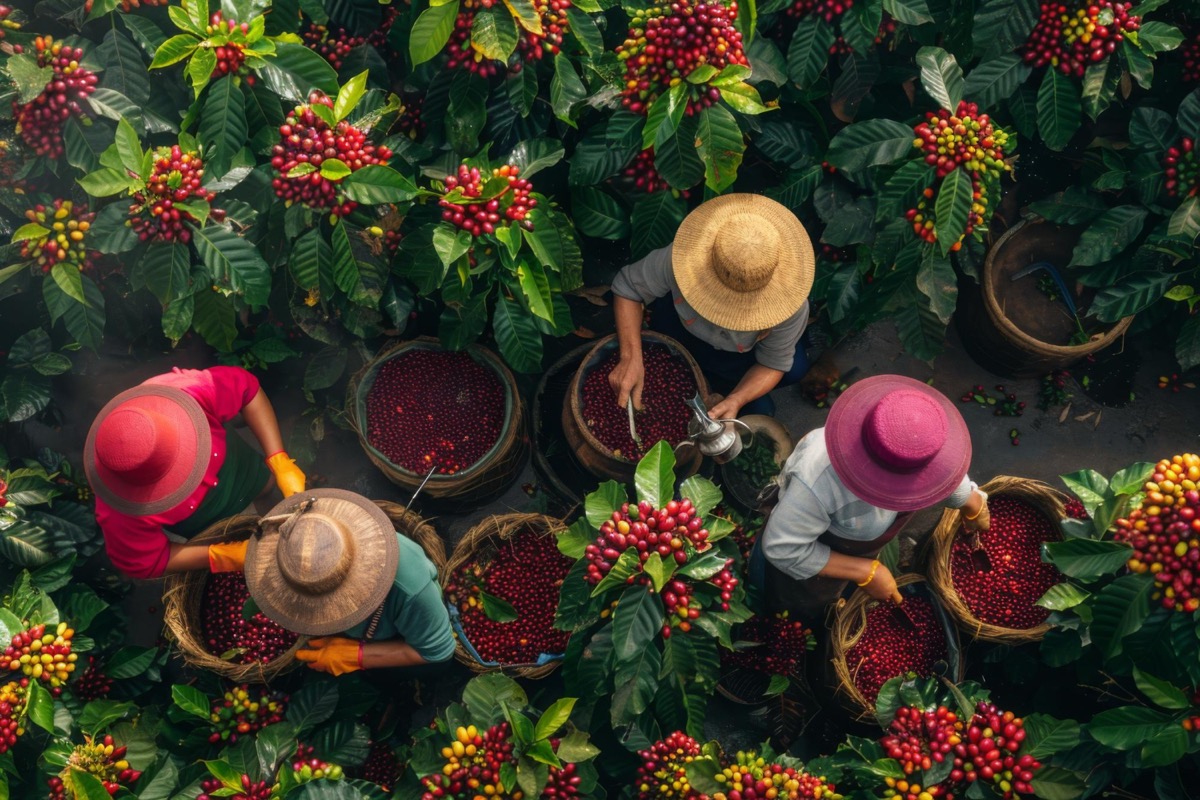
Why Malaysia market trends matter to buyers and roasters
This guide summarises Malaysia’s coffee culture growth, why demand for Arabica is rising in cafés, and how to think about market size and forecast practically—with decisions you can use for sourcing, roasting, and menu planning.
Market trends are only useful when they change what you do. In Malaysia, the most important shifts are not “buzzwords”—they’re operational: faster menu cycles, more iced drinks, higher customer expectations for consistency, and more competition in premium coffee. That means buyers must choose coffees that deliver reliable results, and roasters must build repeatable systems.
If your business runs on milk beverages, you need a sweet, stable Arabica base that performs under milk and ice. If you run a filter bar, you need aromatic lots that remain clean and expressive. Either way, your customers notice drift quickly, especially when they return weekly.
- Espresso menus: Milk and iced drinks reward sweetness + body. See Espresso Arabica.
- Filter menus: Specialty customers value aroma and clarity. See Filter Brew Arabica.
- Buying systems: Reduce surprises with a checklist and sample flow. See Buying Checklist.
Coffee culture growth in Malaysia
Malaysia’s coffee culture is expanding in layers. Traditional kopitiam heritage remains strong—especially for social routines and comfort flavours— while modern cafés grow through specialty offerings, brand storytelling, and improved service standards. At the same time, convenience-driven channels (takeaway windows, delivery apps, and ready-to-drink formats) are increasing the number of “coffee moments” per day.
This layered culture is important for roasters because it creates multiple demand types: some customers want familiar chocolatey profiles and consistent strength; others want floral Ethiopias, naturals, and tasting flights. The winning strategy is to build a portfolio that covers both lanes—comfort and discovery—without compromising quality.
What’s pushing café growth?
- Urban lifestyle and third spaces: cafés as work and social venues.
- Menu innovation: iced lattes, signature drinks, seasonal specials.
- Education: more customers understand origin, processing, and brew methods.
- Equipment and skills: better grinders, espresso machines, and training raise expectations.
How this affects suppliers and buyers
Buyers increasingly request: clearer specs, faster sampling, stable delivery, and menu-fit recommendations. That’s why local supply coordination matters—shorter feedback loops help cafés and roasters adapt quickly. If you want a supplier-view explanation, read Scofi Malaysia Supplier.
- Flavour language: Train staff to describe profiles consistently. See Flavour Wheel.
- Processing trends: Natural/honey demand grows with signature iced drinks. See Processing Methods.
- Consistency expectations: Market growth increases competition—consistency becomes the differentiator. See Roaster Best Practices.
Rising demand for Arabica in cafés
Arabica remains the backbone of premium café menus because it offers a wider palette of aromatics and sweetness. In Malaysia, rising Arabica demand is linked to three realities: (1) consumers want better-tasting coffee, not just caffeine, (2) cafés use Arabica to differentiate with origin stories and signature drinks, and (3) quality-focused roasting makes Arabica more approachable for mainstream guests.
Why Arabica fits modern Malaysia menus
- Versatility: works in filter, espresso, and blends when selected correctly.
- Flavour range: florals and citrus (washed Ethiopia), cocoa/caramel (Latin), fruit-forward naturals (select lots).
- Storytelling: regions, varieties, and processing help cafés explain value and pricing.
How cafés “translate” Arabica to customers
Successful cafés don’t force every customer into bright filter coffee. They offer lanes: a comforting house espresso (sweet, chocolate-caramel), an aromatic filter feature, and an iced signature that tastes smooth and sweet. This approach keeps Arabica demand broad rather than niche.
| Menu Lane | What Customers Want | Arabica Style That Fits | Related Guide |
|---|---|---|---|
| House espresso (milk) | Sweet, smooth, consistent | Chocolate-caramel base, medium roast intent | Espresso Arabica |
| Filter feature | Florals, clarity, tasting notes | Washed highlands, light to light-medium intent | Filter Brew |
| Iced signature | Sweet, bold, not sharp | Balanced naturals/honey, clean fruit and body | Processing Methods |
| Education / flights | Learning + comparison | Variety packs and origin contrasts | Varieties |
Market size & forecast: a practical outlook for Malaysia
Buyers often ask for a single “market size number,” but for green coffee purchasing, what matters more is the direction of demand and which segments are growing. In Malaysia, the outlook for coffee consumption is generally positive, driven by urban café expansion, premiumisation, and the normalisation of coffee as a daily routine. Within that growth, Arabica demand tends to rise faster in premium café channels because it enables differentiation and menu storytelling.
The most useful forecast framework is not “one number,” but a set of demand drivers you can watch: store openings, beverage mix shifts (iced and milk), customer education, price sensitivity, and supply stability. If you operate a roastery, you should forecast based on your own sales channels: wholesale to cafés (stable recurring), DTC retail (campaign-driven), and seasonal promotions (spikes).
Growth drivers (what is likely to expand)
- Specialty café footprint: more outlets and more competition increases demand for differentiated Arabica.
- Iced beverage share: increases volume needs and raises the value of sweet, stable espresso blends.
- Home brewing and hobby roasting: expands demand for smaller packs and variety sets.
- Corporate and hospitality: more offices/hotels upgrade coffee programmes, increasing consistent Arabica demand.
Constraints and risks (what can slow growth)
- Price volatility: Arabica pricing can shift with global supply conditions; buyers need budgeting discipline.
- Quality drift: fast expansion can strain supply chains; strong QC and supplier reputation matter.
- Talent gap: more cafés means more baristas; training becomes a competitive advantage.
What Malaysia trends mean for green coffee buyers
When markets grow, buyers often face two problems: (1) they need more volume quickly, and (2) they need consistency across outlets and staff. The solution is rarely “buy whatever is cheapest.” It is to build a portfolio strategy: a stable base coffee, a rotating feature lane, and a clear checklist for quality and supplier reliability.
Build a simple portfolio
- Base: sweet, chocolate-caramel Arabica for espresso and milk (stable year-round).
- Feature: aromatic washed lots (e.g., florals/citrus) for filter and menu storytelling.
- Seasonal: naturals/honey/experimental lots for special drinks and social content.
Standardise buying checks
Use consistent quality checks: moisture condition, defect expectations, cupping notes, packaging, and storage plan. See Buying Checklist, Quality Control, and Storage Tips.
- Arabica pricing: Plan budgets with market drivers in mind. See Arabica Prices.
- Arabica vs Robusta: Understand roles, not stereotypes. See Arabica vs Robusta.
- Roaster consistency: Market competition rewards repeatability. See Best Practices for Roasters.
How Scofi supports Malaysia buyers (EEAT)
Trend-driven demand is only helpful if supply can keep up. Scofi supports Malaysia buyers with a practical approach: clear specs, menu-fit recommendations, and a workflow that prioritises sampling and repeatability. We aim to reduce uncertainty—not increase it with complicated catalogs.
- Malaysia coordination and local availability: faster sampling and decision cycles where stock is held locally.
- Spec clarity: origin, process, screen, moisture guidance, and QC notes where available.
- Menu-fit shortlists: propose coffees based on espresso/filter lanes and milk/iced realities.
- Consistency support: encourage cupping discipline, retention samples, and mapped replacements.
Learn more about our role and RFQ flow: Scofi Malaysia Supplier • Wholesale Supplier.
FAQ: Malaysia Market Trends & Arabica Demand
Is Malaysia coffee consumption growing?
Overall demand is generally expanding across café, takeaway, delivery, and specialty channels, supported by lifestyle and menu innovation.
Why is Arabica demand rising in cafés?
Arabica offers broader aromatics and sweetness, enabling cafés to differentiate with origin and signature drinks while maintaining premium positioning.
What drinks are driving volume in Malaysia?
Milk and iced beverages typically drive high throughput. That increases demand for sweet, stable Arabica espresso bases and consistent blends.
Do customers in Malaysia like light roast?
Specialty customers often do—especially for filter. Many mainstream guests still prefer medium-style comfort profiles in milk drinks.
How should a café build an Arabica lineup?
Use lanes: a stable house espresso base, a rotating filter feature, and an iced signature lane supported by clean naturals/honey lots.
How can roasters stay consistent while the market grows?
Standardise green acceptance checks, run repeatable cuppings, use retention samples, and map replacements before lots end.
How does Arabica price volatility affect Malaysia buyers?
It can shift cost planning. Buyers protect margins with a portfolio strategy, early contracting, and clear menu lanes that can tolerate substitutions.
Is local stock important for cafés and roasters?
Yes. Local availability shortens sampling and decision loops and reduces downtime when you need replenishment quickly.
What should buyers check as demand increases?
Quality and supplier reliability: moisture condition, defects, process consistency, packaging, storage plan, and documented QC practices.
Can Scofi support market-driven scaling in Malaysia?
Yes. We provide menu-fit shortlists, Malaysia-local sampling where available, QC notes/specs, and delivery/pickup coordination.
